Tokyo subway guide
Tokyo Hotel Arrivals: Choose the Station, Exit and Entrance Together
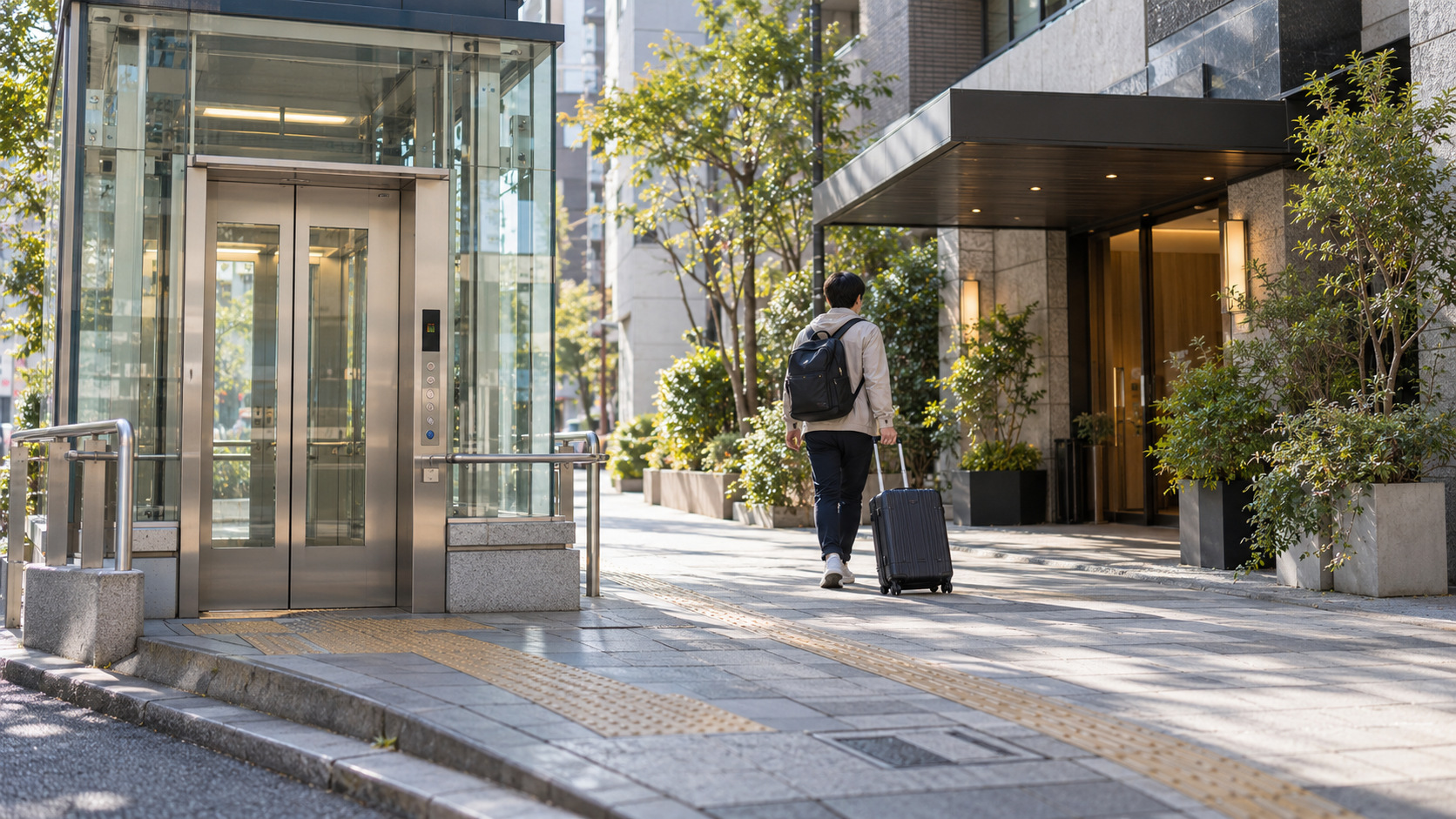
Put the hotel’s full name into your route search, then check the arrival station and exit against the hotel’s own directions. “Ginza,” “Asakusa” or “Shinjuku” is too broad to be a complete luggage-arrival plan.
Three rail-arrival examples below compare the actual line, accessible exit and building entrance. For hotel features, property-specific routes or which area to book, use the existing Ginza, Asakusa and Shinjuku hotel guides.
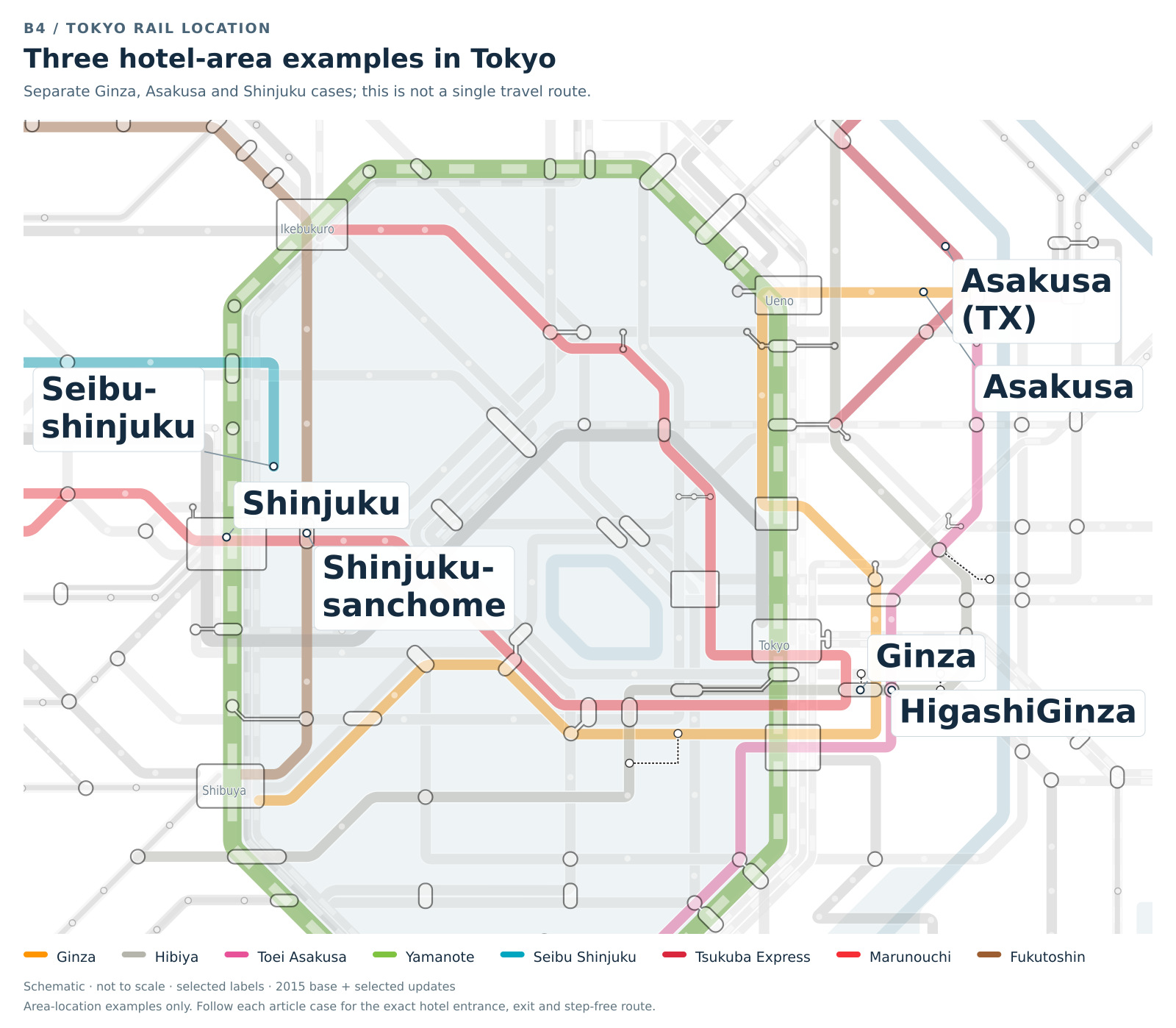
Ginza: choose the arrival line before the lift route
Compare: Higashi-ginza on the Hibiya or Asakusa line with Ginza on the Ginza Line.
If your train already calls at Higashi-ginza, compare arriving there directly before adding a change to reach the better-known Ginza Station. Conversely, a direct Ginza Line ride followed by the hotel’s walk can make more sense than changing trains solely to reduce the final street distance.
With luggage, use the Higashi-ginza accessibility guide to find a lift from the line you will actually ride, then match its street exit to your hotel’s current entrance directions. A step-free exit can extend the outdoor walk beyond an advertised shortest route. The Ginza hotel guide covers individual property access and the wider area decision.
Asakusa: choose the operator before the exit
Compare: Ginza Line Asakusa, Toei Asakusa Line Asakusa and Tsukuba Express Asakusa. These are separate arrival routes even though each uses the Asakusa name. Identify the operator on your actual train before following an exit instruction.
If your hotel names a Ginza Line exit, do not apply it to a direct Toei Asakusa Line arrival. Compare the current lift route for your arrival operator with the hotel’s entrance directions; the step-free street exit may mean a longer outdoor walk than the hotel’s shortest advertised route. Check current lift notices when avoiding stairs is essential.
The Asakusa hotel guide covers hotel choices, individual property routes and neighborhood context. Here the rail decision is to keep the operator, usable exit and final entrance in one itinerary.
Shinjuku: compare the station you really use
Compare: JR Shinjuku with Seibu-Shinjuku, and distinguish Oedo Shinjuku from Oedo Shinjuku-nishiguchi. These station names do not give you the same platform-to-street route.
Do not transfer to another railway solely because its station appears nearer your hotel on a map. First note the operator and arrival platform you will actually use; then check its exit or lift route and the hotel’s current entrance directions. A hotel walk estimate usually begins at a street exit, not at the train door.
For a JR arrival, use the JR Shinjuku station map. For a subway arrival, use that operator’s current map and accessibility information where applicable. The Shinjuku hotel guide covers individual properties and neighborhood choices.
Build a complete arrival plan before comparing minutes
A usable plan has five parts:
- Exact property. Confirm the address and branch, particularly for chains with several hotels in one neighborhood.
- Arrival line and station. Record both. Add the station code if names are similar.
- Platform-to-street route. Check the appropriate gate, elevator or escalator route on the operator’s map.
- Street-to-entrance route. Start at the exit you will actually use, rather than the hotel’s default stair exit.
- Entrance-to-reception step. Note any separate entrance or upper-floor lobby.
Then compare complete routes. One extra train change can outweigh a shorter street walk. A longer but direct route may be preferable with bags, while another traveler may choose the faster rail journey and accept stairs. The evidence needed is the actual route, not a universal ranking of Tokyo stations.
“Directly connected” also needs reading carefully. It can refer to a building passage rather than every platform-to-lobby route. Check which gate or exit connects, whether the passage has opening hours and whether the accessible route is the same. If those details are essential and absent from the property’s instructions, confirm them before relying on the connection for a late arrival.
What a station map does not promise
A station diagram can show where elevators are installed. It does not guarantee that all are operating when you arrive, or that a hotel’s preferred street entrance is barrier-free. Similarly, a transfer symbol does not prove an indoor corridor, a short walk or ticket validity for every payment product.
Keep fare planning separate from physical arrival planning. Tokyo Metro versus Toei explains the operator distinction; station navigation covers the wider process of finding platforms and exits. Choose the ticket after checking which lines your useful routes actually require.
Quick answers
Is the closest station always the best arrival?
No. Compare the route from where you are coming, including train changes and the exit you can use. A slightly longer direct approach may be preferable with luggage.
Can I trust a hotel’s two-minute walk?
Use it with its stated starting point. It usually does not describe your arrival platform, elevator detour or time inside the building.
Before leaving the airport or your previous hotel
Download the property’s current access page and save your arrival line, chosen exit and entrance instructions together. If you need an elevator, save its map location too. Use the hotel’s full address as a fallback if a street landmark has changed.
The operator and station examples above were checked against official railway material on 11 October 2026. Property entrances and lift availability can change; confirm them with the hotel and operator before travel. These routes have not been walked or accessibility-certified by this article’s author.