Where to Stay in Ebisu & Meguro: Hotels and Station Access
Tokyo’s most sophisticated neighborhood for couples, foodies, and design lovers.

Quick links
Overview
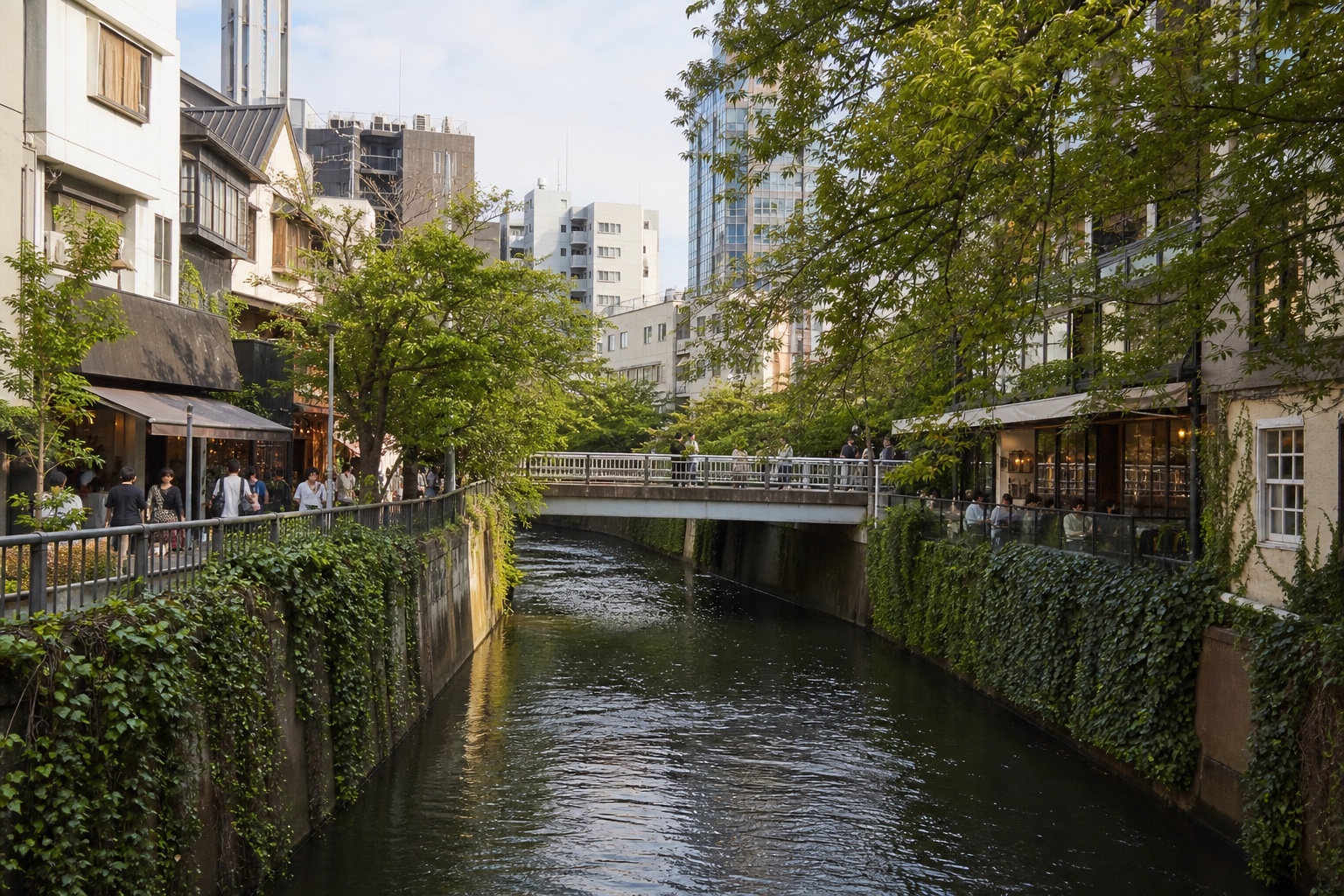
Ebisu and Meguro are where Tokyo’s taste-makers actually live — and where they go to eat, drink, and celebrate.
If Shibuya is Tokyo’s noisy teenager and Roppongi is the late-night party friend, Ebisu is the 30-something with excellent taste who knows every good restaurant in the city. This is Tokyo’s most consistently recommended neighborhood for dining quality, and it’s not close. Ask any Tokyo resident “Where should I eat tonight?” and if they hesitate, the default answer is usually “Ebisu.”
The restaurant density here is staggering — hundreds of independent restaurants packed into the narrow streets between Ebisu Station and Meguro Station, covering every cuisine and every price point. From ¥800 ramen at a standing counter to ¥30,000 omakase at a 6-seat sushi bar, Ebisu has it. The key difference from tourist-heavy areas like Shibuya or Shinjuku: the restaurants here survive on repeat local customers, not tourists. That means quality is consistently high and pretension is low.
Meguro, one station south on the JR Yamanote Line, adds its own character. The Meguro River (目黒川) is Tokyo’s most famous cherry blossom spot — a tree-lined canal that transforms into a pink tunnel during hanami season (late March–early April). The Nakameguro side of Meguro (technically the next station west on the Tokyu Toyoko Line) has become Tokyo’s premier cafe and boutique neighborhood.
The hotel lineup in this area spans premium stays such as The Westin Tokyo (in Ebisu Garden Place) and Sheraton Miyako Hotel Tokyo, newer station-side options such as Tokyu Stay Shibuya Ebisu and EBISUHOLIC HOTEL, and a practical bath-focused option near Nakameguro. Room rates vary widely by hotel and date, from compact station stays to premium properties in Ebisu and Shirokanedai. For couples celebrating anniversaries or travelers who prioritize dining and atmosphere over tourist-checklist proximity, this is the sweet spot.
Access is excellent: Ebisu is on the JR Yamanote Line (Shibuya 2 min, Shinjuku 9 min, Tokyo Station 22 min) and the Tokyo Metro Hibiya Line (Roppongi 7 min, Ginza 15 min). You’re connected to everything without being in the middle of everything.
For a livelier nightlife-and-shopping base, compare this guide with Shibuya Hotel Base Guide. For a more polished shopping-and-luxury stay, compare Ginza Hotel Base Guide.
Must-see Ebisu & Meguro landmarks and attractions
Ebisu & Meguro’s core attractions form a compact route. Use this visual shortlist to choose what to see first and where a hotel should sit.
 01
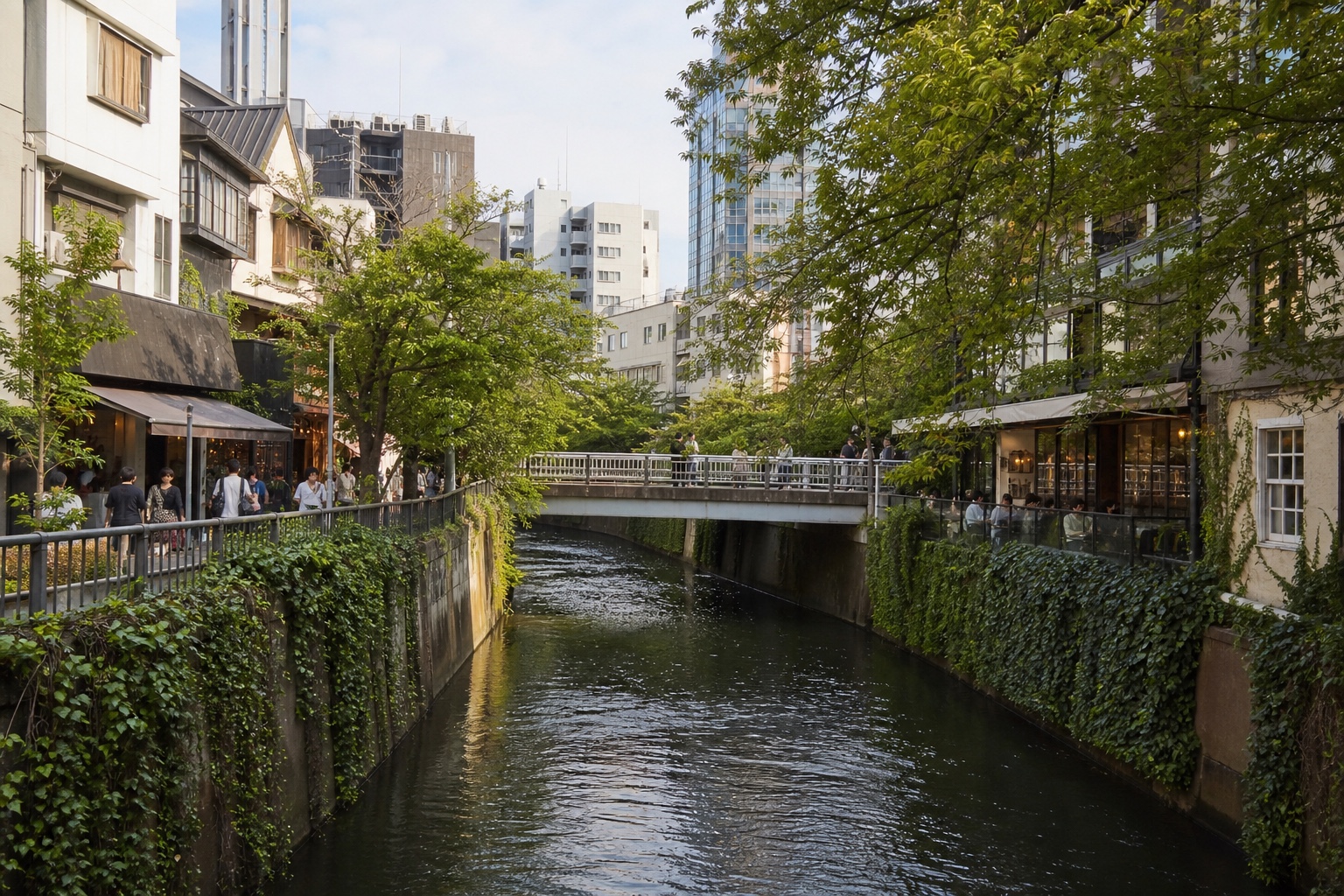
01Meguro River
Canalside walkA tree-lined canal with cafés along the banks, giving this area a calmer alternative to Shibuya.
 02
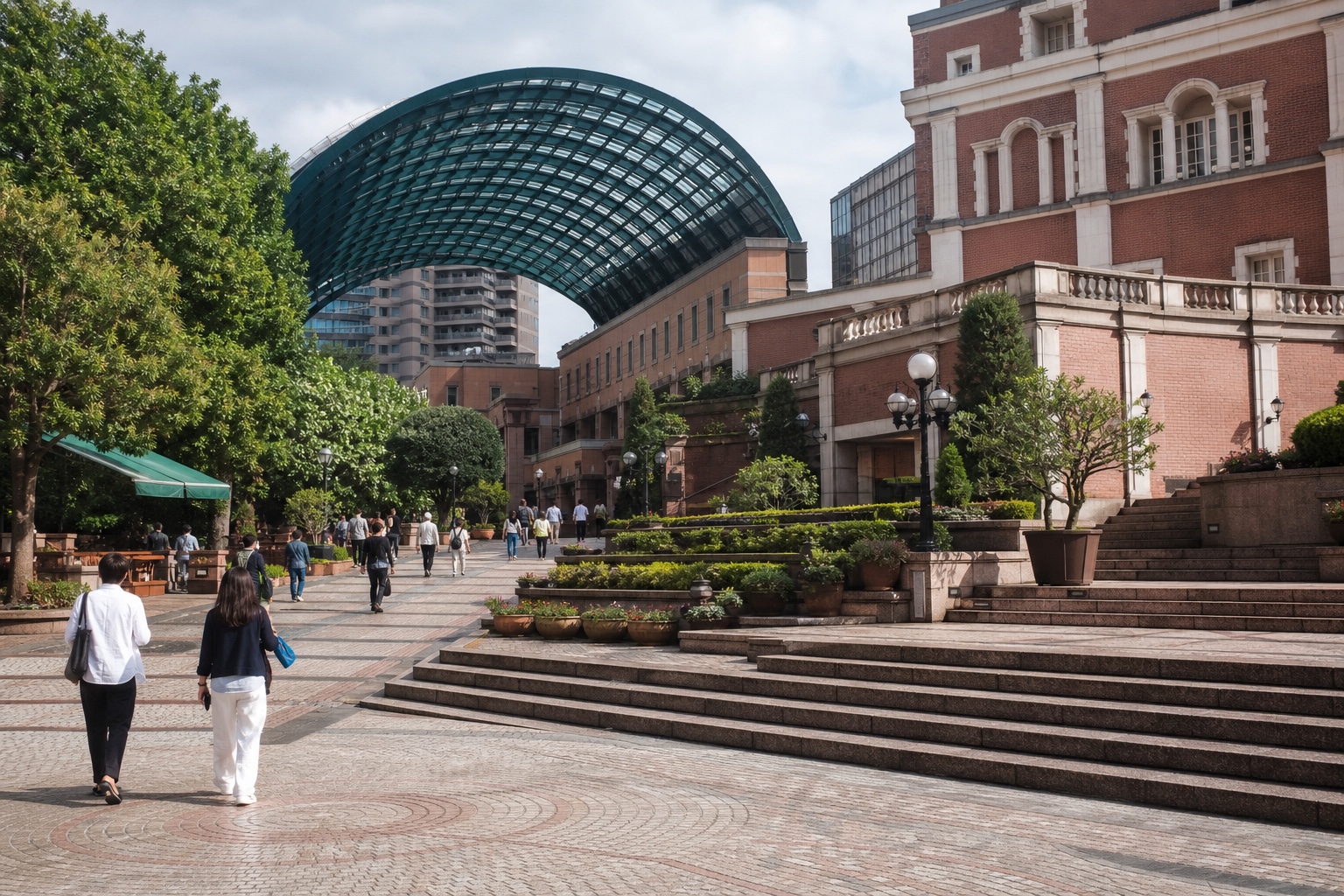
02Yebisu Garden Place
Plaza & cultureEuropean-style plazas beside The Westin Tokyo, with the Tokyo Photographic Art Museum on-site.
03Nakameguro
Cafés & boutiquesA refined district of riverside cafés, bakeries, vintage stores, and design studios.
Who is Ebisu & Meguro for?
Highly Recommended for:
- Couples & Anniversary Travelers: The Westin Tokyo, Sheraton Miyako Hotel Tokyo, and the neighborhood’s sophisticated dining scene make this Tokyo’s best area for a romantic trip. Nakameguro’s riverside cafes are made for couples.
- Serious Foodies: If your trip priority is eating well, Ebisu should be your base. The restaurant quality here is unmatched in density. Michelin-starred spots and hidden local gems coexist on the same block.
- Design & Culture Lovers: Yebisu Garden Place, Tokyo Photographic Art Museum, Nakameguro boutiques, and independent design studios. This area rewards people who appreciate aesthetics.
- Repeat Visitors to Tokyo: If you’ve done Shibuya, Shinjuku, and Asakusa and want to experience where locals actually spend their weekends, Ebisu and Meguro deliver.
- Cherry Blossom Season Travelers: Meguro River during hanami is a once-in-a-lifetime experience. Staying nearby means you can see it at dawn before the crowds arrive.
NOT Recommended for:
- Budget Travelers: The hotel tier here starts at ¥20,000+. Few business hotels in the immediate area.
- First-Time Visitors on Tight Schedules: No major tourist landmarks within walking distance. You’ll use trains to reach temples, shrines, and shopping districts.
- Families with Small Children: The dining scene is adult-oriented. Most restaurants have limited space and no kids’ menus. Hotels here cater more to couples.
Why Stay Here?
1. Tokyo’s Best Restaurant Neighborhood — And It’s Not Even Close
Ebisu’s restaurant scene is what happens when a neighborhood attracts talented chefs who want to cook good food without paying Ginza rent. The backstreets between Ebisu Station and Hiroo are packed with independent restaurants — many run by a single chef with a tiny counter and a passionate following.
The variety is extraordinary. In a single block, you might find a Michelin-starred French bistro, a standing soba shop that’s been open since the 1960s, a natural wine bar with 200 bottles, and a Nigerian restaurant. The thread connecting them is quality — Ebisu restaurants face fierce local competition and can’t coast on tourist traffic.
Some reference points:
- Afuri (阿夫利) — The legendary yuzu shio ramen shop that started in Ebisu before expanding nationwide. The original Ebisu shop still has the best version.
- Ebisu Yokocho (恵比寿横丁) — A covered alley of 20+ tiny izakayas and bars, each with 10–15 seats. It’s atmospheric, lively, and the best single spot to start an Ebisu evening.
- Yakitori Imai (焼鳥今井) — Widely considered one of Tokyo’s best yakitori restaurants. Reservation required.
2. Cherry Blossoms at Meguro River
The Meguro River (目黒川) is lined with approximately 800 cherry trees stretching for 3.8 km. During peak bloom (usually late March to early April), the trees form a complete canopy over the river, creating a tunnel of pink that is genuinely breathtaking.
Unlike Ueno Park or Shinjuku Gyoen (which are flat open spaces), the Meguro River experience is linear and immersive — you walk along the river under the blossoms, with cafes and restaurants spilling out onto the banks. At night, the trees are illuminated and the petals float on the water surface. It is, without exaggeration, one of Tokyo’s most beautiful seasonal experiences.
Staying in Meguro or Nakameguro during cherry blossom season gives you a major advantage: you can see it at 6 AM before the crowds arrive. During peak bloom weekends, the daytime crowds are enormous (think: shoulder-to-shoulder for 2 km). Early morning is serene and photogenic.
3. Hotels with Genuine Character
Unlike business hotel districts (Shinjuku, Ikebukuro) or luxury tower districts (Marunouchi), the hotels in Ebisu and Meguro have distinct personalities:
The Westin Tokyo sits in Yebisu Garden Place, surrounded by European-style plazas and the Tokyo Photographic Art Museum. The rooms are large by Tokyo standards, the lobby has a grand staircase, and the Westin breakfast buffet is one of the best in Tokyo. It feels like a resort embedded in the city.
Tokyu Stay Shibuya Ebisu and EBISUHOLIC HOTEL give the Ebisu side two more station-conscious choices: one is a new lifestyle hotel near the Hibiya Line exit, while the other is a smaller design-led stay near Yebisu Garden Place.
Dormy Inn Meguro Aobadai is the practical counterpoint: a smaller, bath-focused stay near Nakameguro with a natural hot-spring bath and free late-night ramen.
Sheraton Miyako Hotel Tokyo occupies a hillside position in Shirokanedai with traditional Japanese gardens. The garden-view rooms overlook manicured grounds that feel impossibly green for central Tokyo.
4. Nakameguro: Cafe Culture & Boutique Shopping
Nakameguro (中目黒) is the neighborhood between Ebisu and Meguro, accessible from Nakameguro Station on the Tokyu Toyoko Line / Hibiya Line. It’s Tokyo’s most refined cafe-and-boutique district.
The streets along the Meguro River are lined with independent coffee shops, bakeries, vintage clothing stores, and design studios. Starbucks Reserve Roastery Tokyo — the largest Starbucks in the world — is here, occupying a stunning 4-story building designed by Kengo Kuma. Even if you don’t care about Starbucks, the architecture alone is worth seeing.
Nakameguro is not a shopping district in the Shibuya/Ginza sense — there are no department stores or malls. It’s a walking neighborhood where you discover things by wandering. A perfect half-day activity for couples or design enthusiasts.
Where to Eat in Ebisu & Meguro
Best Restaurants in Ebisu
Ebisu Yokocho (恵比寿横丁) is the essential starting point. This covered alley near the east exit of Ebisu Station houses 20+ tiny restaurants and bars — yakitori, sashimi, gyoza, Korean, Thai, and more. Each spot has about 10–15 seats, and the atmosphere is electric on weekday evenings. No reservations needed — if your first-choice spot is full, the next one is literally 2 meters away. Budget ¥2,000–4,000 per person.
Afuri (阿夫利) — The original Ebisu location of Japan’s most famous yuzu shio (citrus salt) ramen. Light, fragrant, and completely different from the heavy tonkotsu ramen tourists typically encounter. Usually a 10–20 minute wait at peak times. ¥1,000–1,500.
Tonkatsu Buzen (とんかつ武蔵) — One of Tokyo’s best tonkatsu (breaded pork cutlet) restaurants. The kurobuta (black pork) set with shredded cabbage and miso soup is ¥2,000–2,800 and rivals shops in Ueno that charge significantly more.
Wine bars and natural wine — Ebisu has one of Tokyo’s highest concentrations of natural wine bars. If you’re into wine, this is your neighborhood. Expect standing bars with curated French and Italian selections, typically ¥800–1,500 per glass.
Sushi Kanesaka Ebisu branch — A satellite of the legendary Ginza sushi restaurant. Omakase from ¥15,000. Reservation required.
Trending Now: Ebisu & Meguro’s New Wave
Ebisu and Meguro’s dining scenes never stand still. Here’s what’s generating the most buzz right now — from new openings to cult favorites drawing lines.
Ebisu — High-End & Date Night:
- Ebisu Sushi Kenshin (恵比寿 鮨謙心) — A counter-sushi experience rated #1 on TripAdvisor for the area. “Must-eat” and “Michelin-level” are the reviews. Reservation essential.
- Ebisu Sushi Hatsume (恵比寿 鮨はつめ) — Another hidden sushi gem with delicate Edomae technique. “Lucky if you get a reservation” — sushi lovers, plan ahead.
- Yakitori Satajuro (焼鳥 佐田十郎) — A beloved yakitori master returning to Ebisu in March 2026 after relocation. Rare cuts, devoted following, reservation-required hype.
Ebisu — New Openings & SNS Buzz:
- SUGARY Ebisu — A healthy-dining concept that opened December 2025 and immediately became an SNS darling. Satisfying yet health-conscious meals, 2 minutes from the station. The “guilt-free Ebisu lunch” option.
- Hirokiya (ヒロキヤ) Ebisu — A yukhoe (raw beef tartare) specialist with dramatic tableside preparation. Instagram-ready, melt-in-mouth delicious.
- Cheese Tavern CASCINA — Mentaiko pasta served IN a cheese wheel. Visually stunning, rich, and indulgent. A date-night and girls’-night favorite.
- Yakiniku Ponga (焼肉ぽんが) — Premium private-room yakiniku open until 3 AM. Staff grill for you, and the signature folded negi-tan (green onion tongue) is legendary. Anniversary-worthy.
- Da Cafe (ダカフェ) Ebisu — Opens at 6 AM with crepes and fruit sandwiches. The early-bird cafe Ebisu was missing.
Meguro — New Faces:
- Princess Tart Meguro — A tart specialty shop that opened February 2026, just 76 meters from the station. Instant lines from day one.
- arbreims — A refined French restaurant (February 2026) bringing elegant course dining to Meguro’s backstreets.
- Menya Shugo Bettei Miyabi (麺屋周郷 別邸 雅) — A tsukemen specialist near Meguro Station, already building a loyal queue.
Meguro — Local Staples:
- Toriyoshi (鳥芳) — A hidden-gem yakitori bar with two Meguro locations. “Perfect char, perfect vibe” — high repeat-visit rates.
- Sumiyaki Isshou (炭焼いっしょう) — Binchotan-charcoal yakitori with excellent cost performance. A local favorite.
- Kimien (貴味苑) — A longtime yakiniku izakaya. Affordable, lively, and great for groups.
Late-Night Food in Ebisu
Ebisu has a strong late-night scene — the neighborhood’s adult, non-tourist character means restaurants and bars stay open later than in family-oriented areas.
- Ebisu Yokocho stays lively until midnight on weekdays, later on weekends.
- Ramen shops near the station are open until 1–2 AM. Afuri closes at midnight; other options stay open later.
- Standing bars (tachinomi) near the east exit serve cheap food and drinks until late. Great for a final drink before heading to your hotel.
- Meguro side: Fewer late-night options. Stick to the Ebisu side if eating past 22:00.
Family-Friendly Restaurants
Honest assessment: Ebisu and Meguro are not the easiest areas for families with small children. Most restaurants have small seating, no kids’ menus, and an adult atmosphere.
That said, workable options:
- Yebisu Garden Place restaurants — The commercial complex has several family-accessible restaurants with more spacious seating than the backstreet spots.
- Chain restaurants along Komazawa-dori — Gusto, Jonathan’s, and other famiresu are a 5–10 minute walk from the stations.
- Nakameguro cafes — Several have spacious interiors and welcome families during daytime hours. The Starbucks Reserve Roastery has ample seating.
- Hotel restaurants — The Westin Tokyo buffet is excellent and accommodates families well.
Hotels in Ebisu & Meguro: Station Access and Stay Options
Not every hotel listed here is immediately next to Meguro Station. Check the named station, walking route, and neighborhood you want before booking; use the cards below as a comparison of stay styles rather than a same-station shortlist.
- ★★★★★9.0/10Our pick
The Westin Tokyo
Area hotelThe Classic. Set in Yebisu Garden Place with European-style plazas and the Tokyo Photographic Art Museum on-site. Rooms are large (by Tokyo standards), the lobby is grand, and the breakfast buffet is one of Tokyo’s best. Marriott Bonvoy eligible.
Pros:Location works well for mixed city plans Simple movement to major stations Low-friction base for short stays
From ¥35,000/nightTrade-off: Rates can jump on weekends and holidays Popular rooms sell out early Late booking reduces value options
📍 Central location 🗺️ Map🗺️ Map - ★★★★★8.0/10
Sheraton Miyako Hotel Tokyo
Area hotelThe Garden Hotel. Located in Shirokanedai (between Meguro and Ebisu), this Sheraton property has a traditional Japanese garden that makes you forget you’re in central Tokyo. Garden-view rooms are the ones to book. Marriott Bonvoy eligible.
Pros:Balanced option for access and comfort Easy to combine with nearby areas Useful when itinerary changes often
From ¥25,000/nightTrade-off: Room availability can be limited in peak season Rate differences across dates can be large Nearby nightlife/noise may vary by room position
📍 Central location 🗺️ Map🗺️ Map - ★★★★★7.8/10
Dormy Inn Meguro Aobadai
Area hotelBest Value. A bath-focused practical option in this area. Natural hot spring bath, free night ramen, and Dormy Inn’s reliable quality. A 7-minute walk from Nakameguro Station.
Pros:Good transport convenience Practical for early and late schedules Reliable choice for first-time visitors
From ¥12,000/nightTrade-off: Price swings depend on event calendars Peak check-in times may be busy Best-value dates require early planning
📍 Central location 🗺️ Map🗺️ Map - ★★★★★Not rated
Tokyu Stay Shibuya Ebisu
New station-side stayA new lifestyle hotel opened in March 2026, with a one-minute walk from Ebisu Station's Hibiya Line exit and an all-day dining restaurant. A useful choice when station convenience matters more than a resort setting.
Pros:Very short walk from the Hibiya Line New 2026 opening Modern rooms and all-day dining
Price: Check current ratesTrade-off: New-opening availability and rates can vary; confirm the exact room type before booking
📍 Ebisu Station Hibiya Line 1 min · 🗺️ Map🗺️ Map - ★★★★★Not rated
EBISUHOLIC HOTEL
Design / BoutiqueA compact designer hotel five minutes from Ebisu's west exit, with eight room types, Simmons beds, free drinks, and a short walk to Yebisu Garden Place. A characterful alternative to the large international hotels.
Pros:Designer-focused rooms Five-minute station walk Free drinks and Wi-Fi
Price: Check current ratesTrade-off: The shortest route is uphill; the property is smaller and more limited than a full-service hotel
📍 Ebisu Station West Exit 5 min · 🗺️ Map🗺️ Map
Access: Central Without the Chaos
Ebisu and Meguro sit on the JR Yamanote Line’s southwest arc — connected to everything but removed from the busiest hubs.
| Destination | From Ebisu | From Meguro |
|---|---|---|
| Shibuya | JR 2 min | JR 5 min |
| Shinjuku | JR 9 min | JR 12 min |
| Tokyo Station | JR 22 min | JR 24 min |
| Roppongi | Hibiya Line 7 min | Namboku / Mita Line 8 min |
| Ginza | Hibiya Line 15 min | Namboku → Tameike-sanno → Ginza 18 min |
| Shinagawa (Shinkansen) | JR 7 min | JR 5 min |
| Harajuku / Omotesando | JR 4 min (to Harajuku) | JR 7 min |
| Ikebukuro | JR 18 min | JR 20 min |
| Odaiba | Rinkai Line from Osaki 15 min | Rinkai Line from Osaki 12 min |
Key insight: Ebisu is on both the JR Yamanote Line and the Tokyo Metro Hibiya Line. The Hibiya Line gives you direct access to Roppongi, Ginza, Tsukiji, and Ueno without touching the crowded Yamanote. This dual-line advantage is a real time-saver.
How to Get to Ebisu & Meguro from Narita and Haneda
| Airport | Route | Time | Cost | Notes |
|---|---|---|---|---|
| Narita | NEX → Shibuya → JR to Ebisu | ~85 min | ~¥3,250 | Best option. NEX goes direct to Shibuya, then 1 stop to Ebisu. |
| Narita | Skyliner → Ueno → Hibiya Line to Ebisu | ~75 min | ~¥2,750 | Slightly faster. Hibiya Line is direct to Ebisu from Ueno. |
| Narita | Limousine Bus → Westin Tokyo / Yebisu GP | ~100 min | ~¥3,200 | Direct to Yebisu Garden Place. No transfers. Best with luggage if staying at Westin. |
| Haneda | Monorail → Hamamatsucho → JR to Ebisu | ~35 min | ~¥700 | Best option. Simple route via JR Yamanote. |
| Haneda | Keikyu → Shinagawa → JR to Ebisu | ~30 min | ~¥650 | Slightly faster. Keikyu express to Shinagawa, then 3 stops on JR. |
Shinkansen Access
Shinagawa Station is 5–7 minutes from Ebisu/Meguro by JR — extremely close. All Tokaido Shinkansen trains stop at Shinagawa.
- Kyoto: ~2h15m from Shinagawa
- Osaka: ~2h30m
- Hakone (Odawara): ~30 min
- Nagoya: ~1h35m
For day trips south and west, the Ebisu/Meguro area is well positioned — Shinagawa is just 2–3 stops away on the Yamanote Line.
How to Get Around Ebisu & Meguro
- Ebisu to Meguro is a 20-minute walk along pleasant residential streets. Or one stop on JR (3 min). Walking is recommended during cherry blossom season — the route passes near the Meguro River.
- Nakameguro Station is on the Tokyu Toyoko Line / Hibiya Line. Access from Ebisu: walk 15 minutes or take Hibiya Line one stop.
- Yebisu Garden Place is a 7-minute walk from Ebisu Station via a covered moving walkway (Ebisu Skywalk). Convenient in rain. JR East’s Ebisu station map is useful for the hotel side; Meguro and Ebisu are separate station walks, not one interchange.
- Daikanyama is a 10-minute walk north from Ebisu — another boutique/cafe neighborhood. The three (Daikanyama, Nakameguro, Ebisu) form a walkable triangle of taste.
- Use the Hibiya Line for quick north-south access. It runs directly from Ebisu through Roppongi, Ginza, Tsukiji, to Ueno.
Local Tips
- Yebisu Beer Museum — Free self-guided exhibits on the history of Yebisu Beer (Ebisu is named after the beer/the brewery, not the other way around). Paid tasting sessions (¥500) let you sample limited-edition beers. Located in Yebisu Garden Place.
- Tokyo Photographic Art Museum (TOP Museum) — Japan’s premier photography museum, also in Yebisu Garden Place. Rotating exhibitions of Japanese and international photography. ¥700 entry.
- Meguro Parasitological Museum — The world’s only museum dedicated to parasites. It’s bizarre, fascinating, free, and a 10-minute walk from Meguro Station. Popular as a quirky date spot.
- Meguro River at night during hanami — Illumination typically runs 17:00–21:00 during peak bloom. The reflections on the water are extraordinary. Go on a weekday evening to avoid the worst crowds.
- Starbucks Reserve Roastery in Nakameguro — Even non-Starbucks fans should visit. The 4-story building designed by Kengo Kuma is architecturally stunning, and the reserve-only menu includes drinks you can’t get anywhere else.
Chain Stores and Convenience Reference
Ebisu and Meguro have solid coverage of “everyday + travel-useful” chains inside the station buildings (Atre Ebisu, Atre Meguro) — MUJI, Starbucks, drugstores, and family restaurants. However, discount mega-stores (Don Quijote), major electronics retailers, and department stores are not within walking distance — head to Shibuya or Shinjuku for those.
| Brand | Store | Category | Access | Official | Maps | Notes |
|---|---|---|---|---|---|---|
| MUJI | Atre Ebisu | Apparel & Lifestyle | Ebisu Stn direct | Official | Map | West Bldg 5-6F. Full lineup |
| MUJI | Atre Meguro | Apparel & Lifestyle | Meguro Stn direct | Official | Map | Bldg A 4F. Tax Free |
| Matsumoto Kiyoshi | Ebisu East Exit | Drugstore | Ebisu Stn East Exit | Official | Map | Tax Free TBC |
| KoKuMiN | Atre Ebisu | Drugstore | Ebisu Stn direct | Official | Map | Inside station building |
| Welcia | Daikanyama Desse | Drugstore | 10 min from Ebisu Stn | Official | Map | Near Daikanyama Stn |
| Saizeriya | Ebisu East Exit | Family Restaurant | 3 min from Ebisu East | Official | Map | Quiz Ebisu 3F |
| Gusto | Meguro East Exit | Family Restaurant | Meguro Stn East Exit | Official | Map | Breakfast to late night |
| Royal Host | Meguro | Family Restaurant | 10 min from Meguro Stn | Official | Map | Along Meguro-dori |
| Ootoya | Meguro Gonnosuke-zaka | Set Meals | Few min from Meguro Stn | Official | Map | Japanese set meals |
| Yoshinoya | Ebisu Ekimae | Beef Bowl | Ebisu Stn | Official | Map | Possibly 24h |
| Matsuya | Ebisu West | Beef Bowl & Set Meals | Few min from Ebisu Stn | Official | Map | Late-night hours |
| Starbucks | Atre Ebisu 5F | Cafe | Ebisu Stn direct | Official | Map | Main Bldg 5F. Good views |
| Starbucks | Atre Meguro 1 | Cafe | Meguro Stn direct | Official | Map | 1F. Quick stop |
Not in this area: Don Quijote, Daiso, Seria, Can Do, Loft, Hands, Uniqlo, GU, BOOK OFF, Yodobashi Camera, Bic Camera, JINS, Zoff, Pokemon Center, Nintendo TOKYO, department stores (Isetan, Takashimaya, Mitsukoshi, Daimaru, Tokyu, Keio, Matsuya), Sukiya, Yayoi-ken, conveyor-belt sushi chains (Sushiro, Kura Sushi, Hama Sushi, Uobei), Ichiran, Ippudo, Komeda’s Coffee → all available in neighboring Shibuya, Shinjuku, or Ginza.
Transport Access Table
Ebisu Station serves two lines — JR Yamanote and Tokyo Metro Hibiya — giving direct, transfer-free access to a wide range of central Tokyo destinations.
| Destination | Route (from Ebisu) | Transfers | Time | Fare |
|---|---|---|---|---|
| Shibuya | JR Yamanote (inner loop) | 0 | ~5 min | ¥150 |
| Shinjuku | JR Yamanote (inner loop) | 0 | ~10 min | ¥170 |
| Shinagawa | JR Yamanote (outer loop) | 0 | ~10 min | ¥170 |
| Tokyo Station | JR Yamanote (outer loop) | 0 | ~25 min | ¥210 |
| Ginza | Tokyo Metro Hibiya Line | 0 | ~20 min | ¥220 |
| Ueno | JR Yamanote | 0 | ~30 min | ¥340 |
| Asakusa | JR → Shibuya → Ginza Line | 1 | ~35 min | ¥360 |
| Tokyo Tower | Hibiya Line → Kamiyacho + 10 min walk | 0 | ~20 min | ¥220 |
| Tokyo Skytree | Hibiya Line → Ningyocho → Asakusa Line → Oshiage | 1 | ~40 min | ¥420 |
| Tokyo Disney Resort | Hibiya Line → Hatchobori → Keiyo Line → Maihama | 2 | ~60 min | ¥740 |
| WB Studio Tour Tokyo | Hibiya Line → Roppongi → Oedo Line → Toshimaen | 1 | TBC | TBC |
| Haneda Airport | JR → Shinagawa → Keikyu | 1 | ~45 min | ¥500 |
| Narita Airport | NEX → Shibuya → JR or Limousine Bus | 1 | ~85–120 min | ¥3,200–3,500 |
Explore More
Compare nearby bases quickly with visual snapshots and jump directly to each full guide.


Landmarks and quick directions
Use the Google Maps links below to set each spot as your destination instantly. “To ___” links open ready-made routes from the area station.
Local Landmarks
FAQ
Is Ebisu quiet at night?
Not quiet — lively, but in a sophisticated way. The bars and restaurants are full on weekday evenings with after-work locals. It’s not loud or rowdy like Shibuya or Roppongi. Think: adult dinner-and-drinks energy.
Is it walkable between Ebisu, Nakameguro, and Daikanyama?
Yes. All three are within a 15-minute walk of each other. They form a natural triangle that’s one of Tokyo’s best half-day walking routes.
Which premium hotel fits an Ebisu–Meguro stay?
Choose The Westin Tokyo for the Yebisu Garden Place setting, familiar international luxury, breakfast, and Marriott Bonvoy points. Choose Tokyu Stay Shibuya Ebisu for a newer station-side base or EBISUHOLIC HOTEL for a smaller design-led stay. Choose Sheraton Miyako Hotel Tokyo for a quieter Shirokanedai base and traditional gardens. Dormy Inn Meguro Aobadai is the practical lower-cost option near Nakameguro.
Is Ebisu good for cherry blossom season?
Excellent — the Meguro River is one of Tokyo’s top 3 cherry blossom spots. But book hotels months in advance for late March / early April. Prices spike during peak bloom.
Are there English menus in Ebisu restaurants?
Mixed. Ebisu Yokocho and popular restaurants often have English menus or picture menus. Small backstreet izakayas usually don’t. Google Translate camera works well here.
Is Ebisu safe at night?
Very safe. Ebisu and Meguro are residential-commercial neighborhoods with a mature, local crowd. You can walk the streets late at night without concern — this is one of Tokyo’s most civilized areas.
Do I need reservations at Ebisu restaurants?
For casual spots (Ebisu Yokocho, ramen, standing bars) — no reservation needed, just walk in. For high-end sushi, popular yakitori, and French/Italian restaurants — book at least a few days ahead. Weekend dinners fill fast.
Where is the nearest convenience store to Ebisu Station?
Several 7-Eleven, FamilyMart, and Lawson locations are within 1–2 minutes of both the east and west exits. The station building (Atre Ebisu) also has food options on the lower floors.
Some links below are affiliate links. If you book through them we may earn a small commission at no extra cost to you.