Where to Stay in Roppongi, Akasaka & Azabu: Best Hotels, Nightlife & Access
High-ends, Art Museums, and Luxury Hotels.

Quick links
Overview
The Honest Truth: If you love nightlife or luxury, this is your spot. It’s the most
foreigner-friendly district in Tokyo. You can walk into almost any bar or restaurant and get by with
English.
But be warned: it lacks the “chaotic youth energy” of Shibuya or Shinjuku. It feels more grown-up,
sometimes a bit “bubble era,” and definitely wealthier. By day, it’s all about high-end business and
museums. By night, it’s a mix of upscale dining and wild partying until 4 AM.
The Catch: The name “Roppongi” literally means “Six Trees,” but it should mean “Six
Hills.” Dragging luggage here is not fun. Take a taxi. Also, at night, ignore the
street touts completely. Just keep walking.
Best for: Night owls, art lovers, and those who want a touch of Western comfort in
Tokyo.
Must-see Roppongi, Akasaka & Azabu landmarks and attractions
Roppongi, Akasaka & Azabu’s core attractions form a compact route. Use this visual shortlist to choose what to see first and where a hotel should sit.
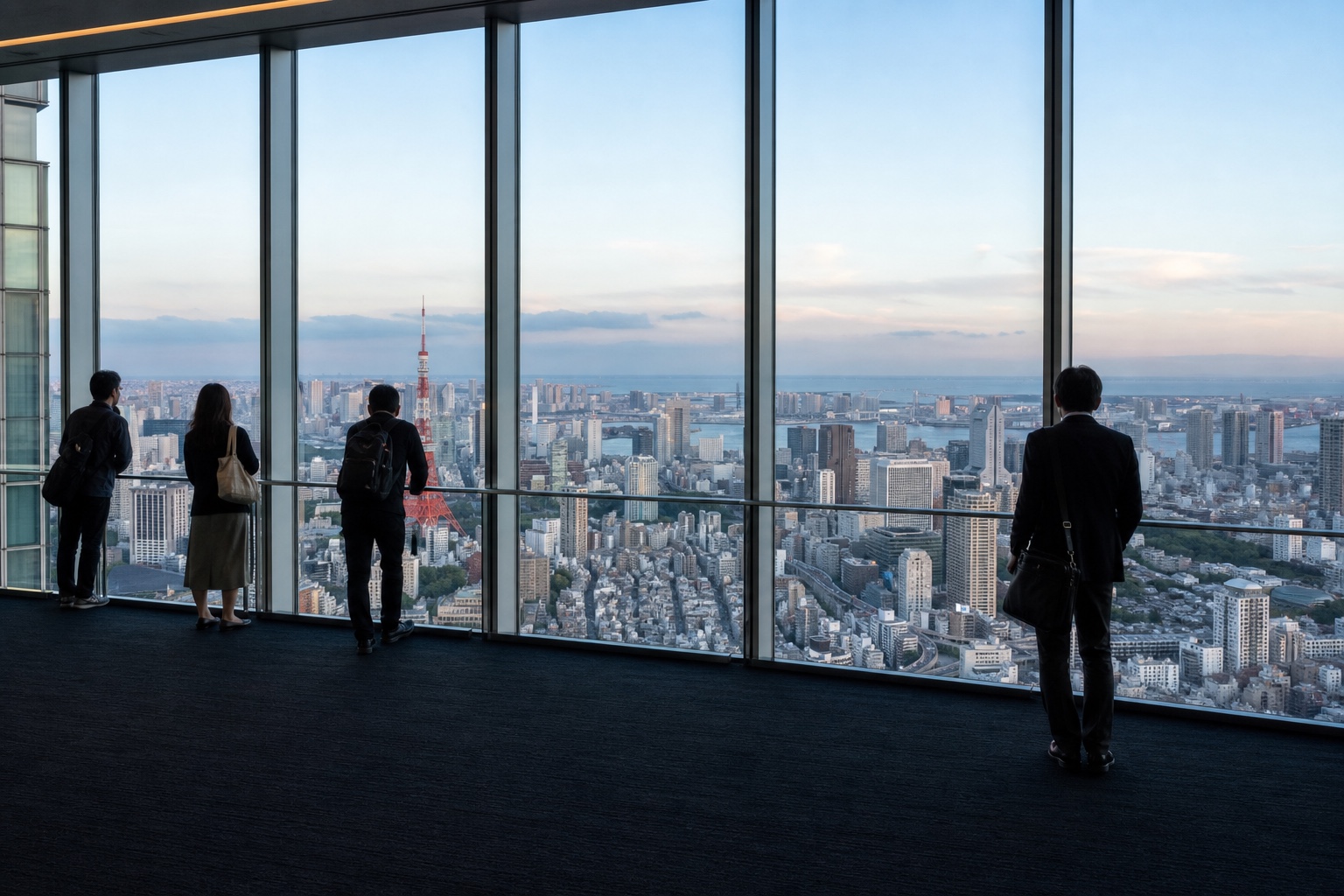 01
01Roppongi Hills
Museums and viewsRoppongi Hills combines an observation deck, Mori Art Museum, cinema, shops, and restaurants.
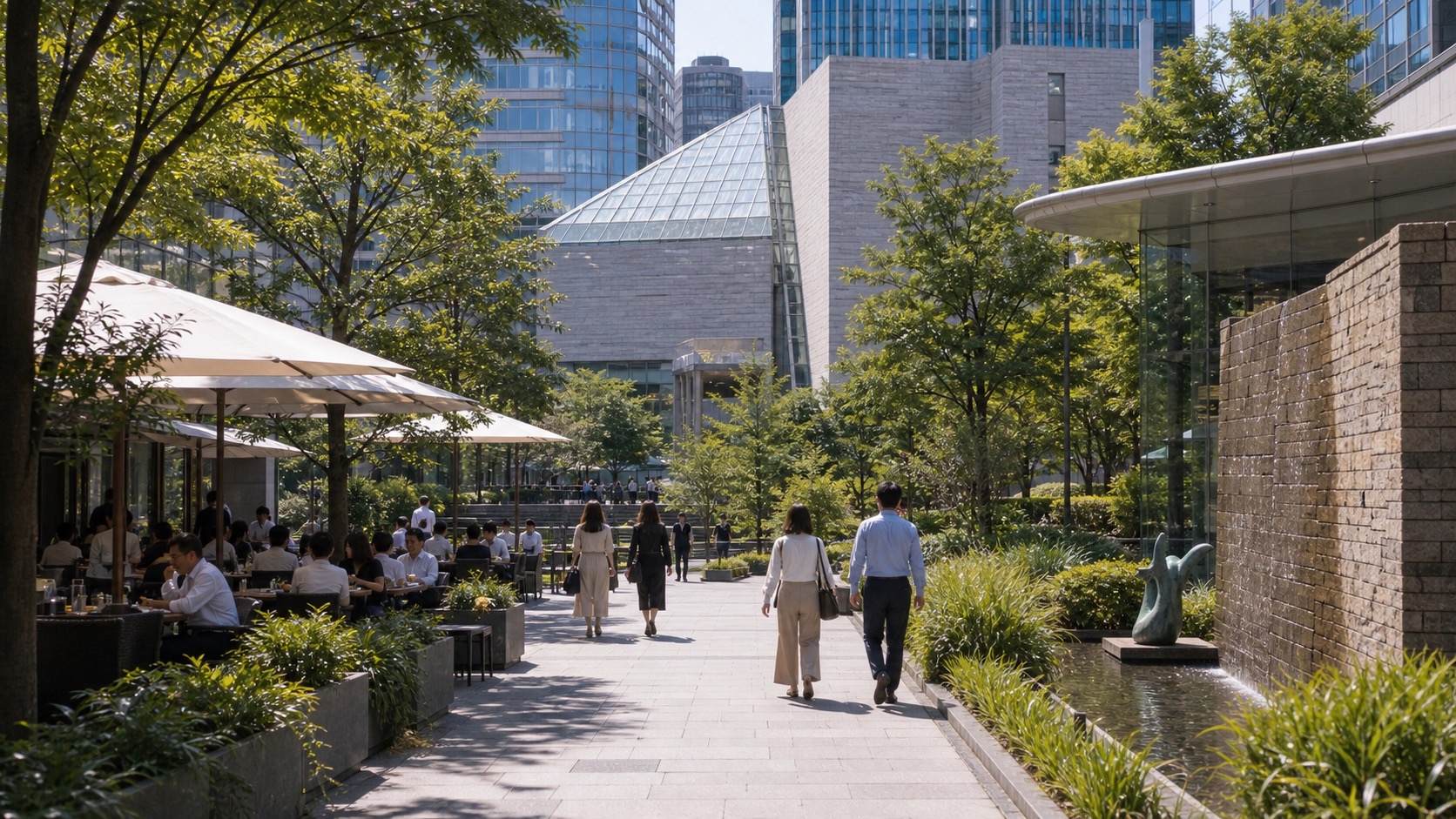 02
02Tokyo Midtown
Park and designTokyo Midtown offers a quieter luxury complex, a park, lunch, and access to the Suntory Museum of Art.
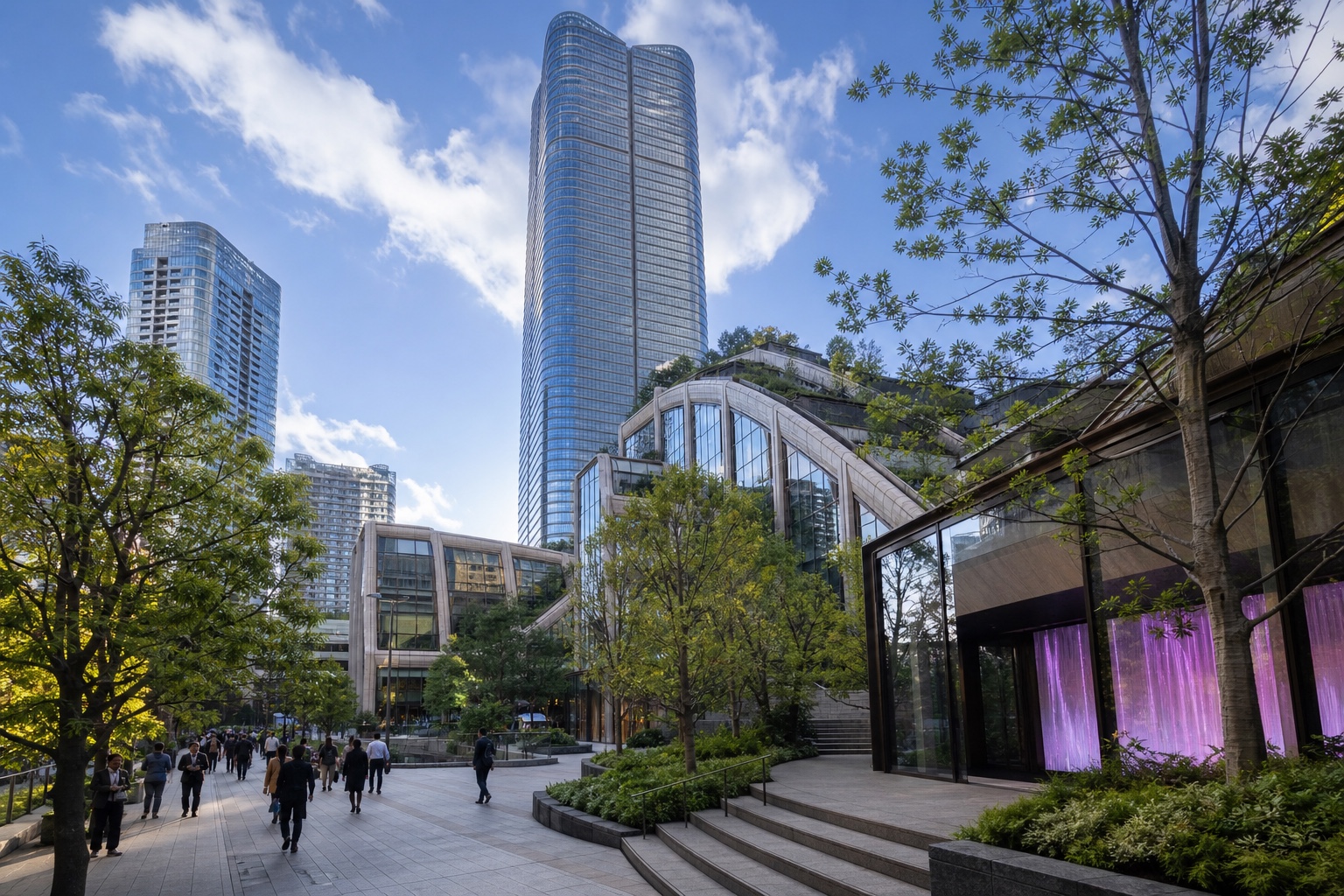 03
03Azabudai Hills
New landmarkAzabudai Hills is the newer landmark and home to teamLab Borderless.
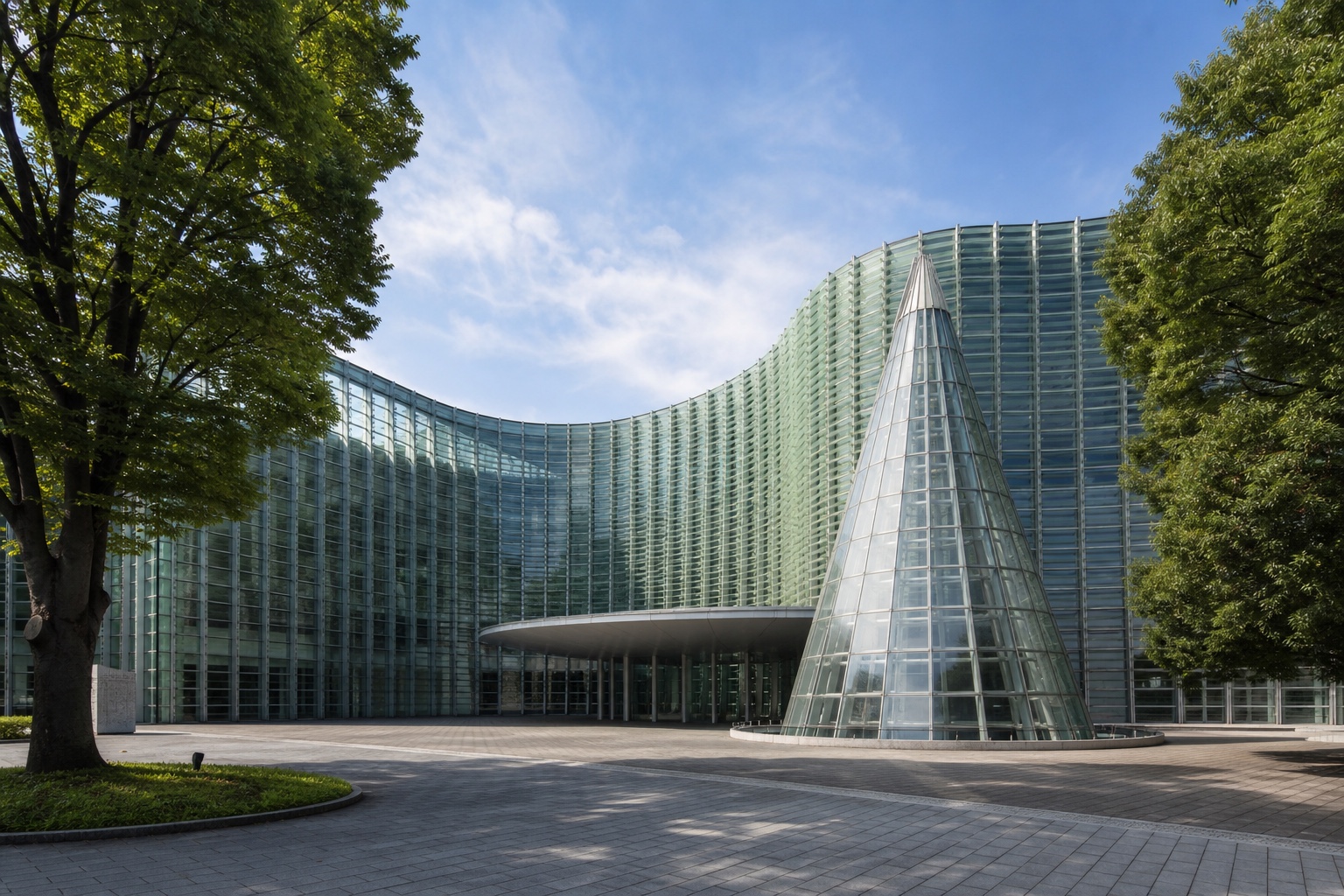 04
04The National Art Center Tokyo
Art museumA major art-museum stop within the same walkable museum area as Roppongi Hills and Tokyo Midtown.
Why stay in Roppongi, Akasaka & Azabu?
This cluster works when the hotel is part of the itinerary, not just a place to sleep. Roppongi puts the Art Triangle, Roppongi Hills, Tokyo Midtown, and late-night international dining within one neighborhood. Akasaka gives you a quieter business base with the Ginza and Marunouchi Lines at Akasaka-mitsuke. Azabu-juban adds a residential shopping street, embassies, and a walk toward Tokyo Tower.
The trade-off is that the area is not a flat, JR-connected, budget-first base. Metro stations can be deep, the streets rise and fall, and Roppongi Crossing becomes noisy after dark. Choose this cluster for museums, polished complexes, English-friendly dining, and late nights. Compare Shibuya Hotel Base Guide for younger street energy or Shinjuku Hotel Base Guide for JR-heavy travel.
Who is Roppongi for?
Perfect for:
This area works best for these types of travelers:
- Night Owls: If you plan to stay out until 4 AM, stay here. Taxis are everywhere, but walking home is better.
- English Speakers: If you’re nervous about the language barrier, Roppongi is your safety net.
- Luxury Travelers: The Ritz-Carlton, Grand Hyatt, and nicer business hotels are all here.
- Art Lovers: The “Art Triangle” (Mori Art Museum, National Art Center, Suntory Museum) is walkable.
Watch out for:
- Hills everywhere: The name “Roppongi” (Six Trees) comes from the hilly terrain — not ideal for heavy luggage.
- Touts at night: Near Roppongi Crossing, you’ll encounter persistent club touts. Just ignore them completely.
- No JR lines: Only Metro and Toei lines serve this area — plan your routes accordingly.
- Taxi is your friend: Hills everywhere, narrow sidewalks, and Google Maps won’t show you the slopes. Dragging luggage is brutal. Taking taxis also puts Shibuya within easy reach (~10-15 min). Use the GO app.
Key areas
① Roppongi
- Roppongi Hills: Observation deck, Mori Art Museum, cinema, and shops and restaurants.
- Tokyo Midtown: A quieter luxury complex. Nice park behind it for coffee breaks.
- Azabudai Hills: The new landmark (2023). Home to teamLab Borderless.
- Pro Tip: Need supplies? Don Quijote Roppongi is iconic, chaotic, and has a giant fish tank. For groceries, check out Meidi-ya (Roppongi Hills) or Precce (Midtown) for high-end imports.
② Akasaka
- More business-oriented and quieter than Roppongi.
- Akasaka-mitsuke Station: Best transit hub — Ginza Line and Marunouchi Line cross here.
- Packed with restaurants and izakayas for office workers. Good for “real” Japanese dining.
- Better value hotels with solid train access.
③ Azabu-juban
- Quiet local shopping street — traditional senbei shops next to modern cafes.
- Home to many embassies—very international residential area.
- Walking distance to Tokyo Tower.
- Vibe: It feels like a wealthy European village dropped into Tokyo. Worth a walk.
Where to Eat in Roppongi
Roppongi’s dining scene splits into two worlds: the luxury restaurants inside the major complexes (Roppongi Hills, Midtown, Azabudai Hills) and the chaotic, international street-level scene around Roppongi Crossing. Both worth knowing.
Best Restaurants in Roppongi for Tourists
Check the inbound restaurant rankings and you’ll be surprised. The 2024 ranking (Honichi Lab, 1,169 restaurants, 1,911 foreign-language reviews) was topped by Burger Revolution Tokyo — a craft burger shop near Roppongi Crossing that serves massive, American-style wagyu burgers with creative toppings. It received 140+ foreign-language reviews in just four months. Why a burger shop in Tokyo? Because Roppongi’s foreign resident and tourist population craves familiar comfort food done at a Japanese quality level.
The 2025 ranking shifted to Nikujiru Suigyoza Gyoho at Roppongi Crossing — a gyoza specialist serving soup-filled dumplings (xiaolongbao-style) that burst with pork broth when you bite in. At around ¥1,000–1,500 for a set, it’s cheap, photogenic, and good. The open kitchen and casual vibe make it easy to walk into alone.
Other notable names: Yakiniku Kokokara (3rd in 2024) offers a wagyu yakiniku experience at mid-range prices — around ¥4,000–6,000 per person, much cheaper than the high-end yakiniku places in Nishi-Azabu. Osaka Yakiniku Futago (5th) is a loud, Osaka-style horumon (offal) yakiniku chain — rowdy, fun, and nothing like the polished Roppongi you’d expect.
For upscale dining, the big complexes are stacked. Roppongi Hills has a restaurant floor (Hill Side, 5F–6F) with everything from sushi to Italian. Tokyo Midtown leans more refined, with Teppanyaki Kisentei offering wagyu steak courses from ¥8,000 at lunch — a steal for the quality. Azabu-juban‘s shopping street has old-school senbei shops, modern cafes, and small neighborhood spots that feel nothing like the Roppongi nightlife district.
Late-Night Food in Roppongi
Roppongi might be the best late-night eating neighborhood in Tokyo. Because the clubs run until dawn, plenty of restaurants stay open until 3–5 AM, and unlike Shibuya’s rowdy scene, Roppongi offers options across the entire price spectrum.
The streets around Roppongi Crossing are packed with international restaurants — Korean BBQ, Thai, Indian, Italian, Mexican — many open until 3 AM or later. The quality varies, but you can eat almost any cuisine at 2 AM. Gonpachi Nishi-Azabu (the restaurant that inspired the fight scene in Kill Bill) serves yakitori and soba until late in a tall, multi-level wooden interior. It is touristy but the atmosphere is real.
Roppongi Hills restaurants generally close by 23:00, but the surrounding streets pick up from there. Aburiya Kinnosuke near Midtown serves solid grilled dishes and sake until midnight. For ramen, Afuri Roppongi offers a lighter, yuzu-flavored ramen that contrasts with the rich tonkotsu you find elsewhere — open until late.
The Akasaka side is worth knowing about for calmer late-night options. The izakaya-lined streets behind Akasaka-mitsuke Station serve office workers who drink late, and many stay open until midnight or 1 AM. More authentic, less touristy than the Roppongi Crossing scene.
One hidden trick: convenience store gourmet at 3–4 AM. Roppongi’s FamilyMart and Lawson stores stock legit good onigiri, sandwiches, and hot snacks. After a night out, a ¥500 conbini meal on a bench in Mohri Garden is a very Tokyo experience.
Family-Friendly Restaurants in Roppongi
Roppongi with kids? Actually works during the day, especially around Hills and Midtown.
Roppongi Hills has a dedicated kids’ dining guide. Hills Dal-Mat (Italian, West Walk) offers a kids’ pasta set for ¥1,320 with gelato. McDonald’s in the complex has a McCafe attached with sofa seating and baby chairs — basic, but very convenient with tired kids. The food floor on the basement level has bento and takeout options for a quick park lunch in Mohri Garden.
Tokyo Midtown’s restaurants tend to be more upscale, but Tsurutontan (udon) is family-friendly with big portions and a laid-back vibe. The thick, chewy udon noodles appeal to kids, and portions are huge — one bowl is often enough for a parent and small child to share.
Grand Hyatt Tokyo (inside Roppongi Hills) offers family-friendly dining at its restaurants, including kids’ menus and private rooms that can be reserved for families. The breakfast buffet at The French Kitchen is a big hit with families — huge spread, high chairs, and a Sunday brunch worth the splurge.
On a budget? Take the Namboku Line one stop to Azabu-juban — a local shopping street with casual restaurants, bakeries, and the famous Naniwaya Souhonten taiyaki (fish-shaped waffle) — cheap, and kids go nuts for them. The walk to Tokyo Tower from here is also a solid family walk.
Chain Stores & Convenience Reference
| Brand | Store Name | Category | Access | Notes |
|---|---|---|---|---|
| Don Quijote | Roppongi | Discount | Roppongi Stn 3 min | 24 hours. Tax-free. Famous giant fish tank. |
| FamilyMart | Roppongi Crossing | Convenience | Roppongi Stn 1 min | 24 hours. Great for late-night snacks. |
| Lawson | Roppongi 7-chome | Convenience | Roppongi Stn 2 min | 24 hours. ATM available. |
| 7-Eleven | Roppongi Hills | Convenience | Inside Roppongi Hills | ATM (international cards accepted). |
| Matsumoto Kiyoshi | Roppongi Ekimae | Drugstore | Roppongi Stn 2 min | Tax-free. Cosmetics & daily goods. |
| Meidi-ya | Roppongi Hills | Premium Grocery | Inside Roppongi Hills | Lots of imported foods. |
| Precce | Tokyo Midtown | Premium Grocery | Inside Midtown | Good deli & prepared foods. |
| McDonald’s | Roppongi Hills | Fast Food | Inside Roppongi Hills | McCafe attached. Sofa seating & baby chairs. |
| Starbucks | Roppongi Hills | Cafe | Inside Roppongi Hills | Terrace seating available. |
Best Hotels in Roppongi & Akasaka
- ★★★★★Not ratedOur pick
Grand Hyatt Tokyo
HotelDirectly connected to Roppongi Hills. You never have to go outside if it rains. Total convenience—shopping, dining, art museum, and observation deck all in your building. Service is spot-on.
Pros:Direct connection to Roppongi Hills Shopping, dining, and museums stay close Useful when you want a full-service base
Price: Check current ratesTrade-off: Starts at a luxury price level The complex-first location feels less local
📍 Location details on the hotel page🗺️ Grand Hyatt Tokyo - ★★★★★Not rated
The Ritz-Carlton, Tokyo
HotelIn Midtown. The lobby starts on the 45th floor, so the views are insane. Great rooms, outstanding service. The club lounge is worth the upgrade alone.
Pros:Tokyo Midtown location High-floor views and strong service Club lounge upgrade is a clear splurge option
Price: Check current ratesTrade-off: The highest price point in this set A poor fit for a value-focused itinerary
📍 Location details on the hotel page🗺️ The Ritz-Carlton, Tokyo - ★★★★★Not rated
Candeo Hotels Tokyo Roppongi
HotelRooftop open-air “Sky Spa” with Tokyo Tower views. Sitting in a hot bath looking at the city lights is a mood. Books out fast.
Pros:Rooftop open-air Sky Spa Tokyo Tower views from the bath Five-minute station access
Price: Check current ratesTrade-off: Popular dates book out quickly Rates sit above the value tier
📍 Location details on the hotel page🗺️ Candeo Hotels Tokyo Roppongi - ★★★★★Not rated
remm Roppongi
HotelRight at the station exit. Rooms are compact but well-designed with massage chairs and quality bedding. Built for sleeping.
Pros:One-minute station access Massage chairs and quality bedding Designed for travelers out all day
Price: Check current ratesTrade-off: Rooms are compact Less suitable when you need generous family space
📍 Location details on the hotel page🗺️ remm Roppongi - ★★★★★Not rated
the b akasaka
HotelModern design hotel at budget-friendly prices. Clean, compact rooms. Works if you’re out all day.
Pros:Budget-friendly modern design Clean, compact rooms Useful when you spend most days outside
Price: Check current ratesTrade-off: Compact rooms limit in-room downtime Less suited to travelers seeking resort-style facilities
📍 Location details on the hotel page🗺️ the b akasaka
Luxury (¥50,000+/night)
Upscale Design (¥20,000–50,000/night)
Business / Value (¥10,000–20,000/night)
Access
Key stations
- Roppongi Station: Hibiya Line, Toei Oedo Line
- Akasaka Station: Chiyoda Line
- Akasaka-mitsuke Station: Ginza Line, Marunouchi Line (best transit hub)
- Azabu-juban Station: Namboku Line, Toei Oedo Line
Travel times from Roppongi
| Destination | Route | Transfers | Time | Fare |
|---|---|---|---|---|
| Ginza | Hibiya Line (direct) | 0 | 10 min | ~¥180 |
| Shinjuku | Oedo Line (direct) | 0 | 9 min | ~¥220 |
| Shibuya | Oedo Line → Ginza Line (Aoyama-itchome) | 1 | 15 min | ~¥220 |
| Tokyo Station | Hibiya Line → Marunouchi Line | 1 | 18–21 min | ~¥210 |
| Akihabara | Hibiya Line (direct) | 0 | 24 min | ~¥180 |
| Ueno | Hibiya Line (direct) | 0 | 20 min | ~¥210 |
| Asakusa | Oedo Line → Asakusa Line (Daimon) | 1 | 25 min | ~¥260 |
| Ikebukuro | Oedo Line → Marunouchi Line (Shinjuku) | 1 | 25 min | ~¥280 |
| Haneda Airport | Hibiya Line → Hamamatsucho → Monorail | 1 | 37–43 min | ~¥850 |
| Narita Airport | Hibiya Line → Ueno → Skyliner | 2 | ~76 min | ~¥2,800 |
Tip: Akasaka-mitsuke is the area’s secret weapon for transit. If you stay near here, you
have the Ginza Line and Marunouchi Line—the two most useful lines in Tokyo.
How to Get to Roppongi from Narita and Haneda
Roppongi has no JR station, which makes airport access slightly less straightforward than areas like Shinjuku or Ginza. The best options depend on your budget and luggage situation.
| Airport | Route | Time | Cost | Notes |
|---|---|---|---|---|
| Haneda | Limousine Bus → Grand Hyatt / Roppongi Hills | ~35–50 min | ¥1,300 | Best for luxury hotels. Direct to Roppongi Hills. No stairs, no transfers. |
| Haneda | Monorail → Hamamatsucho → Oedo Line → Roppongi | ~45 min | ~¥850 | Cheapest train route. Oedo Line platforms are very deep underground. |
| Haneda | Taxi (direct) | ~30–40 min | ¥5,000–7,000 | Most comfortable. Use the GO app. Worth it for groups of 2–3. |
| Narita | Limousine Bus → Roppongi area hotels | ~85–110 min | ¥3,200 | Best option. Direct to major hotels. Traffic dependent. |
| Narita | Narita Express to Tokyo → Marunouchi Line to Ginza → Hibiya Line to Roppongi | Check dated timetable | Check current fare | Confirm for your exact route |
| Narita | Skyliner → Ueno → Hibiya Line → Roppongi | ~80 min | ~¥2,800 | Good option if connecting via Hibiya Line (direct from Ueno to Roppongi). |
For Roppongi, taxi or Limousine Bus beats trains almost every time. The area’s metro stations (Hibiya Line, Oedo Line) are very deep underground with long escalators — brutal with suitcases. If you’re staying at Grand Hyatt or Ritz-Carlton, the Limousine Bus stops right at your door.
Shinkansen (Bullet Train) Access from Roppongi
Roppongi doesn’t have direct shinkansen access, but Tokyo Station is reachable in about 20 minutes via the Hibiya Line + Marunouchi Line transfer.
| Shinkansen Line | Station | From Roppongi | Key Destinations |
|---|---|---|---|
| Tokaido Shinkansen | Tokyo / Shinagawa | ~20–25 min | Kyoto (2h15m), Osaka (2h30m), Nagoya (1h40m) |
| Tohoku / Hokkaido Shinkansen | Tokyo | ~20 min | Sendai (1h30m), Morioka (2h10m), Shin-Hakodate (4h) |
| Hokuriku Shinkansen | Tokyo | ~20 min | Kanazawa (2h30m), Nagano (1h20m) |
| Joetsu Shinkansen | Tokyo | ~20 min | Niigata (2h), Echigo-Yuzawa (1h10m) |
From Akasaka-mitsuke, take the Marunouchi Line direct to Tokyo Station (10 min, no transfer). If you’re staying in Akasaka, shinkansen access is way easier than from Roppongi proper.
How to Get Around Roppongi
Taxi is king here. The hills, deep metro stations, and narrow sidewalks make walking with luggage miserable. Download the GO app — taxis to Shibuya are only ~¥1,500 and 10 minutes.
For trains, the Hibiya Line is more useful than the Oedo Line — it connects directly to Ginza, Ueno, and Akihabara. The Oedo Line reaches Shinjuku and Tsukiji, but the platforms are absurdly deep. If you need the Ginza Line or Marunouchi Line, head to Akasaka-mitsuke — it’s the area’s best-connected station and worth the short walk or taxi.
Allow extra time for slopes, lifts, crossings and your walking pace. Compare the route from your hotel entrance with the appropriate station exit and the hotel’s instructions; this guide does not establish a percentage adjustment for map estimates.
Do not choose by station name alone: Tokyo Metro’s guide lists an elevator route in the Roppongi Hills commercial complex 1C area, while Exit 4a is an escalator route and operating hours can be limited. Akasaka Exit 3a and Azabu-juban Exit 1 are also documented elevator-side starting points. For a suitcase, compare the Roppongi accessibility guide and English station map with the hotel’s exact location.
Things to do around Roppongi, Akasaka & Azabu
Build the day around the area’s three different rhythms: museums and views in Roppongi, a more refined lunch around Tokyo Midtown, and a slower walk through Azabu-juban before dinner. The route works for first-time visitors because it keeps the main choices close together instead of sending you across Tokyo.
Morning: art and views
At Roppongi Hills, check the calendar before choosing Mori Art Museum or Tokyo City View. They have separate admission arrangements. The official visitor information lists Mori Art Museum as closed from September 24 through October 30, 2026, with its next exhibition scheduled to open October 31. Tokyo City View has its own hours and closure dates, so check the specific attraction before making it your morning stop.
Midday: Midtown and the Art Triangle
Walk to Tokyo Midtown for lunch, Hinokicho Park, and the Suntory Museum of Art. The National Art Center Tokyo is also within the same walkable museum area.
Evening: Azabu, then dinner
Use Azabu-juban for senbei shops, cafes, and taiyaki before returning to Roppongi for international dining. Trains stop around midnight, so late plans need a taxi or a hotel within walking distance.
Landmarks and quick directions
Use the area map links already attached to the six shortlisted hotels when you want a precise destination. For a simple walking plan, treat Roppongi Hills, Tokyo Midtown, and Azabudai Hills as one connected cluster, then move toward Akasaka or Azabu-juban when you want a different pace.
Local landmarks
Roppongi Hills for museums and views; Tokyo Midtown for a calmer complex and park; Azabudai Hills for the newer landmark and teamLab Borderless.
Quick routes
Review the three area personalities, then use the station table for train planning. For luggage, choose the taxi or limousine-bus option described in airport access.
Is Roppongi, Akasaka or Azabu right for your stay?
Choose Roppongi when art museums, international restaurants, luxury complexes, and late nights matter more than flat streets or JR access. Choose Akasaka when you want quieter evenings, better-value business hotels, and the Ginza and Marunouchi Lines at Akasaka-mitsuke. Choose Azabu-juban for a residential walk, local shops, and a route toward Tokyo Tower rather than a large hotel concentration.
The honest cost is terrain, deep stations, and a nightlife district where street touts require firm boundaries. If those trade-offs fit your itinerary, this is a comfortable, international Tokyo base. If you want old-Tokyo atmosphere, compare Asakusa Hotel Base Guide; if you want department stores and polished shopping, compare Ginza Hotel Base Guide.
FAQ
Is Roppongi safe at night?
For most visitors, yes: Roppongi is generally safe at night, including the busy streets around Roppongi Crossing. The practical problem is street touts, who may approach visitors aggressively and steer them toward bars with unclear prices. Keep walking, do not follow a tout, and choose a venue yourself; the main entertainment streets stay active late, but normal city awareness still matters on quieter side streets and after the trains stop.
Is it good for families?
Yes, mainly during the daytime. Mohri Garden, Midtown Park, the National Art Center Tokyo, and the museums around Roppongi Hills give families concrete places to visit, and short taxi rides can reduce the strain of the area’s hills and deep stations. Roppongi is less comfortable around the main crossing on Friday nights, and strollers or tired children may find the slopes and crowded nightlife streets difficult; Akasaka or Azabu-juban is often the calmer base.
Akasaka or Roppongi—which is better?
For many travelers, stay in Akasaka and play in Roppongi. Akasaka is quieter and often better suited to a hotel base, with Akasaka-mitsuke providing useful Ginza and Marunouchi Line connections; Roppongi is the better choice when museums, international dining, or late-night venues are the main reason for the trip. The two areas are close enough for about a 10-minute walk or roughly a ¥1,000 taxi ride, so choose Roppongi for immediate nightlife access and Akasaka for a calmer return at night.
Explore more Tokyo neighborhoods
Compare nearby bases before booking to match your route and budget.


Some links below are affiliate links. If you book through them we may earn a small commission at no extra cost to you.