Where to Stay in Shimbashi & Shiodome Tokyo: Best Hotels for Ginza, Food & Transit
The salaryman drinking capital meets luxury high-rise hotels. Rail links to Tokyo Station and Haneda; check the full journey for your train and terminal.
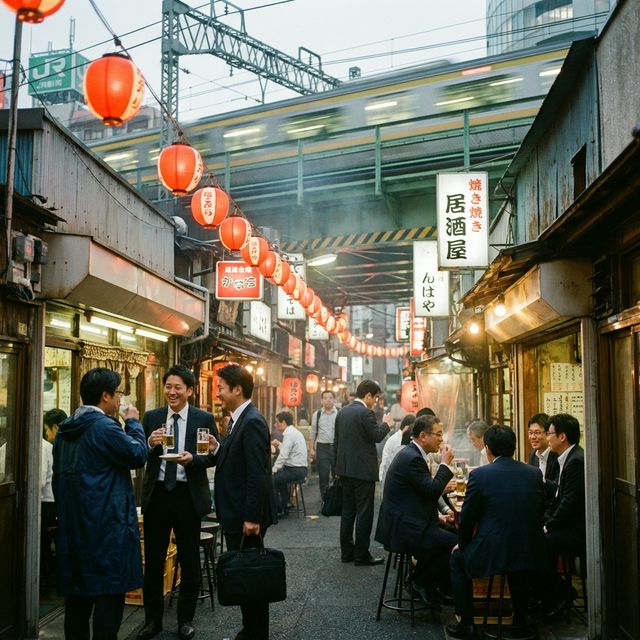
Shimbashi is an office district with restaurants and bars near the station. Compare current menus and prices at the specific establishments that fit your route and budget.
Quick links
Overview
Shimbashi–Shiodome is a practical base for travelers who want strong rail connections, an easy walk to Ginza, Haneda access via nearby Hamamatsucho, and a choice between old-school dining and modern high-rise hotels.
Shimbashi feels like a working Tokyo neighborhood built around izakaya, office workers, and rail lines. Shiodome feels more planned and vertical, with hotel towers, restaurants, Hamarikyu Gardens, and views from the upper floors. The trade-off is that some streets become quieter after office hours, and the area is less of a self-contained sightseeing district than Asakusa or Shinjuku.
Must-see Shimbashi & Shiodome landmarks and attractions
Shimbashi & Shiodome’s core attractions form a compact route. Use this visual shortlist to choose what to see first and where a hotel should sit.
 01
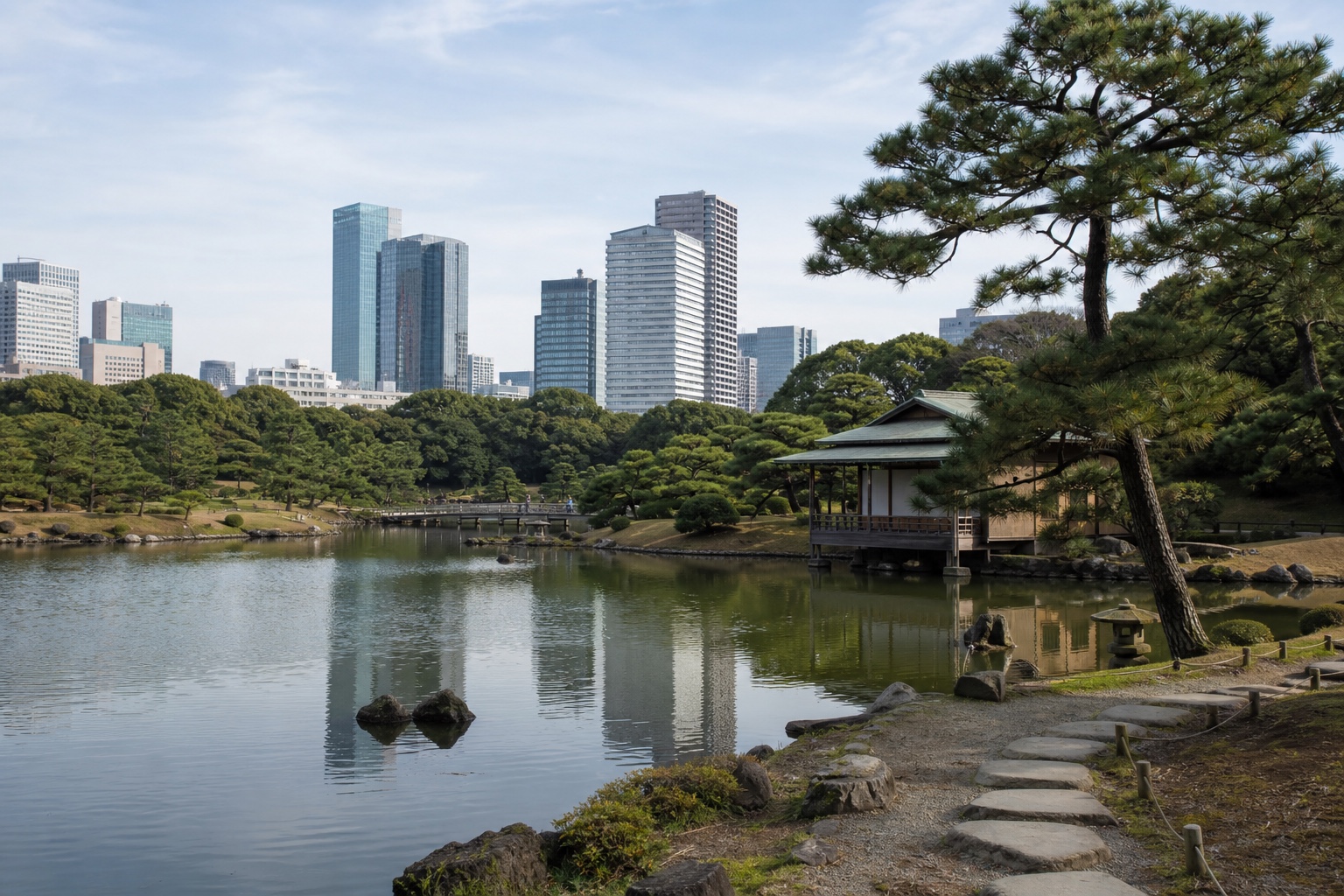
01Hama-rikyu Gardens
Waterfront gardenA waterfront garden near Shiodome, with a tidal pond and Nakajima teahouse for matcha and Japanese sweets.
 02
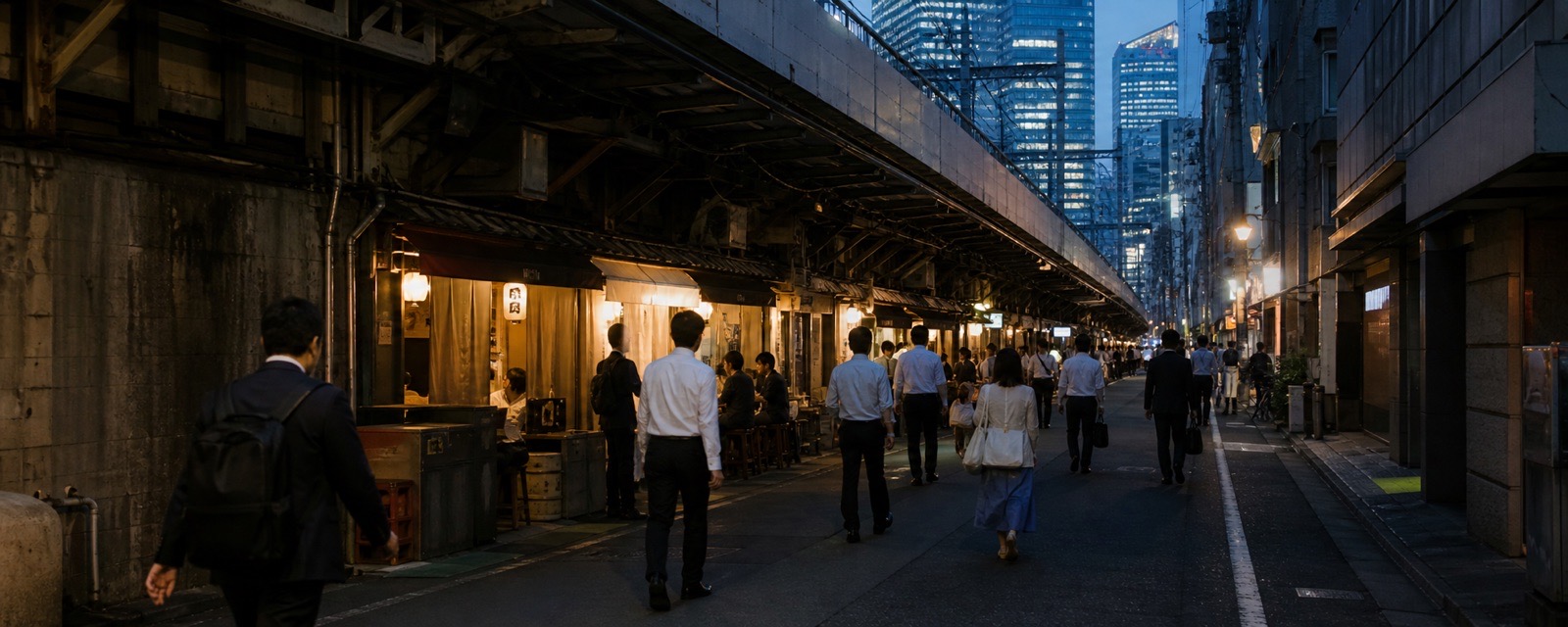
02Shimbashi SL Square
Railway landmarkA Shimbashi gateway marked by a steam locomotive monument, with Ginza and Karasumori Exit routes nearby.
 03
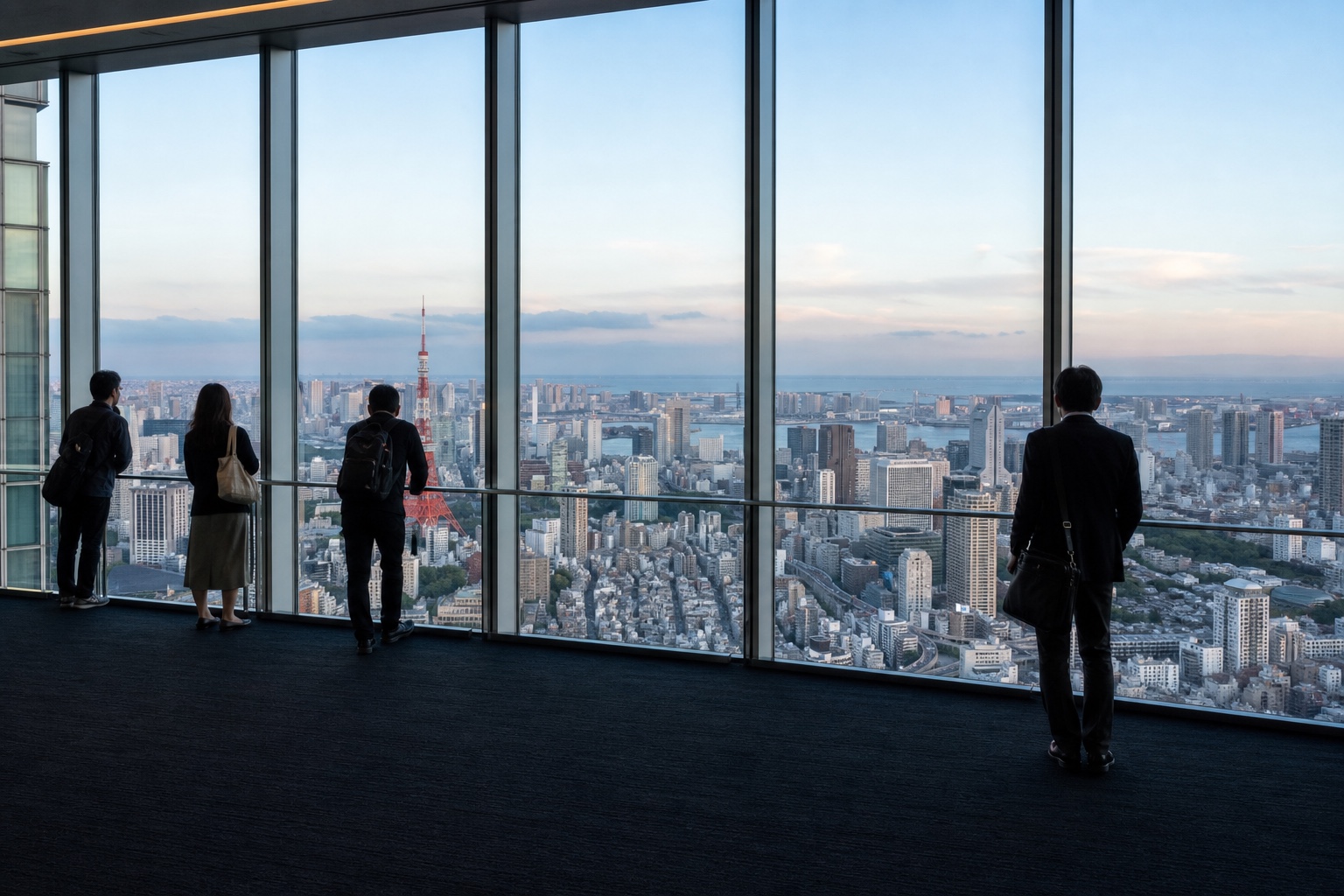
03Caretta Shiodome Observation Floor
City viewsA high-rise observation stop with panoramic Tokyo Tower and Hama-rikyu views.
 04
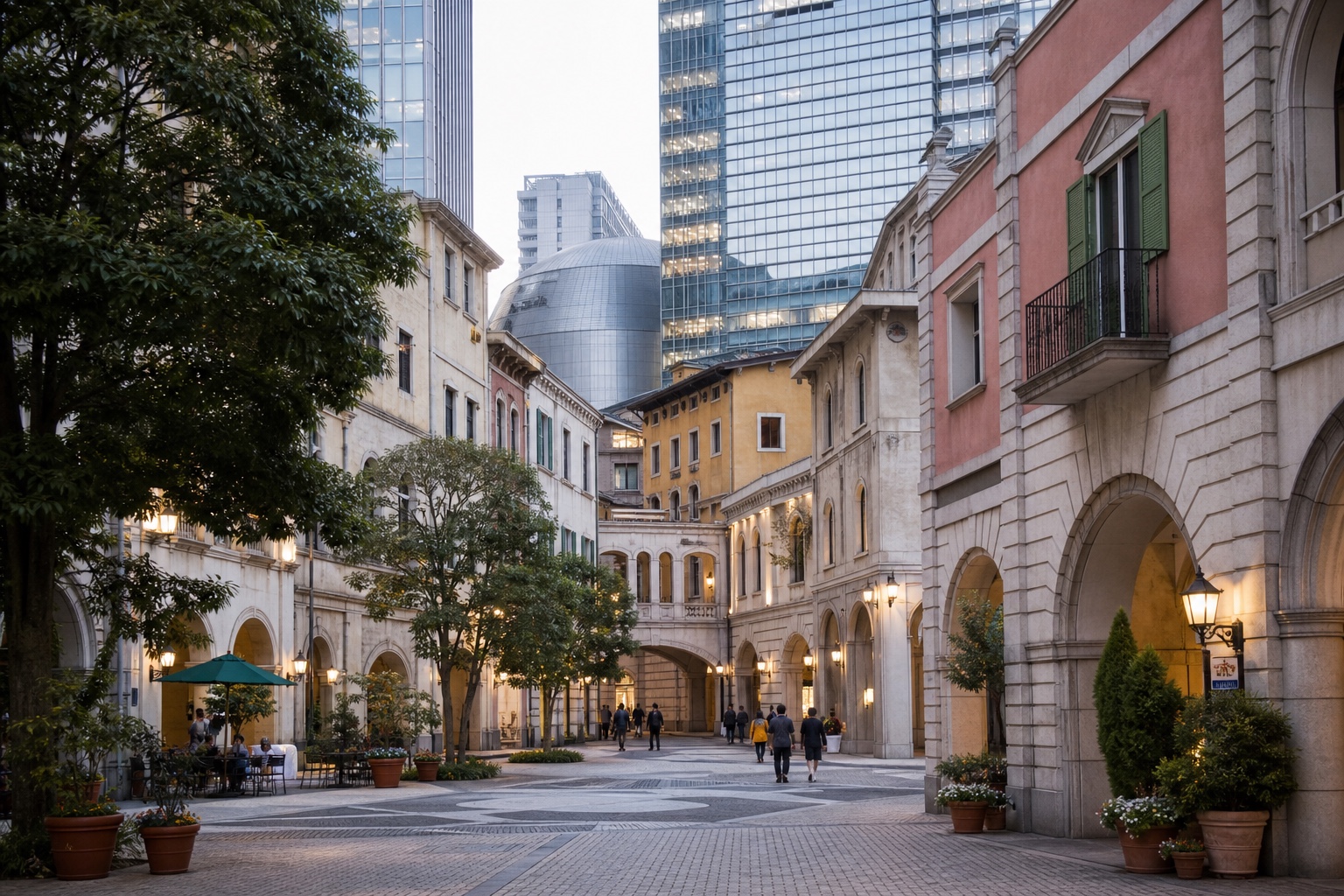
04Shiodome Italia-gai
European-style streetsA European-style pocket with cobblestone plazas, Italian restaurants, cafés, and photo-friendly architecture.
Who is this area for?
✅ Highly Recommended for:
- Salaryman Culture Seekers: The most authentic after-work drinking scene in Tokyo. Under-the-tracks izakayas are the real deal.
- Haneda Flyers: Some Toei Asakusa Line/Keikyu services run through to Haneda. Check the train destination, terminal, timetable, station walk and current fare.
- Budget-Conscious Foodies: Compare current menus and total prices at the specific Shimbashi and Ginza restaurants you would use.
- Couples who want contrast: A carefully chosen hotel room followed by a casual yakitori dinner can offer a contrast in Shimbashi; compare the booked room and actual menu before relying on a price example.
❌ NOT Recommended for:
- Instagram Sightseeing Travelers: No temples, no kawaii streets. This is a business district.
- Families with Young Kids (nighttime): The under-the-tracks scene is lively but not child-friendly after dark.
- Shopping-Focused Travelers: Leave shopping to Ginza (10 min walk).
What Kind of Place is Shimbashi & Shiodome?
Compared to other major tourist areas in Tokyo, here’s where Shimbashi stands:
- Ginza and Shimbashi offer different dining areas. Compare menus and prices at the establishments you would use.
- If Roppongi is “nightlife for foreigners,” Shimbashi’s under-the-tracks bars are “nightlife for Japanese salarymen.” These aren’t staged for tourists — this is the real drinking culture.
- If Shinagawa is “the shinkansen gateway,” Shimbashi has a Toei Asakusa Line connection toward Haneda. Some departures run through on Keikyu; check your terminal, full journey time and current fare.
Shiodome sits just east of Shimbashi — an office-and-hotel district of glass towers housing Nippon TV headquarters and Conrad Tokyo. It’s the polar opposite of Shimbashi’s noisy energy: orderly elevated walkways and quiet promenades. Hama-rikyu Gardens is right next door, and the view across the gardens toward Tokyo Bay and Rainbow Bridge is genuinely worth seeing.
Key Areas
🚂 Shimbashi Station & SL Square
The gateway to the neighborhood. A steam locomotive (SL) monument marks the square — you’ve probably seen this spot on Japanese TV street interviews. Head toward Karasumori Exit for the izakaya alley, or take the Ginza Exit to walk to Ginza. The underground “Wing Shimbashi” mall has practical shops: Uniqlo, drugstores, 100-yen shops.
🏮 Under the Tracks & Karasumori Exit
This is the soul of Shimbashi. Beneath the JR railway viaduct and around Karasumori Exit, dozens of tiny izakayas, yakitori joints, and standing bars pack into a dense maze of red lanterns and narrow alleys. This is the original landscape of Japan’s salaryman drinking culture — not a tourist recreation, but the actual thing. English menus are rare, but pointing and smiling works perfectly. Friday nights are electric.
🏢 Shiodome Sio-Site
A 2003 redevelopment zone of high-rise towers. This is where foreign travelers actually stay — Conrad Tokyo, Park Hotel Tokyo, and Royal Park Hotel Iconic are all concentrated here. The 46th–47th floors of Caretta Shiodome have observation restaurants with panoramic Tokyo Tower and Hama-rikyu views. Connected to Shimbashi Station via underground passages — no rain, no hassle.
🇮🇹 Shiodome Italia-gai (Italian Town)
A pocket of European-style architecture on the south side of Shiodome. Cobblestone plazas surrounded by Italian restaurants and cafes, plus Mitsui Garden Hotel Shiodome Italia-gai. Quiet on weekends — a hidden gem for a relaxed stroll. Great for photos.
🍷 Corridor Street (Shimbashi–Ginza Border)
A dining strip running between Shimbashi Station and Ginza. Upscale wine bars, Spanish tapas, and creative Japanese cuisine line both sides. If the under-the-tracks izakayas are “cheap and delicious,” Corridor Street is “stylish and delicious.” The classic Shimbashi move: start with a cheap drink under the tracks, then finish at a Corridor Street bar. Budget ¥3,000–5,000.
Day vs. Night
☀️ Daytime in Shimbashi & Shiodome
- Hama-rikyu Gardens (5 min walk from Shiodome) — A waterfront oasis in the middle of the city. The Nakajima teahouse sits on a pond where you can enjoy matcha and Japanese sweets (¥800). Entry: ¥300 adults, free for children under 12.
- Caretta Shiodome Observation Floor (46th–47th FL) — Free observation space. On clear days, you can see Mt. Fuji.
- Shiodome Sio-Site Skywalks — Elevated decks connect the buildings. A decent rainy-day walking route.
- New Shimbashi Building — A retro building frozen in the Showa era. Discount ticket shops sell cheap shinkansen tickets. The basement has a deep, eclectic food alley. A hidden gem for experiencing Japanese subculture.
🌙 Nighttime in Shimbashi
- Under-the-Tracks Bar Hopping — The classic Shimbashi course: yakitori → motsu-ni (stewed offal) → finishing ramen. About ¥1,500–2,500 per place, ¥6,000 total for three stops.
- Conrad Tokyo “TwentyEight” Bar (28F) — Cocktails from ¥2,500–3,500 with night views over Hama-rikyu Gardens. Open until midnight.
- Caretta Shiodome Restaurant Floor — Night-view dining with Japanese, Western, and Chinese options.
- Corridor Street Bar Crawl — Wine in hand, drifting toward Ginza. The grown-up way to end the night.
Pro Tip: Daytime = Shiodome side (gardens, observation decks, lunch). Nighttime = Shimbashi side (izakayas, bars). This “daytime Shiodome, nighttime Shimbashi” split is the correct way to enjoy this area.
Where to Eat & Drink
Shimbashi has restaurants and bars near the station, while Shiodome has dining options in high-rise buildings. Check the specific establishment’s current menu, prices and access before choosing a meal.
🔥 Popular with Foreign Visitors
When choosing a restaurant near Shimbashi, compare the specific establishment’s current menu, prices and opening hours.
Under the Tracks (SL Square → Karasumori Exit) — This is Shimbashi. The izakayas packed beneath the JR viaduct are the original landscape of salaryman drinking culture. Red lanterns strung in rows, men in suits eating yakitori with a beer in hand — this is a scene you can only find here in Tokyo. English menus are virtually nonexistent, but pointing and smiling gets you everything. Yakitori ¥100–200 per skewer, draft beer ¥400–500. Because these aren’t tourist-oriented establishments, the experience feels genuinely authentic.
Karasumori Hyakuyaku — A “yokocho” (alley-style food court) in the Karasumori area. Multiple small vendors under one roof where you order from whichever stall you like. Great for solo travelers and for sampling multiple dishes in one sitting. English support varies but some stalls have tablet ordering. ¥2,000–3,000 per person.
Shiodome City Center Restaurants — The Shiodome tower complex houses international options: Singapore Hainanese Chicken Rice, Vietnam Frog (Vietnamese), Tenkuu Yakiniku Hoshiyuzan (rooftop yakiniku). Lunch sets ¥1,000–1,500 aimed at office workers. English menus available.
Corridor Street (10 min walk) — The dining strip between Shimbashi and Ginza. Stylish wine bars, standing Spanish bars, and creative Japanese restaurants. The polar opposite of the under-the-tracks scene, yet both are within walking distance — that’s the magic of this area. Budget ¥3,000–5,000.
Heritage Picks:
- Torishige — A legendary yakitori shop since 1963. Binchotan charcoal-grilled skewers in a completely different league from chain shops. The liver and tsukune are exceptional. Course ¥4,000–6,000.
- Musashiya — A beloved yoshoku (Japanese-Western) diner. Giant omurice and Napolitan spaghetti in a retro Showa-era interior. Lunch ¥800–1,200. There’s often a queue but turnover is fast.
🌙 Late-Night Food (After 10 PM)
Shimbashi is one of Tokyo’s best late-night eating zones. Because it’s a salaryman town, many places stay open well past the last train. The variety here is unmatched.
Sukiya Shimbashi 3-chome — Open until 3 AM. It’s a beef bowl chain, but at 1 AM in Shimbashi it’s a lifesaver. ¥500 fills you up.
Yoshinoya Shimbashi Karasumori Exit — Open nearly 24 hours. The original beef bowl chain, founded in 1899. ¥500.
Under-the-tracks izakayas — Most stay open until 11 PM–midnight. On Friday nights, some push to 1 AM. The “one more place” culture keeps this neighborhood alive late.
Karasumori Zetsu-Meshi Shokudo — Open late. The concept is “meals on the verge of extinction” — nostalgic Showa-era comfort food: hamburg steak sets, ginger pork. ¥800–1,200.
Conrad Tokyo “TwentyEight” Bar — 28th floor, open until midnight. Cocktails ¥2,500–3,500. The price is steep, but the night view over Hama-rikyu Gardens is among the best in Tokyo. For a truly special late-night drink, this is the place.
Practical note: Shimbashi has aggressive touts (catch) at night, especially around Karasumori Exit. They’ll call out “cheap drinks” and “all-you-can-drink.” Ignore them all. Following one risks ending up at a rip-off bar. Always choose your own place.
👨👩👧👦 Family-Friendly Dining
Shimbashi is honestly not the most family-friendly neighborhood — it’s built for salarymen. But combine the Shiodome side with Ginza-direction options and you’ll find plenty.
Shiodome Sio-Site Restaurants — The tower restaurants are clean, spacious, and stroller-accessible. Singapore Hainanese Chicken Rice serves mild chicken rice that kids tend to enjoy. Lunch ¥1,000–1,500.
Caretta Shiodome Restaurant Floor (46th–47th FL) — The panoramic views get kids excited. Tokyo Tower and Hama-rikyu Gardens visible from the tables. Japanese, Western, and Chinese options. Lunch ¥1,500–3,000.
Hama-rikyu Gardens + Teahouse — 5 min from Shiodome. The Nakajima teahouse in the middle of the pond serves matcha and sweets (¥800) — a gentle introduction to Japanese culture for kids. Entry ¥300 adults, free for children under 12.
Komeda Coffee Shimbashi Karasumori-dori — A Nagoya-born cafe chain. Morning service (drink price only, comes with free toast + boiled egg) is perfect for breakfast. Wide sofa seating is comfortable for families with small children.
Price Guide: Under-the-tracks izakaya (per person): ¥2,000–3,000. Shiodome lunch: ¥1,000–1,500. Corridor Street dinner: ¥3,000–5,000. Hama-rikyu tea: ¥800.
☕ Cafes
Shimbashi is a business district, so there are plenty of cafes open early and easy to pop into. The Shiodome side adds hotel lounge-style options.
Komeda Coffee Shimbashi Karasumori-dori — Wide sofas, morning service (free toast + egg with any drink), 2–3 min from the station. A solid breakfast spot.
Tsubakiya Coffee Shimbashi Saryo — Taisho-era romantic interior. Siphon-brewed coffee from ¥900. Expensive but the quiet, refined atmosphere is worth it for a mid-sightseeing break.
Park Hotel Tokyo Art Lounge (25F) — The lobby-floor cafe is open to non-guests. Coffee from ¥1,000 with a direct view of Tokyo Tower. A Shiodome-only experience.
Tully’s Coffee Shiodome City Center — Power outlets + Wi-Fi. Useful for looking things up during your trip. Quiet because it’s inside a high-rise. From ¥400.
Doutor Coffee Shimbashi Ekimae — Opens at 7 AM. Morning set ¥450 (coffee + sandwich). The go-to for a quick, cheap early breakfast.
Shopping & Practical Stores
Shimbashi is not a shopping destination. Leave the serious shopping to Ginza, which is a 10-minute walk away. But for practical needs, the station area has everything covered.
Wing Shimbashi (Station-connected Underground Mall) — Uniqlo, drugstores, 100-yen shops. Aimed at commuters but practical for travelers. Uniqlo’s published hours: weekdays 08:00–21:00, weekends and public holidays 10:00–20:00. Other Wing Shimbashi shops have separate hours.
New Shimbashi Building — A Showa-era miscellaneous building. Discount ticket shops sell cheap shinkansen tickets. Used bookstores and a deep underground food alley make it worth a browse if you want a taste of old-school Japan.
Caretta Shiodome — Shiodome’s commercial complex. Mostly restaurants, but also has a Nippon TV goods shop and souvenir stores.
Matsumoto Kiyoshi Shimbashi Ekimae — Drugstore facing SL Square. Tax-free shopping available. Cosmetics, daily goods, and snacks all in one stop.
Shopping Tip: Buy “practical stuff” in Shimbashi, buy “gifts and luxury” in Ginza. Ginza is a 10-minute walk or 1 station / 2 minutes by train.
Hotels Near Shiodome Station and Shimbashi Station
Choose the station side first, then compare the named room, beds, bathroom and route to the hotel.
- Our pick
Conrad Tokyo
Check total price for your dates, all guests and the exact room.Conrad Tokyo works well for travelers who want luxury access while staying close to Shiodome Stn direct.
Pros:Location logic is clear for day-to-day movement Walking route is simple and predictable Works for mixed city + side-trip itineraries
Compare total stay price for your dates, room and all guests, including taxes and cancellation terms.Trade-off: Weekend prices rise faster than weekday averages Popular room categories can disappear early Breakfast windows may feel crowded at peak times
📍 Location Shiodome Stn direct Map Map🗺️ MapMap Park Hotel Tokyo
Check total price for your dates, all guests and the exact room.For this base, Park Hotel Tokyo is a practical art / design pick with direct movement through Shiodome Stn direct.
Pros:Good fit when station access matters more than scenery Transfer path stays manageable during busy hours Useful balance between cost, convenience, and sleep quality
Compare total stay price for your dates, room and all guests, including taxes and cancellation terms.Trade-off: Peak-season pricing volatility is high Late bookings usually leave weaker room options Lobby and elevator wait times can increase at rush hours
📍 Location Shiodome Stn direct Map Map🗺️ MapMapTHE BLOSSOM HIBIYA
Check total price for your dates, all guests and the exact room.THE BLOSSOM HIBIYA targets travelers prioritizing city / upscale trade-offs and manageable access via Shimbashi Stn 5 min.
Pros:Reliable base if your plan changes often Nearby station links reduce backtracking risk Convenient for early starts and late returns
Compare total stay price for your dates, room and all guests, including taxes and cancellation terms.Trade-off: Rate gaps between dates can be large Family or triple rooms often sell out first Noise levels around check-in/out can spike
📍 Location Shimbashi Stn 5 min Map Map🗺️ MapMapCandeo Hotels Tokyo Shimbashi
Check total price for your dates, all guests and the exact room.Candeo Hotels Tokyo Shimbashi works well for travelers who want business / public bath access while staying close to Shimbashi Stn 4 min.
Pros:Location logic is clear for day-to-day movement Walking route is simple and predictable Works for mixed city + side-trip itineraries
Compare total stay price for your dates, room and all guests, including taxes and cancellation terms.Trade-off: Weekend prices rise faster than weekday averages Popular room categories can disappear early Breakfast windows may feel crowded at peak times
📍 Location Shimbashi Stn 4 min Map Map🗺️ MapMapTokyu Stay Shimbashi
Check total price for your dates, all guests and the exact room.For this base, Tokyu Stay Shimbashi is a practical business / extended stay pick with direct movement through Shimbashi Stn 3 min.
Pros:Good fit when station access matters more than scenery Transfer path stays manageable during busy hours Useful balance between cost, convenience, and sleep quality
Compare total stay price for your dates, room and all guests, including taxes and cancellation terms.Trade-off: Peak-season pricing volatility is high Late bookings usually leave weaker room options Lobby and elevator wait times can increase at rush hours
📍 Location Shimbashi Stn 3 min Map Map🗺️ MapMapremm plus Ginza
Check total price for your dates, all guests and the exact room.remm plus Ginza targets travelers prioritizing business / sleep-focused trade-offs and manageable access via Shimbashi Stn direct.
Pros:Reliable base if your plan changes often Nearby station links reduce backtracking risk Convenient for early starts and late returns
Compare total stay price for your dates, room and all guests, including taxes and cancellation terms.Trade-off: Rate gaps between dates can be large Family or triple rooms often sell out first Noise levels around check-in/out can spike
📍 Ginza 8-chome · Shimbashi Stn 4 min Map Map🗺️ MapMap
Chain Stores & Convenience Reference
| Brand | Store Name | Category | Access | Notes |
|---|---|---|---|---|
| Uniqlo | Wing Shimbashi | Clothing | Shimbashi Stn 1 min (underground mall) | Weekdays 8:00–21:00, Weekends 10:00–20:00 |
| Matsumoto Kiyoshi | Shimbashi Ekimae | Drugstore | Shimbashi Stn 2 min | Facing SL Square. Tax-free available. |
| BOOKOFF | New Shimbashi Building | Used books / goods | Shimbashi Stn 1 min (connected) | Weekdays 10:00–19:30, Sat 10:00–16:30, Sun closed |
| Yoshinoya | Shimbashi Karasumori Exit | Beef bowl | Shimbashi Stn 2 min | Nearly 24 hours. Late-night savior. |
| Sukiya | Shimbashi 3-chome | Beef bowl | Shimbashi Stn 3 min | 4:00–3:00 AM. Late-night hours. |
| Matsuya | Shimbashi 3-chome | Beef bowl | Shimbashi Stn 2 min | Gyudon chain. |
| Komeda Coffee | Shimbashi Karasumori-dori | Cafe | Shimbashi Stn 2–3 min | Morning service included. |
Safety & Security
Use ordinary city precautions in Shimbashi during the day and at night: secure valuables, choose establishments independently and plan your return route.
Watch out for touts (catch). Around Karasumori Exit and the under-the-tracks area, touts for izakayas, snack bars, and hostess clubs stand along the sidewalks at night. They’ll call out “cheap!” or “all-you-can-drink!” — ignore them all. Following one risks being led to a rip-off bar. Always choose your own place.
Evening crowds. Stay aware of people around you and leave space on busy sidewalks. Crowding varies by venue and day; check the last usable train for your line and destination.
Plan your evening return through Shiodome. Ask your hotel about the approach after dark, use well-lit public routes and leave situations that feel uncomfortable.
Koban (police box) — There’s a koban next to SL Square in front of Shimbashi Station. If you need help, go there. English is limited but officers can work with translation apps on your phone.
Bottom line: Keep ordinary precautions, avoid unsolicited approaches and use a well-lit route back to your hotel. Seek help if a situation feels unsafe.
✈️ Airport Access
Some Toei Asakusa Line departures run through to Haneda via Keikyu; others may require a transfer. For Narita, check the selected through service and destination. Compare each full journey, terminal, station walk and current fare before traveling.
| Airport | Route | Time | Cost | Notes |
|---|---|---|---|---|
| Haneda | 🚃 Toei Asakusa Line → Keikyu; check selected through service | Check train and terminal | Check current total fare | A through train needs no change of train; otherwise allow for a transfer and the hotel-to-platform walk. |
| Haneda | 🚃 JR → Hamamatsucho → Monorail | Check terminal and full journey | Check current combined fare | Allow for the transfer at Hamamatsucho and the hotel-to-platform walk. |
| Haneda | Taxi to exact hotel | Traffic-dependent; obtain a current route estimate | Request current terminal-to-hotel total, including tolls and any time surcharge | Compare the selected public-transport departure and station walk before choosing a taxi. |
| Narita | 🚃 Toei Asakusa Line → Access Express; check selected through service | Check train and terminal | Check current total fare | Confirm whether your selected departure runs through and compare the full journey with other routes. |
| Narita | 🚃 JR → Tokyo → Narita Express | Check terminal and full journey | Check current combined fare | Check the selected JR service and allow a separate transfer to the Narita Express platform at Tokyo Station. |
| Narita | 🚌 Airport Bus (from Ginza) | ~70–90 min | Regular adult one-way ¥1,500; late-night/early-morning ¥3,000 | Bus stop is a 10–15 min walk in Ginza. Good with heavy luggage. |
💡 Key Point: Check the chosen Asakusa Line/Keikyu departure and airport terminal before relying on a through service. For late arrivals, compare the last usable train with a current taxi quote to the exact hotel, including any tolls and time-of-day charges.
🚄 Shinkansen Access
Shimbashi is served by JR routes to both Tokyo and Shinagawa. Stop counts and journey times depend on the selected JR service. Both shinkansen hubs are immediately accessible.
| Shinkansen Line | Station | From Shimbashi | Key Destinations |
|---|---|---|---|
| Tokaido Shinkansen | Tokyo / Shinagawa | ~5–10 min | Kyoto (2h15m), Osaka (2h30m), Nagoya (1h40m) |
| Tohoku / Hokkaido Shinkansen | Tokyo | ~5 min | Sendai (1h30m), Morioka (2h10m), Shin-Hakodate (4h) |
| Hokuriku Shinkansen | Tokyo | ~5 min | Kanazawa (2h30m), Nagano (1h20m) |
| Joetsu Shinkansen | Tokyo | ~5 min | Niigata (2h), Echigo-Yuzawa (1h10m) |
💡 Key Point: Kyoto / Osaka → use Shinagawa. Tohoku / Hokuriku → use Tokyo Station. Both are under 10 minutes by JR. Shimbashi’s advantage is being close to both. Ideal as a day-trip base.
🚶 Getting Around Shimbashi & Shiodome
- Three transit pillars: JR + Ginza Line + Asakusa Line. JR Shimbashi (Yamanote / Tokaido), Ginza Line (to Shibuya / Asakusa), and Asakusa Line (to Haneda / Narita / Asakusa) are all within walking distance. Pick the best one for your destination.
- Shiodome Station = Oedo Line + Yurikamome. Odaiba → Yurikamome. Roppongi / Shinjuku → Oedo Line. Connected to Shimbashi Station via underground passages.
- Ginza is walkable. Shimbashi to Ginza 4-chome crossing is about 15 minutes on foot. Not worth taking the train.
- Corridor Street is the Shimbashi–Ginza border. For bar hopping: under the tracks → Corridor Street → Ginza. That’s the classic route.
- Taxis are easy to find. Business district = plenty of taxis. Shiodome hotels have taxi stands right at the entrance.
- IC card essential. Suica/Pasmo covers JR, Metro, Toei, and Yurikamome. Charge ¥3,000 and you’re set for the day.
For airport luggage: Shimbashi’s JR, Ginza Line, Toei Asakusa Line, and Shiodome/Yurikamome routes are close but not one simple concourse. Confirm the hotel’s actual side using the Tokyo Metro accessibility guide, English station map, and Toei Shimbashi guide before choosing the nearest-looking exit.
Transport Access Table
| Destination | Route | Time | Cost | Notes |
|---|---|---|---|---|
| Haneda Airport | Toei Asakusa Line → Keikyu; check selected through service | Check terminal and full journey | Check current total fare | Through trains need no change of train; other departures may require a transfer. |
| Narita Airport | Toei Asakusa Line → Access Express; check selected through service | Check terminal and full journey | Check current total fare | Confirm whether the selected departure runs through and compare with other routes. |
| Kyoto | JR → Tokyo/Shinagawa → Tokaido Shinkansen | ~2h20m total | ~¥13,320 | Check the selected JR service, then allow a separate Shinkansen gate and platform transfer. |
| Osaka | JR → Tokyo/Shinagawa → Tokaido Shinkansen | ~2h35m total | ~¥13,870 | Nozomi. |
| Ginza | Walk / Ginza Line 1 stop | 10–15 min walk / 2 min | Free / ¥180 | Walking is recommended. |
| Shibuya | Ginza Line from Shimbashi | ~15 min | ¥210 | Direct, no transfer. |
| Asakusa | Ginza Line or Asakusa Line from Shimbashi | ~15–20 min | ¥210 | Direct, no transfer. |
| Odaiba | Yurikamome from Shimbashi | ~15 min | ¥390 | Direct. Rainbow Bridge view from train. |
Nearby Side Trips
- Ginza (10 min walk) — High-end shopping and dining. Depachika (department store basement food halls) alone can fill half a day.
- Hibiya / Yurakucho (10–15 min walk) — Hibiya Park, Tokyo Takarazuka Theater, Hibiya Midtown.
- Hama-rikyu Gardens (5 min walk from Shiodome) — A downtown garden. The “tidal pond” that draws seawater from Tokyo Bay is rare even among Japanese gardens.
- Odaiba (Yurikamome, 15 min) — Direct from Shimbashi. The ride across Rainbow Bridge is a highlight.
- Tsukiji (check the actual walking, rail or taxi route) — Tsukiji Outer Market for street food. Best to go first thing in the morning.
FAQ
What is the difference between Shimbashi and Shiodome?
Shimbashi is the livelier, older station-side district, with dense dining under and around the railway tracks. Shiodome is a modern high-rise complex with hotels, offices, restaurants, and a direct pedestrian route toward Hamarikyu Gardens. Choose Shimbashi for food and rail convenience; choose Shiodome for a more controlled hotel environment and waterfront-side walks.
What is the easiest route from Haneda Airport?
From Hamamatsucho, the Tokyo Monorail takes 13 minutes to Haneda Airport Terminal 3 on the Haneda Express; Terminal 1 takes 16 minutes and Terminal 2 takes 18 minutes. From Hamamatsucho, Shimbashi is one short JR stop away. Some Toei Asakusa Line services run directly from Haneda toward Shimbashi, but check the destination and current timetable before boarding.
Where should I board for Odaiba?
Use the Yurikamome at Shimbashi. Shiodome is one stop along the line. Takeshiba is roughly four minutes from Shimbashi, while Daiba is roughly 15 minutes depending on the service. The Shimbashi Yurikamome station is connected to the JR station’s Shiodome side.
Can I walk to Tokyo Tower?
It is possible for strong walkers, but it is not the most convenient landmark from every Shimbashi hotel. Allow roughly 20–30 minutes depending on the hotel and destination entrance, or use a short train, taxi, or walking route via Hamamatsucho and Daimon. Hamarikyu Gardens is much closer, generally within a short walk from the Shiodome side.
Can I still find dinner late?
Yes, but do not assume every restaurant stays open late. Shimbashi has many after-work restaurants and izakaya, while Shiodome’s office and hotel buildings follow their own schedules. Check the individual restaurant or hotel dining page when planning a late meal.
How far is Ginza?
Ginza is walkable. From Shimbashi, Ginza 4-chome is roughly 10–15 minutes on foot depending on the exact starting point. The Ginza Line is useful when carrying luggage or continuing farther into the city.
Why is 1872 important here?
Japan’s first railway opened between Shimbashi and Yokohama in 1872. The restored Old Shimbashi Station site in Shiodome preserves that history, and the free Railway History Exhibition Room is open 10:00–17:00, with admission until 16:45. Check its calendar because Mondays, exhibition changes, and maintenance can affect opening.
Explore more Tokyo areas
Compare Shimbashi–Shiodome with nearby bases before choosing your hotel.
 Ginza
Ginza Odaiba
 Tokyo Station, Marunouchi & Otemachi
Some links below are affiliate links. If you book through them we may earn a small commission at no extra cost to you.