Hotels Near Ginza & Higashi-Ginza Stations in Tokyo
Luxury shopping streets, quiet back lanes, and a calm night vibe.

Quick links
Choose a Ginza base: arrival station, step-free route and room setup
Ginza night lights near the main crossing.
Ginza is Tokyo at its most polished: flagship stores, department stores, and hidden bars just one block away.
If Ginza feels too polished or expensive, compare it with Ueno for better value and Skyliner access, or with Ikebukuro for a cheaper rail-hub family base. If you want more nightlife, Shinjuku is the stronger alternative.
Hotel base · Transit access · Premium shopping
Must-see Ginza landmarks and attractions
Ginza’s core attractions form a compact route. Use this visual shortlist to choose what to see first and where a hotel should sit.
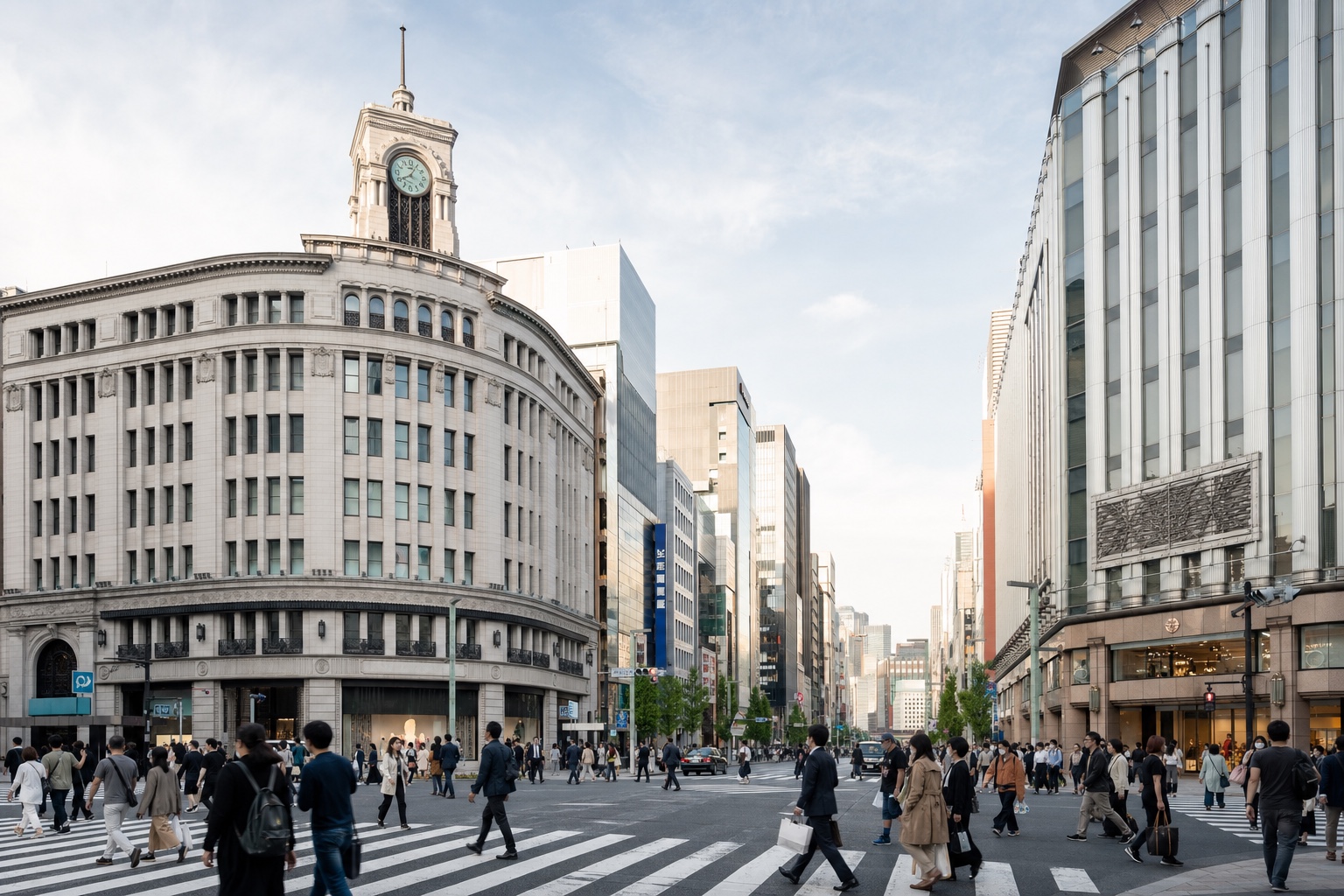 01
01Ginza 4-chome Crossing
Iconic crossingHome to the Wako clock tower, classic department stores, flagship shopping, gifts, and basement food halls.
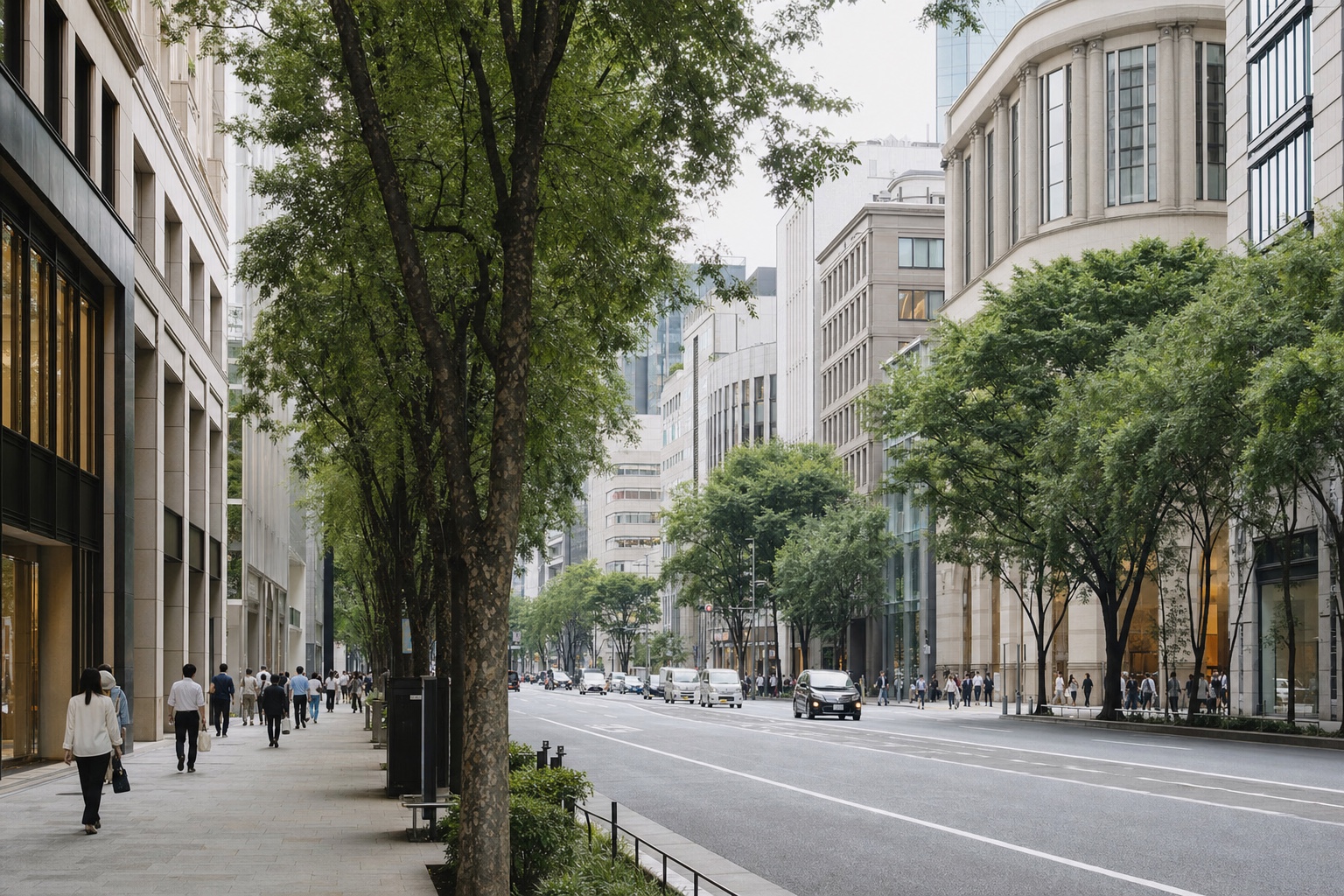 02
02Chuo-dori & Namiki-dori
Luxury shopping streetHigh-end brands and elegant architecture make window shopping part of the Ginza experience.
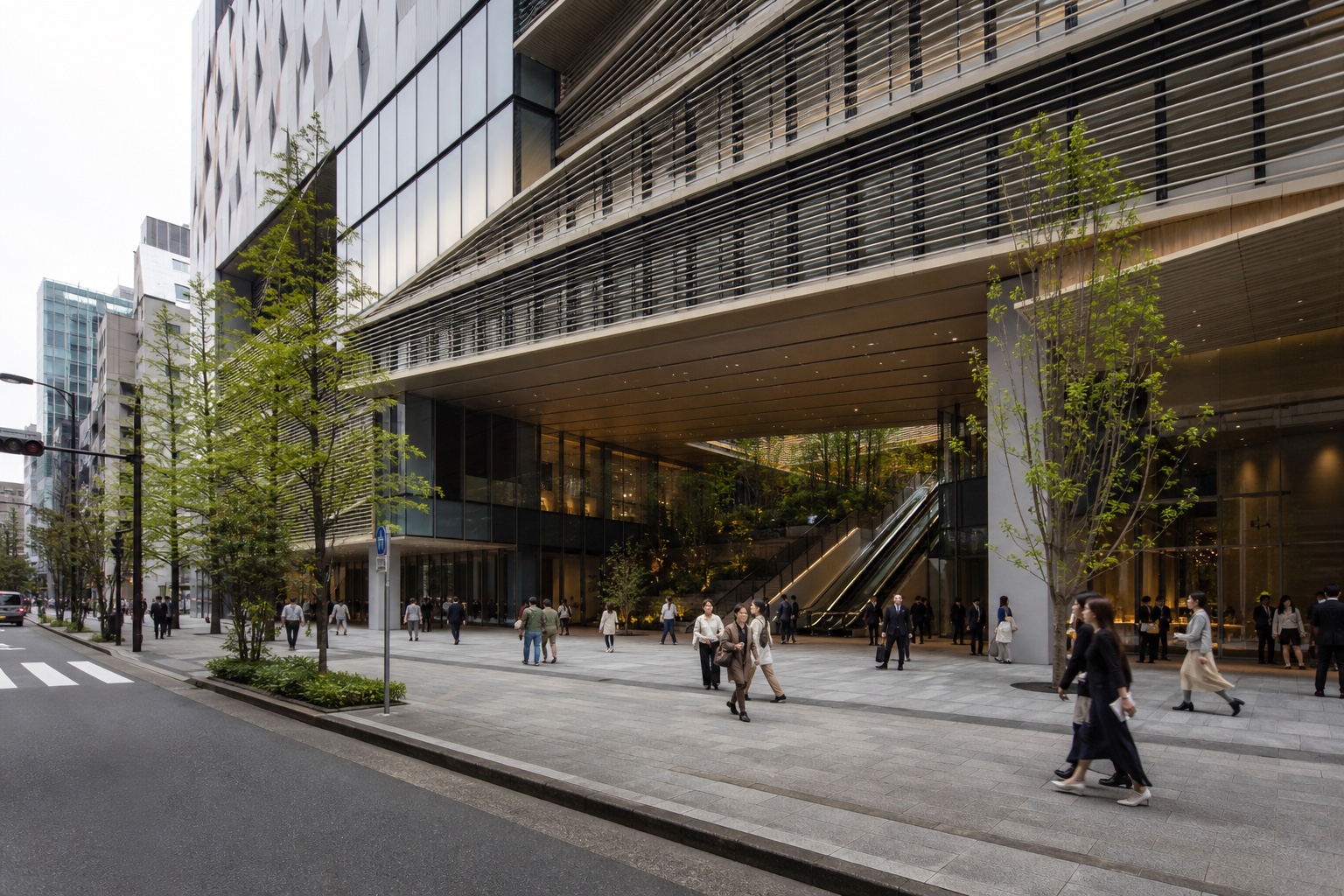 03
03GINZA SIX
Art & rooftop gardenA modern luxury mall with art spaces, premium shopping, and a rooftop garden.
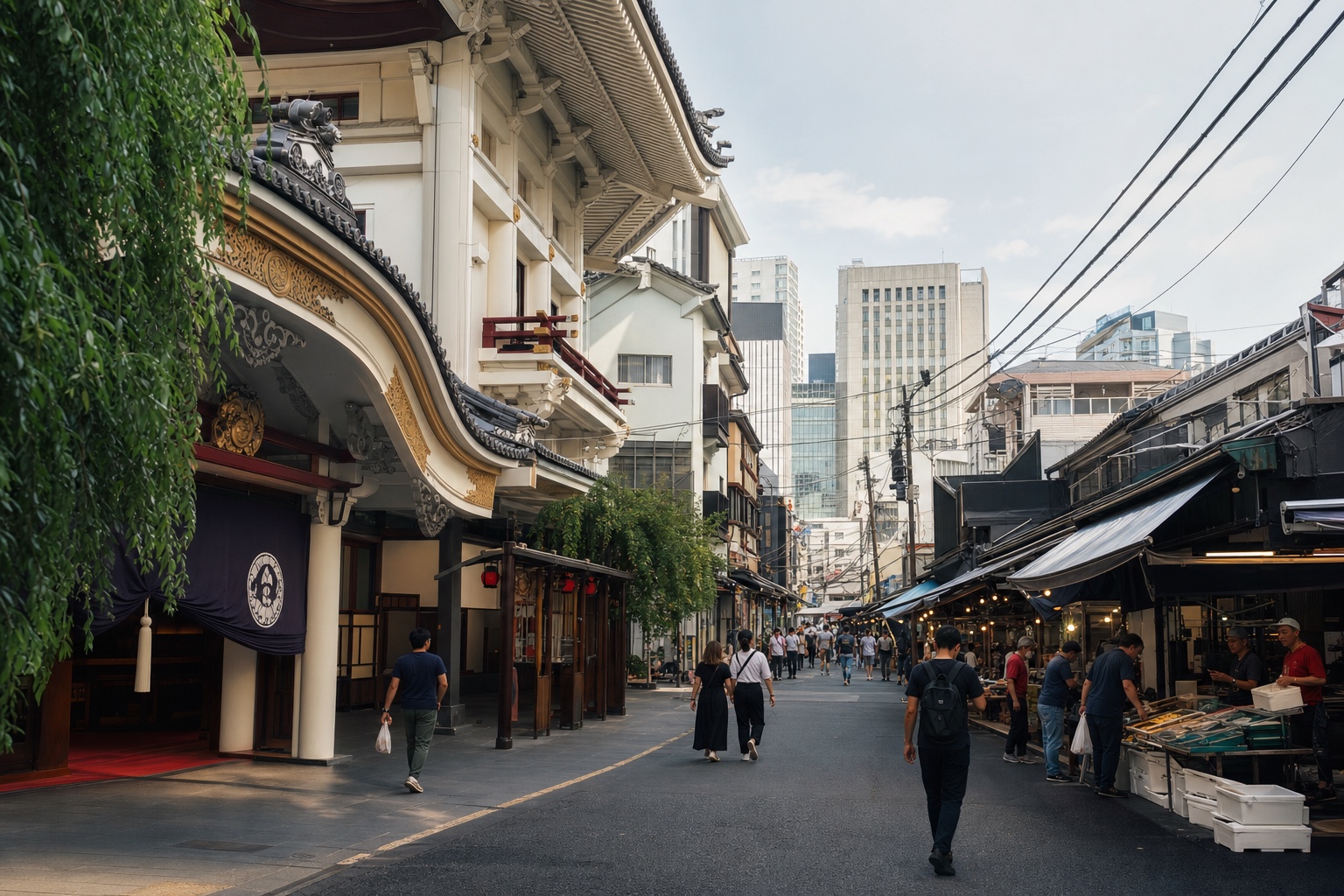 04
04Higashi-Ginza & Tsukiji
Theatre & market walkA traditional-feeling side near Kabukiza, with Tsukiji Outer Market within walking distance.
Overview
Ginza is Tokyo’s most polished district. The main streets are lined with luxury brands and department stores, while the side streets hide small bistros, classic cafes, and quiet bars. It is a great base if you want a calm, adult atmosphere with fast access to the rest of the city.
What is Ginza like?
- Main streets are luxury and flagship retail.
- Back streets keep the quiet, local bar and cafe scene alive.
Compare the actual hotel, evening route and total stay price rather than inferring conditions from the district alone.
Why Stay in Ginza?
Ginza suits visitors who want central subway connections and department-store shopping. Plan the route between your hotel and station, especially with luggage. It sits at a strategic transit junction — the Ginza, Marunouchi, and Hibiya subway lines are all within walking distance — making it effortless to reach Tokyo Station (3 min), Shibuya (15 min), or Roppongi (10 min) without a single transfer.
The Trade-off
The polish comes with a price tag. Compare total hotel prices with Ueno or Asakusa for the same dates, guests, bed setup and cancellation terms. Cheap eats exist (chains are everywhere), but the gritty, smoky alleyways of “salaryman Tokyo” are not on your doorstep — walk 10 minutes to Yurakucho or Shimbashi for that.
You will love Ginza if…
- You prioritize department-store shopping and central subway access.
- You want to shop at UNIQLO, MUJI, and luxury brands without traveling far.
- You prefer subway access over JR commuter trains.
- You are traveling with parents or small children and need paved, flat streets.
You should avoid Ginza if…
- You are on a strict backpacker budget.
- You want a counter-culture or vintage vibe (try Shimokitazawa or Koenji).
- You want rowdy nightlife until 4 AM (go to Shinjuku).
Who is Ginza Best For?
| Traveler Type | Verdict | Why? |
|---|---|---|
| First-timers | Excellent | Central subway connections and department-store shopping; language support varies by shop. |
| Families | Great | Wide sidewalks for strollers. Access to Hibiya Park and Character Street (Tokyo Stn). |
| Foodies | World-class | From 3-star sushi to basement food halls (depachika), the quality is unmatched. |
| Nightlife Seekers | ⚠ Weak | Bars are high-end and exclusive. Not a place for clubbing. |
| Budget Solo | ⚠ Hard | Few hostels. Business hotels are pricier. Look at Ueno instead. |
Key areas
Ginza 4-chome Crossing (Wako, Mitsukoshi)
- Home to the Wako clock tower and classic department stores.
- Best for flagship windows, gifts, and basement food halls.
Chuo-dori and Namiki-dori
- High-end brands and elegant architecture.
- Window shopping alone is worth the walk.
Marronnier Street and Yurakucho side
- More everyday shopping with UNIQLO, GU, and Hands.
- GinzaNovo has a rooftop area; check the current venue and access conditions.
GINZA SIX area
- Modern luxury mall with art spaces and a rooftop garden.
Higashi-Ginza and Tsukiji side
- Traditional vibe near Kabukiza and a short walk to Tsukiji Outer Market.
Day vs night
Daytime
- Chuo-dori becomes a pedestrian street on weekends.
- Department store food halls are perfect for snacks and gifts.
Nighttime
- Quiet, adult nightlife with bars and small restaurants.
- For louder nightlife, Yurakucho to Shimbashi is nearby.

Evenings feel lively but still calm compared to Shinjuku or Shibuya.
Best Shopping in Ginza
Department stores and luxury
- Wako, Ginza Mitsukoshi, Matsuya Ginza, and GINZA SIX anchor the district.
- Great for premium gifts, cosmetics, and seasonal pop-ups.
Everyday shopping
- Marronnier Gate Ginza has UNIQLO, GU, and Hands in one block.
- MUJI Ginza is a full-building flagship with a hotel inside.
- OK Store is a reliable supermarket with great prices even in Ginza.

UNIQLO flagship near Marronnier Gate.

OK Store for everyday groceries.
Best Cafes in Ginza
Ginza’s cafe culture stands apart from the rest of Tokyo. Chain cafes exist, but the real draw is the kissaten — classic Japanese coffee houses that have been running for decades.
Shiseido Parlour has been open since 1902. The strawberry parfait is a Ginza icon, and the desserts feel like edible art. The interior is refined and comfortable for solo visitors. Budget ¥1,500–2,500 — high for a cafe, but the atmosphere makes it worth it.
Cafe Paulista dates to 1911 and is credited with helping bring coffee culture to Japan. John Lennon and Yoko Ono were regulars. A cup of coffee runs about ¥700, which feels remarkably reasonable given the history.
Tricolore is one of the best-preserved kissaten in Ginza, with siphon-brewed coffee and thick-cut toast breakfast sets. The Showa-era interior is as much a draw as the coffee itself.
GLITCH COFFEE GINZA is a specialty coffee pilgrimage site for international visitors — one of the most-reviewed cafes in Ginza among international visitors. If third-wave coffee is your thing, this is the Ginza stop.
What sets Ginza cafes apart from Shibuya or Harajuku? They are quiet. Tables are spaced far enough apart that you barely hear the next conversation. Good for reading, thinking, or getting a bit of laptop work done.
Where to Eat in Ginza
Best Restaurants in Ginza for Tourists
Most people think “Ginza = sushi or kaiseki.” In practice, Ginza is also a great place for approachable, everyday Japanese comfort food.
Many international visitors end up loving sukiyaki, ramen, and tsukemen here because the quality is high and it is easy to order.
If you want a safe, tourist-friendly pick, look for well-reviewed spots around Ginza Corridor Street and the Yurakucho side streets.
For conveyor-belt sushi, Nemuro Hanamaru Ginza serves Hokkaido-quality fish at chain prices. Expect a 30–60 minute wait even on weekdays.
Sushi at every budget:
- Casual: Nemuro Hanamaru (¥2,000–4,000). Conveyor belt, Hokkaido-fresh.
- Counter experience, accessible price: Toryumon (¥5,000–8,000). A standing sushi bar using the same fish as its Michelin-starred parent, Sushi Ginza Onodera. Young chefs train at the counter, keeping prices at a fraction of the main restaurant. Walk-ins usually OK. 1 min from Higashi-Ginza Station.
- Top-tier Ginza experience: Sushi Ginza Onodera Honten (¥27,500–). Michelin-starred omakase at the flagship. Reservation required.
Department store restaurant floors (Mitsukoshi, Matsuya upper levels) are a safe pick when undecided — Japanese, sushi, tempura, and Western options with English menus. Budget ¥2,000–5,000.
For budget dining, Ginza INZ (underground mall near Yurakucho) has Saizeriya, Yayoiken, Gusto, Kura Sushi, and Hama Sushi — familiar chains where a full meal costs ¥500–1,000.
Late-Night Food in Ginza
Ginza department stores close at 20:00. Most restaurants take last orders by 21:00–22:00. But options exist.
Sushizanmai Honten is a 5-minute walk toward Tsukiji and open 24 hours. Solo-friendly, ¥2,000–3,000 for a solid sushi set. Well-known among international visitors as “the 24-hour Tsukiji sushi spot.”
Shina Soba Hashigo Honten is a tantanmen (spicy sesame noodle) institution, 2 minutes from Ginza Station, open late. A bowl runs under ¥1,000 — perfect as a nightcap meal.
Ginza Corridor Street (toward Yurakucho) has bars and casual dining open past 23:00 — wine bars, Spanish tapas, yakitori. A livelier vibe than the main Ginza streets.
For something rougher, walk 10 minutes south to the Shimbashi railway arch bars. Tiny izakayas packed under the JR tracks, open late, smoky and loud. Budget ¥1,500–3,000 for yakitori, motsu-yaki, and oden. English menus are rare, but pointing and Google Translate work fine.
Family-Friendly Restaurants in Ginza
Mikasa Kaikan (Ginza 5-chome) has served Western cuisine since 1925 and offers a proper kids’ plate: corn potage, mini hamburger steak, crab cream croquette, omelette, tomato rice, and vanilla ice cream. Check the current children’s menu, ingredients and allergens before ordering.
Kura Sushi Global Flagship (Ginza) is a strong pick for families. English touchscreen ordering, and kids love the capsule-toy game triggered every 5 plates. The revolving belt alone keeps children entertained.
Department store restaurant floors (Mitsukoshi, Matsuya) offer baby rest rooms on the same floor, multiple cuisine options, and English menus at many restaurants.
For budget family meals, Ginza INZ has Saizeriya, Royal Host, and Gusto with kids’ menus under ¥1,000.
Bars and Drinks
Ginza Lion is a beer hall dating to 1934. The art-deco interior feels like a living museum. Draft beer and sausages — simple and classic.
Back-street bars are part of Ginza’s nightlife charm, but some still follow an ichigensan-okotowari (regulars-only) culture. If a door has no sign and no menu, it may be members-only. Check Google Maps reviews for “foreigner-friendly” or “solo OK” comments before walking in. Hotel bars and GINZA SIX bar options are always welcoming.
Ginza viewpoints: check access conditions
GinzaNovo (formerly Tokyu Plaza Ginza) — check the current rooftop venue
- Check the facility’s current rooftop opening hours and admission conditions before visiting.
- Great break spot after shopping.
GINZA SIX: books, food and the rooftop garden
GINZA SIX can be a short stop even when luxury shopping is not your main plan. Ginza Tsutaya Books on 6F focuses on art and Japanese culture, and the same-floor directory lists dining choices. Choose a specific restaurant rather than treating every option as a food court.
When weather and access permit, continue to GINZA SIX Garden on the roof for an outdoor break. Check the garden conditions and restaurant hours before relying on this evening plan.
Safety and hotel style
Safety
- Plan a well-lit evening route between your hotel, station and dinner stop.
- Late-night foot traffic is light compared to Shinjuku.
- Some bar streets feel exclusive; check Google Maps reviews first.
Hotel style
- Prices skew higher, but access to major lines is excellent.
- Most hotels cluster around Higashi-Ginza or a short walk from the main streets.

MUJI Hotel Ginza, minimalist stay.

Solaria Nishitetsu Hotel Ginza.

Tokyu Stay Ginza.

Millennium Mitsui Garden Hotel Tokyo.
Quick summary
- Best for polished evenings: dinner and a quiet drink in Ginza.
- Best for high-end shopping: Mitsukoshi, Matsuya, GINZA SIX.
- Viewpoint planning: Check current access conditions at GinzaNovo and GINZA SIX.
- Budget food and drinks: walk to Yurakucho or Shimbashi.
Chain stores list
This area has a very large number of chain stores, so shopping is easy and convenient.
| Brand | Store |
|---|---|
| Don Quijote | Ginza Main Store |
| Daiso | Marronnier Gate Ginza |
| Seria | Exitmelsa Ginza |
| Loft | Ginza Loft |
| Hands | Hands Ginza |
| UNIQLO | UNIQLO Ginza |
| GU | GU Ginza |
| MUJI | MUJI Ginza |
| Matsumoto Kiyoshi | Ginza 5th Store |
| BicCamera | Yurakucho |
| JINS | Ginza Loft |
| Ginza Mitsukoshi | Main Store |
| Matsuya | Matsuya Ginza |
| Yoshinoya | Higashi-Ginza |
| Yayoiken | Ginza INZ |
| Kura Sushi | Ginza Flagship |
| Hama Sushi | Ginza INZ |
| Ichiran | Ginza |
| Ippudo | Ginza |
| Coco Ichibanya | Kyobashi Edogrand |
| Saizeriya | Ginza INZ |
| Gusto | Ginza INZ |
| Royal Host | Ginza INZ |
| Komeda Is | Higashi-Ginza |
Hotels Near Ginza & Higashi-Ginza Stations
Traveling with a large suitcase? In Ginza, the station exit matters almost as much as the hotel’s walking distance. From the Tokyo Metro Hibiya Line platform at Higashi-Ginza, use the elevators via Central Gate to Exit 3 when you need to avoid steps, then walk at street level to Aloft Tokyo Ginza, The Royal Park Hotel Ginza 6-chome, Dormy Inn Premium Ginza, or Mitsui Garden Hotel Ginza Premier. A1 has an elevator between Miharabashi Gate and the street, but the platform-to-Miharabashi Gate section uses stairs or an escalator; A1 is not a continuous elevator route from the Hibiya Line platform. Solaria Nishitetsu Hotel Ginza is very close, but its official A2 route is not documented as an elevator exit, so check the current station map with a suitcase.
Check before you travel: Ginza Station and Higashi-Ginza Station have many stairs, level changes, and connected underground passages. An exit that looks closest on the map may not be the easiest one with a suitcase, so check the elevator or escalator route and the latest station map before arriving.
- From the Hibiya Line platform: To avoid steps, take the elevators via Central Gate to Exit 3, then continue at street level to Aloft, The Royal Park Hotel, Dormy Inn, or Mitsui Garden Ginza Premier. A1 has a street elevator, but reaching Miharabashi Gate from the platform involves stairs or an escalator. For Solaria, follow the hotel’s A2 route and confirm the elevator route on the current station map.
- Best airport convenience: Mitsui Garden Hotel Ginza Premier is about five minutes from Higashi-Ginza Exit A1 at street level, and the Narita limousine bus stops at the hotel. From the Hibiya Line platform, use Exit 3 via Central Gate to avoid steps; allow for a different street-level walk.
- Shortest walk, but less convenient with luggage: MUJI Hotel Ginza is about three minutes from Ginza C8. C8 is not identified as an elevator exit in Tokyo Metro’s current accessibility guide, so travelers with heavy luggage should allow extra time for an accessible route.
Which station map do you need? Higashi-Ginza is a shared station: Tokyo Metro Hibiya Line H10 and Toei Asakusa Line A11. If you arrive from Haneda or Narita on a Keikyu/Keisei through-service train, use the Toei Asakusa Line side as your main reference. Check the official English Toei Higashi-ginza Station map and the Toei airport access guide before traveling.
For the Tokyo Metro Hibiya Line side, use the official English Tokyo Metro Higashi-ginza Station map and the English barrier-free guide. The two operators’ maps are different, so checking the correct side matters when you have luggage.
Quick luggage route guide: Use the exit below as your starting point, then follow the hotel’s street-level directions. These are practical starting points rather than a substitute for checking the live station map.
On smaller screens, swipe left to see exits and reasons, and right to return to hotel names.
| Hotel | Route starting point: distinguish shortest walk from Hibiya step-free approach | Why |
|---|---|---|
| Solaria Nishitetsu Hotel Ginza | Higashi-Ginza A2 | Hotel’s official access route (about 1 min). A2 is not documented as an elevator exit, so check the current station map with luggage. |
| Aloft Tokyo Ginza | Tokyo Metro Hibiya Line Exit 3 via Central Gate | Elevators from the Hibiya platform: Exit 3, then walk. The A1 approach involves stairs or an escalator. |
| The Royal Park Hotel Ginza 6-chome | Tokyo Metro Hibiya Line Exit 3 via Central Gate | Hotel lists 4/A1. For elevators from the Hibiya platform, use 3 then walk; the A1 approach involves stairs or an escalator. |
| Dormy Inn Premium Ginza | Tokyo Metro Hibiya Line Exit 3 | Use the elevator exit instead of the closer Exit 4. |
| Mitsui Garden Hotel Ginza Premier | Tokyo Metro Hibiya Line Exit 3 via Central Gate | Elevators from the Hibiya platform: Exit 3, then walk. The A1 approach involves stairs or an escalator; Narita bus stops at hotel. |
| MUJI Hotel Ginza | Ginza C8 | Shortest walk, but C8 is not identified as a station elevator exit in the current accessibility guide. |
- ★★★★★9.2/10Our pick
MUJI Hotel Ginza
Minimalist design stayMUJI Hotel Ginza is about three minutes from Ginza Station C8, making it one of the shortest walks in this list. The hotel’s official access also lists Ginza-itchome Exit 5 at the same walking time. C8 is not identified as a station elevator exit in Tokyo Metro’s current accessibility guide, so guests with a large suitcase should plan an accessible route or take a short taxi.
Check total price for all guests, dates and the exact room, including taxes, breakfast and cancellation terms.Trade-off: Before booking, check the named room, breakfast arrangement and cancellation deadline for your stay.
📍 3 min from Ginza C8 · shortest route 🗺️ Map🗺️ Map - ★★★★★8.6/10
Solaria Nishitetsu Hotel Ginza
Convenient central baseSolaria Nishitetsu Hotel Ginza is one of the closest Ginza choices: the hotel’s official access lists Higashi-Ginza A2 (about 1 minute) and Ginza A12 (about 2 minutes). Neither A2 nor A12 is documented as an elevator exit on Tokyo Metro’s current barrier-free page, so with a large suitcase check the live station map before relying on the nearest exit.
Check total price for all guests, dates and the exact room, including taxes, breakfast and cancellation terms.Trade-off: Before booking, check the named room, breakfast arrangement and cancellation deadline for your stay.
📍 1 min from Higashi-Ginza A2 · hotel official route 🗺️ Map🗺️ Map - ★★★★★8.5/10
Mitsui Garden Hotel Ginza Premier
High-floor city viewsMitsui Garden Hotel Ginza Premier is about five minutes from Higashi-Ginza Exit A1 at street level. A1 has an elevator from Miharabashi Gate to the street, but reaching that gate from the Hibiya Line platform involves stairs or an escalator. To avoid steps, take the elevators via Central Gate to Exit 3, then allow for a different street-level walk to the hotel. It is also a strong airport choice because the hotel’s access page says the Narita limousine bus stops in front of the hotel.
Check total price for all guests, dates and the exact room, including taxes, breakfast and cancellation terms.Trade-off: Before booking, check the named room, breakfast arrangement and cancellation deadline for your stay.
📍 5 min from A1 at street level · Hibiya elevator route: Exit 3, then walk · Narita bus 🗺️ Map🗺️ Map - ★★★★★8.8/10
Dormy Inn Premium Ginza
Onsen-style public bath + valueDormy Inn Premium Ginza is about four minutes from Higashi-Ginza. The hotel’s standard route is Exit 4; Tokyo Metro’s barrier-free guide lists Tokyo Metro Hibiya Line Exit 3 as the elevator route, so use that exit with a large suitcase.
Check total price for all guests, dates and the exact room, including taxes, breakfast and cancellation terms.Trade-off: Weekend prices rise faster than weekday averages Popular room categories can disappear early Breakfast windows may feel crowded at peak times
📍 Hibiya step-free exit: 3; allow a separate street-level walk to the hotel 🗺️ Map🗺️ Map - ★★★★★8.6/10
Aloft Tokyo Ginza
Modern, design-forward stayAloft Tokyo Ginza is a short street-level walk from Higashi-Ginza Exit A1. A1 has an elevator from Miharabashi Gate to the street, but the Hibiya Line platform-to-gate section involves stairs or an escalator. If you need to avoid steps with your suitcase, take the elevators via Central Gate to Exit 3, then continue at street level to the hotel.
Check total price for all guests, dates and the exact room, including taxes, breakfast and cancellation terms.Trade-off: Before booking, check the named room, breakfast arrangement and cancellation deadline for your stay.
📍 Short walk from A1 at street level · Hibiya elevator route: Exit 3, then walk 🗺️ Map🗺️ Map - ★★★★★8.7/10
The Royal Park Hotel Ginza 6-chome
Newer upscale baseThe Royal Park Hotel Ginza 6-chome is about three minutes from Higashi-Ginza. The hotel’s access page lists Exit 4 and A1. A1 has an elevator from Miharabashi Gate to the street, but reaching that gate from the Hibiya Line platform involves stairs or an escalator. To avoid steps, take the elevators via Central Gate to Exit 3 and continue at street level; the hotel’s walking time for Exit 4 or A1 does not describe this route.
Check total price for all guests, dates and the exact room, including taxes, breakfast and cancellation terms.Trade-off: Before booking, check the named room, breakfast arrangement and cancellation deadline for your stay.
📍 3 min from Exit 4 or A1 at street level · Hibiya elevator route: Exit 3, then walk 🗺️ Map🗺️ Map
Access
Ginza has fast access to Shinjuku, Shibuya, Tokyo Station, and both airports via the Ginza and Hibiya lines, plus nearby JR Yurakucho.
Scroll horizontally on mobile for the full table.
| Destination | Mode | Route (lines + key stations) | Transfers | Time (min) | Fare (one-way, JPY) | Taxi time (min) | Taxi fare (JPY) | Notes |
|---|---|---|---|---|---|---|---|---|
| Shinjuku Station | Train | Ginza Station → Shinjuku Station (Marunouchi Line) | 0 | 16–20 | ¥210 | 20–30 | ¥3,500–¥4,500 | Direct on the Marunouchi Line. |
| Shibuya Station | Train | Ginza Station → Shibuya Station (Ginza Line) | 0 | 15–20 | ¥210 | 15–25 | ¥3,000–¥3,800 | Direct on the Ginza Line. |
| Tokyo Station | Train or walk | Ginza Station → Tokyo Station (Marunouchi Line) | 0 | 3 | ¥180 | 5–10 | ¥900–¥1,200 | One stop by train. About 10–15 minutes on foot. |
| Shinagawa Station | Train | Ginza Station → Shimbashi (Ginza Line) → Shinagawa (JR) | 1 | 12–15 | ¥350 | 15–20 | ¥2,500–¥3,200 | Easy transfer at Shimbashi. |
| Asakusa (Asakusa Station) | Train | Ginza Station → Asakusa Station (Ginza Line) | 0 | 15–20 | ¥210 | 15–20 | ¥2,800–¥3,500 | Direct on the Ginza Line. |
| Ueno (Ueno Station) | Train | Ginza Station → Ueno Station (Ginza or Hibiya Line) | 0 | 10–15 | ¥180 | 15–20 | ¥2,500–¥3,200 | Direct on the Ginza or Hibiya Line. |
| Tokyo Disney Resort (Maihama) | Train | Ginza-itchome/Yurakucho → Shinkiba (Yurakucho Line) → Maihama (Keiyo Line) | 1 | 30–40 | ¥380 | 25–35 | ¥6,000–¥7,500 | Use the Yurakucho Line from Ginza-itchome or Yurakucho. |
| Warner Bros. Studio Tour Tokyo (Toshimaen) | Train | Ginza-itchome/Ginza → Ikebukuro (Yurakucho/Marunouchi Line) → Toshimaen (Seibu Line) | 1 | 40–50 | ¥400 | 45–60 | ¥8,000–¥10,000 | Often faster than Oedo Line routes. |
| Tokyo Tower | Train | Ginza Station → Kamiyacho (Hibiya Line) | 0 | 10–15 | ¥180 | 10–15 | ¥1,500–¥2,000 | About a 7-minute walk from Kamiyacho. |
| Tokyo Skytree (Oshiage) | Train | Higashi-Ginza → Oshiage (Toei Asakusa Line) | 0 | 15–20 | ¥220 | 25–35 | ¥4,500–¥5,500 | Fastest via the Asakusa Line from Higashi-Ginza. |
| Narita Airport | Bus or train | Ginza Station area → Narita (Airport Bus Tokyo/Narita) | 0 | 70–90 | ~¥1,500 | 60–80 | ¥24,000–¥28,000 | The ~¥1,500 airport bus serves the Ginza Station area. Train via Higashi-Ginza is another option. |
| Haneda Airport | Train | Higashi-Ginza → Haneda Airport T1/T2 (through Asakusa Line) | 0 | 25–30 | ~¥570–590 | 20–30 | ¥6,500–¥8,000 | Some through-service trains run direct to Higashi-Ginza; check the departure display. |

Yurakucho Station is an easy walk from Ginza.
How to Get to Ginza from Narita and Haneda
Ginza sits in the center of Tokyo with excellent airport connections. The combination of direct train lines and affordable bus options makes it one of the easiest areas to reach from both airports.
| Airport | Route | Time | Cost | Notes |
|---|---|---|---|---|
| Narita | Airport bus Airport Bus Tokyo/Narita → Ginza Station area | ~70–90 min | ~¥1,500 | Best budget option. Drops you near Ginza Station. No transfers; check the current stop and timetable. |
| Narita | Train Narita Express → Tokyo Station → walk/Metro | ~65 min | ¥3,070 | Fast and reliable. Tokyo Station is 10–15 min walk from Ginza. |
| Narita | Train Keisei Skyliner → Ueno → Ginza Line → Ginza | ~60 min | ¥2,680 | Skyliner arrives at Keisei-Ueno. Include the walk to Tokyo Metro Ueno, waiting and the Ginza Line ride in a door-to-door comparison. |
| Narita | Train Access Express → Higashi-Ginza (Asakusa Line through-service) | ~80 min | ~¥1,300 | Budget train. Some services run direct to Higashi-Ginza with no transfer; check the departure display. |
| Haneda | Train Keikyu → Higashi-Ginza (Asakusa Line through-service) | ~25–30 min | ~¥570–590 | Best option on through-service trains. Not every Haneda train goes to Higashi-Ginza, so check the departure display. |
| Haneda | Train Monorail → Hamamatsucho → JR → Yurakucho (walk to Ginza) | ~35 min | ~¥700 | Reliable alternative. Yurakucho is a 5-min walk from Ginza. |
| Haneda | Taxi Taxi (direct) | ~25–40 min | ¥5,000–7,000 | Most comfortable. Use the GO app. Worth it for 2–3 people. |
The ~¥1,500 airport bus from Narita to Ginza is one of Tokyo’s better travel deals. It serves the Ginza Station area, and stops and times change, so check the current schedule. From Haneda, the Keikyu-Asakusa Line through-service to Higashi-Ginza is hard to beat on trains that run the full route — fast, cheap, and direct, but not every departure goes through.
Shinkansen (Bullet Train) Access from Ginza
Ginza is incredibly close to Tokyo Station; the Marunouchi Line is one option from Ginza Station, while a walking route depends on your starting hotel and destination gate. This makes it one of the best bases for shinkansen day trips.
| Shinkansen Line | Station | From Ginza | Key Destinations |
|---|---|---|---|
| Tokaido Shinkansen | Tokyo / Shinagawa | ~5–15 min | Kyoto (2h15m), Osaka (2h30m), Nagoya (1h40m) |
| Tohoku / Hokkaido Shinkansen | Tokyo | ~5–15 min | Sendai (1h30m), Morioka (2h10m), Shin-Hakodate (4h) |
| Hokuriku Shinkansen | Tokyo | ~5–15 min | Kanazawa (2h30m), Nagano (1h20m) |
| Joetsu Shinkansen | Tokyo | ~5–15 min | Niigata (2h), Echigo-Yuzawa (1h10m) |
Check the route from your hotel to the specific Shinkansen gate and allow extra time for luggage, ticket collection and finding your platform. For the Tokaido Shinkansen (Kyoto/Osaka), Shinagawa is also an option — take the Ginza Line to Shimbashi, then JR to Shinagawa (~12 min total). Shinagawa’s platforms are less crowded.
How to Get Around Ginza
- Use multiple stations. Ginza, Higashi-Ginza, Ginza-itchome, and Yurakucho are all within walking distance. Pick the station that best matches your destination.
- Late-night taxis. Some areas restrict street hails late at night, so use official taxi stands or an app.
- Airport bus. The airport bus serving the Ginza Station area is convenient if you have luggage.
Frequently Asked Questions
Are hotels in Ginza expensive?
Not necessarily. Business hotels like Dormy Inn Premium Ginza are worth comparing by the exact room, services and total price for your stay. Compare the exact room and total stay price across districts; this guide does not establish a fixed Ginza price premium.
Where can I eat on a budget in Ginza?
Head to Ginza INZ, the underground mall near Yurakucho Station. It has familiar chains like Saizeriya, Yayoiken, Gusto, Kura Sushi, and Hama Sushi — a full meal costs ¥500–1,000. Department store basement food halls (depachika) also have affordable takeout options.
When is the weekend pedestrian paradise on Chuo-dori?
Chuo-dori between Ginza 1-chome and 8-chome becomes car-free on Saturdays, Sundays, and public holidays from noon to 5:00 PM (October–March) or 6:00 PM (April–September) (weather permitting). It is one of the best free experiences in Ginza — locals and visitors stroll, sit on benches placed on the road, and enjoy the open space.
Can I walk to Tsukiji Market from Ginza?
Yes. Tsukiji Outer Market is about a 10-minute walk from Higashi-Ginza Station. Head east along Harumi-dori and you will see the market entrance on your left. It is an easy morning side trip before the Ginza shops open.
Is Ginza a good area for families with small children?
Yes. Ginza has wide, flat sidewalks that are easy to navigate with a stroller. Major department stores like Mitsukoshi and Matsuya have dedicated baby rest rooms with nursing areas and changing stations. Nearby Hibiya Park and the Character Street underground shops at Tokyo Station are great for keeping kids entertained.
Explore More — Other Area Guides
Compare nearby Tokyo bases before choosing Ginza for your trip.
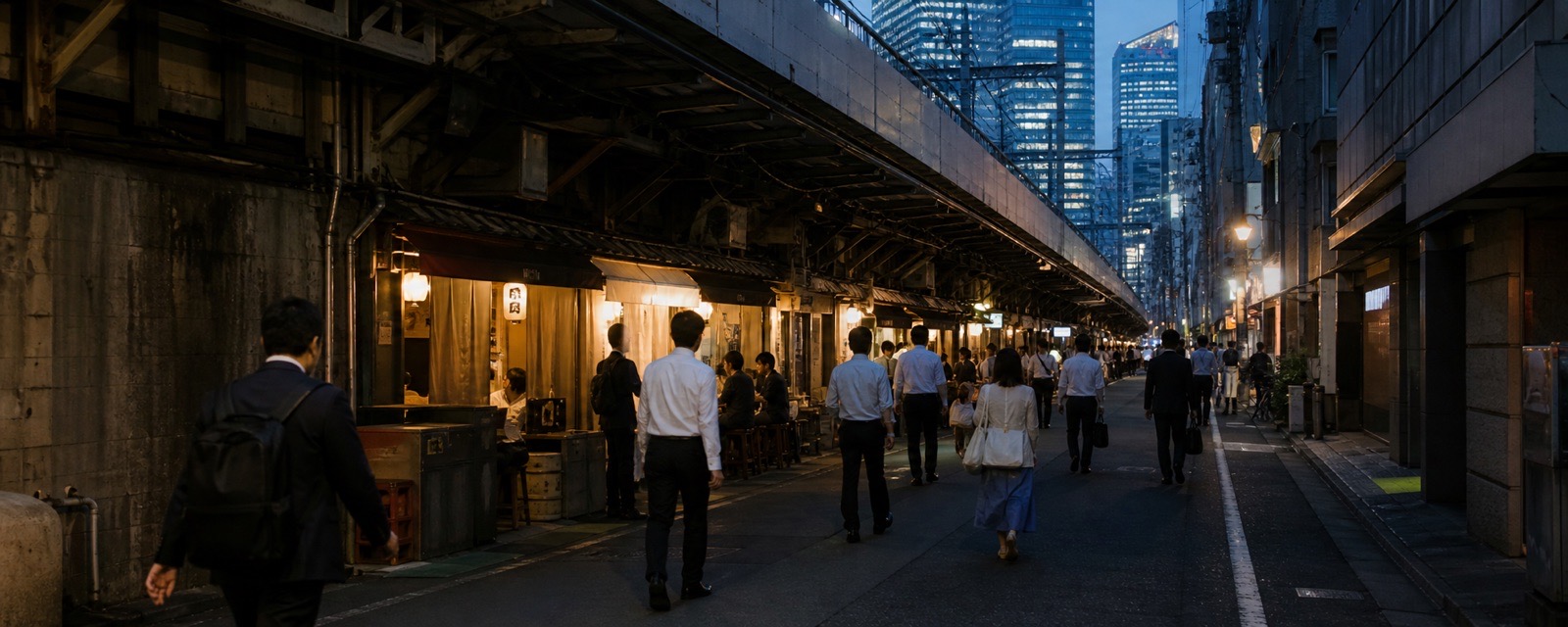 Shimbashi & Shiodome
 Asakusa
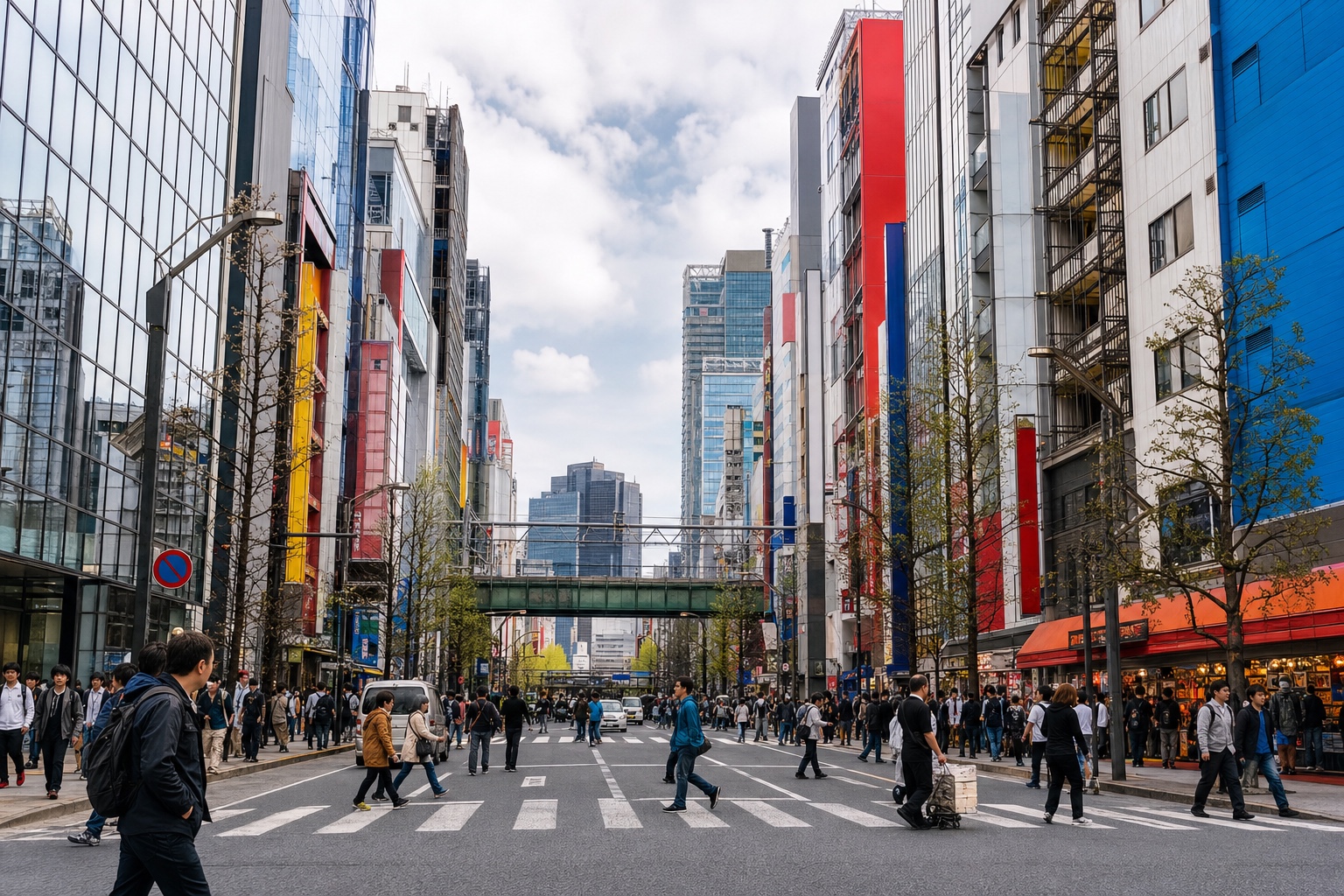 Shibuya
Landmarks and quick directions
Use the Google Maps links below to set each spot as your destination instantly. “To ___” links open ready-made routes from the area station.
Some links below are affiliate links. If you book through them we may earn a small commission at no extra cost to you.