Where to Stay in Omotesando & Harajuku Tokyo: Best Hotels for Fashion & Shibuya Access
Kawaii culture, high fashion, and a sacred forest — all within walking distance.
The Honest Truth: Harajuku and Omotesando sit one Yamanote Line stop from Shibuya, and together they form the most fashionable area in Tokyo. Harajuku’s Takeshita Street packs kawaii culture into 350 meters of crepe shops, colorful candy stores, and character goods. Ura-Harajuku (the backstreets) hides world-class streetwear brands that international celebrities fly in to shop at.
Quick links
Overview
Omotesando–Harajuku is a strong hotel base for travelers who want fashion, cafés, youth culture, and Meiji Jingu within walking distance. Takeshita Street, Cat Street, Omotesando Boulevard, Yoyogi Park, and the Meiji Jingu forest give the area more to do locally than most central shopping districts.
The trade-off is crowding and price. Harajuku Station and Takeshita Street become especially busy on weekend afternoons, while Omotesando feels more polished and expensive. For a calmer stay, look toward Kitasando, Sendagaya, or the quieter side streets away from the station.
Must-see Omotesando & Harajuku landmarks and attractions
Omotesando & Harajuku’s core attractions form a compact route. Use this visual shortlist to choose what to see first and where a hotel should sit.
 01
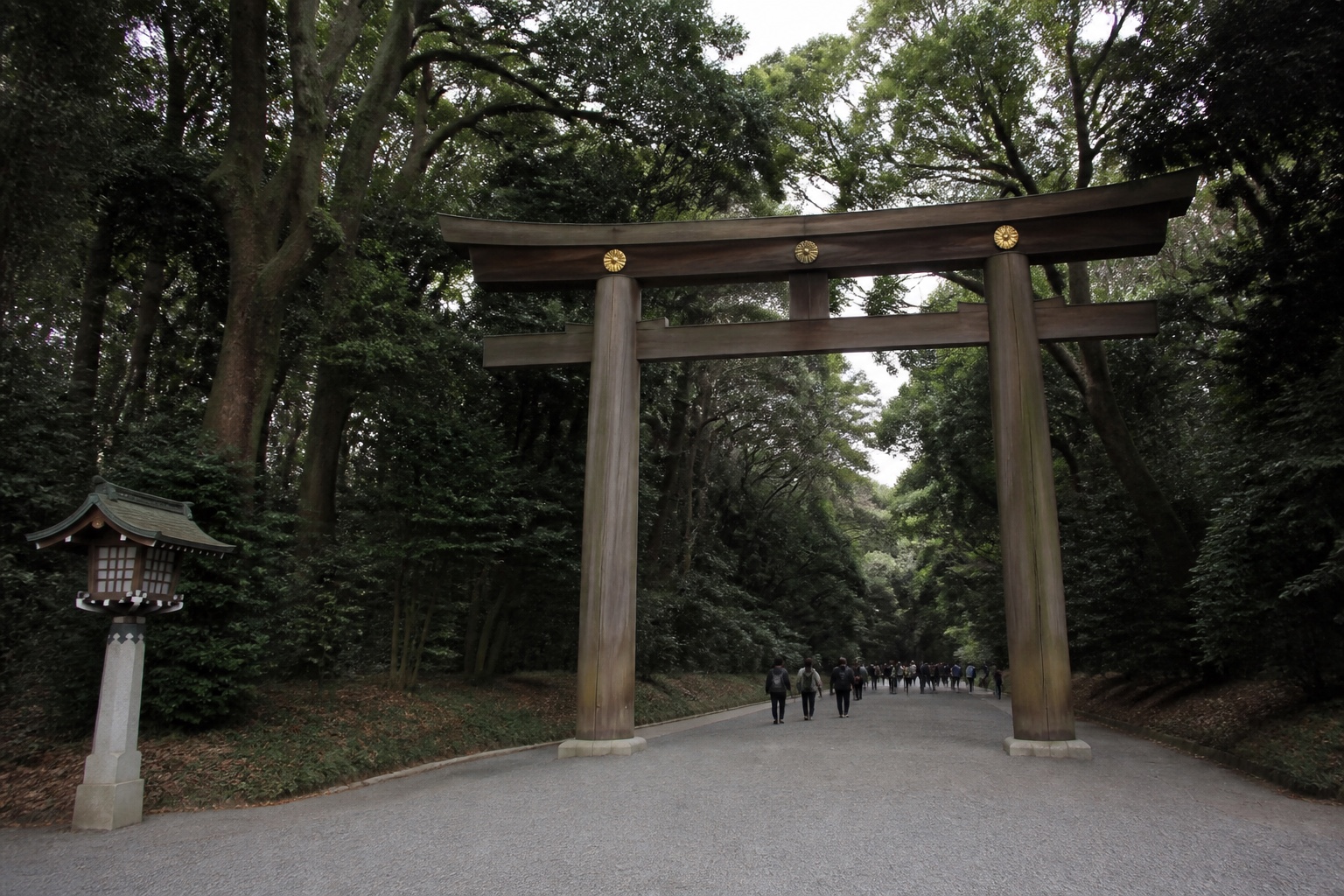
01Meiji Jingu & Yoyogi Park
Shrine and forestA vast forest beside Harajuku Station, combining Meiji Jingu Shrine with Yoyogi Park’s open grounds.
 02
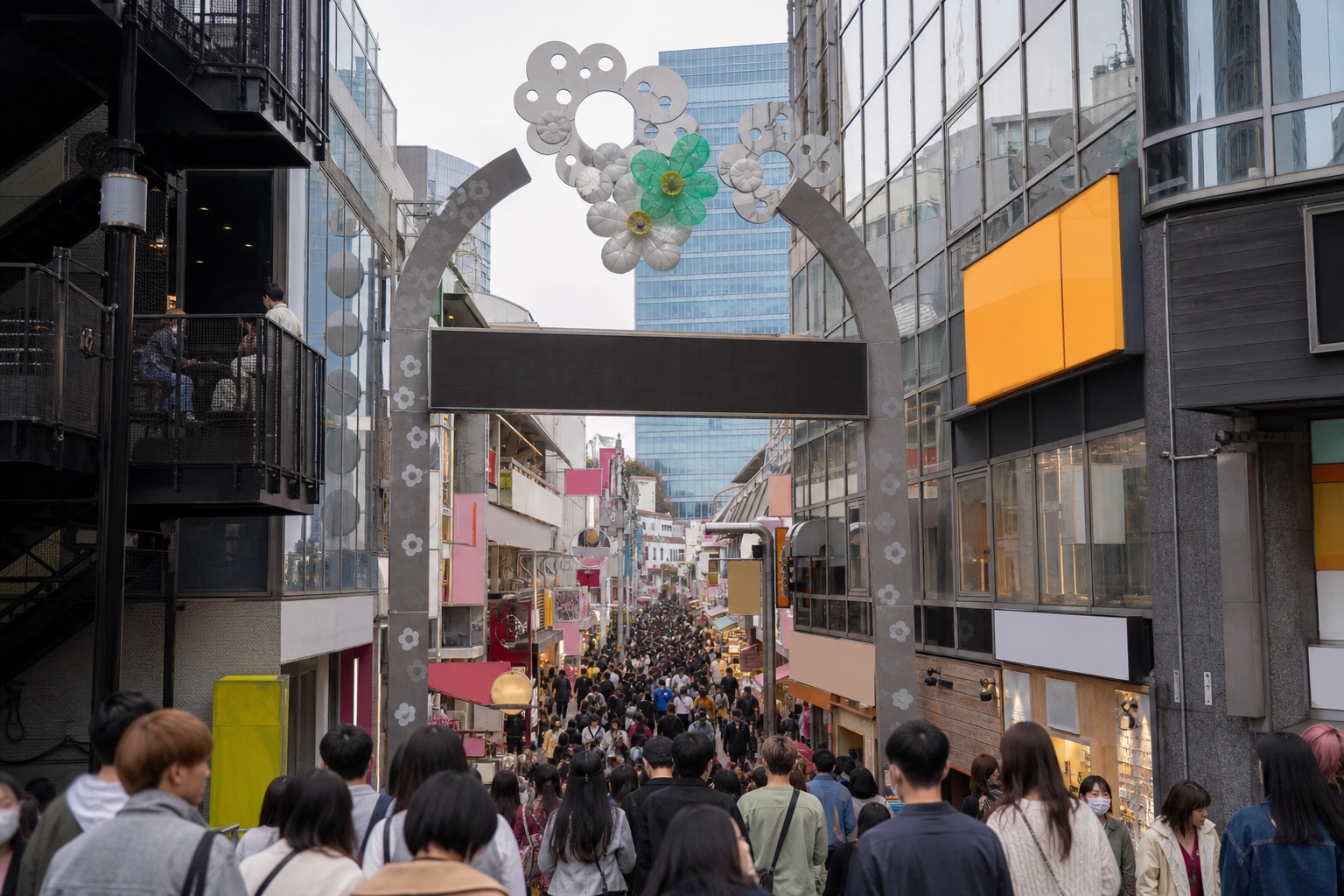
02Takeshita Street
Pop cultureA Harajuku street packed with crepes, kawaii goods, vintage clothing, and character merchandise.
 03
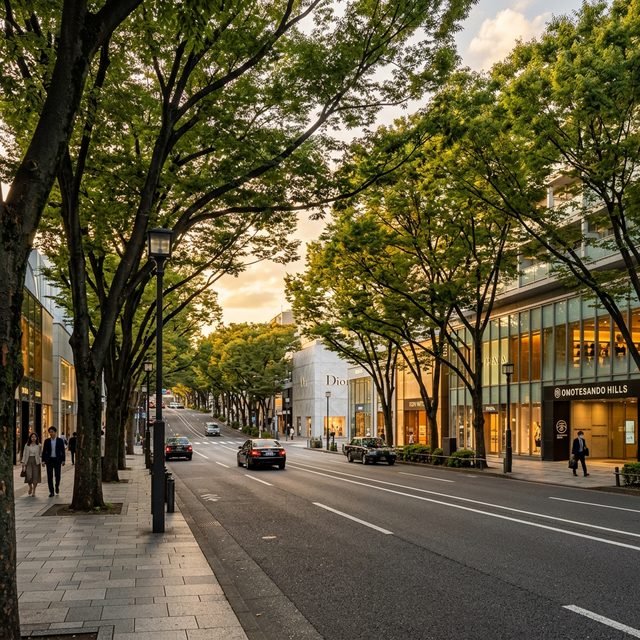
03Omotesando Boulevard
Luxury boulevardA zelkova-lined avenue toward Aoyama with global flagships and Omotesando Hills’ Tadao Ando architecture.
 04
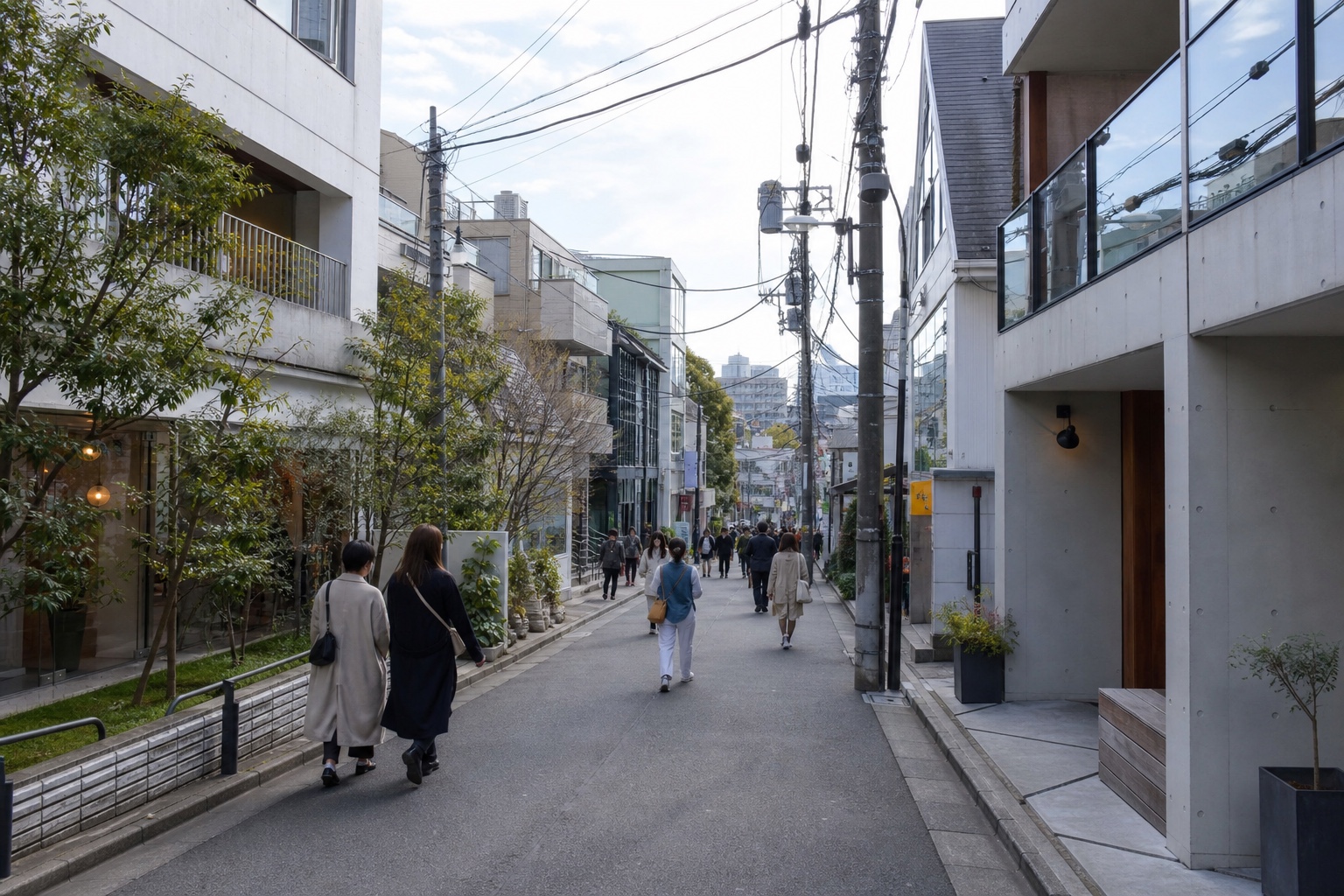
04Cat Street
Fashion and cafésA back road linking Omotesando and Shibuya with independent shops, vintage stores, and cafés.
What Kind of Place is Harajuku & Omotesando?
Compared to other major areas in Tokyo:
- If Shibuya is “youth culture exploding,” Harajuku is “the birthplace of kawaii.” A 15-minute walk from Shibuya’s Scramble Crossing, yet the atmosphere is completely different.
- If Ginza is “high-end shopping for adults,” Omotesando is “the cutting edge of style.” Both have brand flagships, but Omotesando puts far more emphasis on architectural design and café culture.
- If Asakusa is “traditional Tokyo,” Meiji Jingu is “a spiritual power spot in the city center.” Where Asakusa’s Kaminarimon is tourist-friendly tradition, Meiji Jingu is forest-wrapped genuine sacredness.
This is the area where international celebrities are most frequently spotted in Tokyo. Unlike Ginza‘s formal shopping district, this area breathes creativity and freedom. Ura-Harajuku’s select shops are known worldwide as the birthplace of streetwear culture. Meanwhile, Meiji Jingu and Yoyogi Park (Tokyo’s 5th largest park) offer a different world just steps from the fashion buzz. Cherry blossom season brings picnickers, and New Year’s brings millions of shrine visitors.
Key Areas
Meiji Jingu & Yoyogi Park
A vast forest right in front of Harajuku Station. Meiji Jingu Shrine, founded in 1920, is so serene you forget you’re in central Tokyo. The grounds take 30–40 minutes to walk at a relaxed pace. Omikuji (fortune slips, English available) and goshuin (shrine stamps) are popular. General shrine visits are free during published opening hours. Check separate entry conditions for the Inner Garden and museum. Yoyogi Park, Tokyo’s 5th largest, hosts weekend flea markets and events. A top cherry blossom spot.
Takeshita Street
The icon of Harajuku. About 350 meters packed with crepe shops, kawaii goods stores, vintage clothing, and character merchandise. Mostly teens and twentysomethings, but any foreign traveler wanting to experience Tokyo’s pop culture should walk it once. Weekends are insanely crowded — weekday mornings are far better.
Ura-Harajuku (Backstreet Harajuku)
The backstreets behind Takeshita. Select shops and vintage stores for BAPE, NEIGHBORHOOD, SUPREME, and other streetwear legends. A completely different world from Takeshita’s pop-and-kawaii vibe — this is the adult fashion mecca.
Omotesando (Zelkova Tree Boulevard)
The main avenue stretching about 1 km from Harajuku toward Aoyama. Louis Vuitton, Dior, Prada, and other global flagships line the zelkova trees. The architecture is a highlight — Omotesando Hills (designed by Tadao Ando) is worth seeing for the exterior alone. The winter illumination is one of Tokyo’s signature seasonal sights.
Cat Street (Former Shibuya River Promenade)
A back road connecting Omotesando and Shibuya. Independent select shops, vintage stores, and cafes. Less crowded than Takeshita or the main boulevard. A favorite of fashion-savvy locals and great for hidden café discoveries.
Day vs. Night
Daytime
- Meiji Jingu (best early morning) — The forest walk is most sacred when it’s quiet. 30–60 min.
- Takeshita Street food walk — Crepes (¥400–700), colorful cotton candy (¥500–800), character buns. A feast for the eyes.
- Omotesando window shopping — Even without buying, the architecture is entertaining.
- Yoyogi Park picnic — Grab takeout and relax on the grass. Spring cherry blossoms, autumn leaves.
Nighttime
- Omotesando restaurant dinner — More Western/Italian/French than Japanese. Great for dates or special meals.
- Winter only: Omotesando Illumination — Zelkova trees wrapped in lights — a Tokyo winter icon.
- Escape to Shibuya / Roppongi — Omotesando to Shibuya is 2 min on the Ginza Line; Roppongi is a 10-min taxi. After 10 PM, move to the next neighborhood.
Pro Tip: Harajuku is fundamentally a “daytime neighborhood.” Takeshita Street closes by 6–7 PM, Ura-Harajuku shops by 8 PM. Evenings = Omotesando restaurants, then Shibuya/Roppongi for late night.
Where to Eat & Drink
Harajuku and Omotesando have street snacks, cafés and restaurants. Check each business’s official branch information before planning a visit.
Places to Check
The following are places to investigate. Check each branch’s current menu, location and booking conditions.
mipig cafe Harajuku & Takeshita Street — Check the selected branch’s reservations, charges, accompanying-adult rules and animal-interaction rules before visiting.
Gyukatsu Kyoto Katsugyu Harajuku Meiji-dori — The official branch listing places this beef-katsu restaurant at 4-31-11 Jingumae B1F. Check the current menu, hours and booking conditions before visiting.
Tonkatsu Maisen Aoyama Honten — The official restaurant listing places this tonkatsu restaurant at 4-8-5 Jingumae, about three minutes from Omotesando Station A2 exit. Check its current menu, prices and seating before visiting.
AFURI Harajuku — The official branch listing places this ramen restaurant at 3-63-1 Sendagaya, Grandeforesta 1F. Check its current menu and hours before visiting.
Late-Night Food (After 10 PM)
For a meal after 10 PM, check the exact restaurant branch’s current hours, last order and route before leaving your hotel. Hours vary, and a nearby district or another branch may require a separate journey.
Family-Friendly Dining
For meals with children, check each branch’s menu, allergens, seating, opening hours and travel time before going.
Takeshita Street food walk — Check individual stall menus, prices and hours before making this a family meal stop.
mipig cafe (family note) — Elementary-school-age children and younger must visit with an adult. Guests generally should not pick up the pigs. At the Harajuku branch, the private-room plan allows pickup after staff instruction. Check the selected branch and plan rules when booking.
Tonkatsu Maisen Aoyama — Check the current menu, ingredients, allergens, portion sizes and stroller seating with the restaurant before choosing a meal for children.
Shake Shack Gaien Icho Namiki — The official branch page lists 2-1-15 Kita-Aoyama, near Gaienmae Station, with terrace seating, kids’ chairs and a changing station. It is a separate trip from central Harajuku; check current hours and menu before visiting.
Yoyogi Park picnic — If you plan to take food to the park, check the selected takeaway branch’s current menu and prices and the park’s visitor rules.
Family price check: Compare current menu totals for your group at the exact branch, including any drinks or service charges.
Cafes
Harajuku and Omotesando are a café battleground. Instagram-worthy to serious specialty — among the best selections in Tokyo.
% Arabica Harajuku — Kyoto-born specialty coffee. Minimal, stylish interior. A global coffee-lover pilgrimage site. Latte from ¥600. Near Takeshita Street.
Blue Bottle Coffee Omotesando — San Francisco’s third-wave pioneer. Hidden in an Omotesando backstreet. Drip from ¥500. Wi-Fi.
Chacha no Ma — Japanese tea specialty café, Omotesando backstreet. A tea sommelier serves premium teas brewed at different temperatures and steeped multiple times. A rare chance to experience the depth of Japanese tea culture. From ¥1,500.
OMOTESANDO KOFFEE legacy — The legendary café is closed, but its influence lives on in high-quality cafes scattered through Omotesando backstreets. Exploring to find your own favorite is part of the fun.
Komeda Coffee Harajuku Takeshita-dori — When you’re tired of trendy cafes, retreat here. Wide sofas, morning service (free toast + egg with drink). Wi-Fi.
Café tip: Harajuku cafes turn over fast. Today’s hot spot may be gone in 6 months. But stumbling into an unknown backstreet café might be the highlight of your trip.
Shopping
This area is where shopping becomes the *purpose* of the visit. Fast fashion to haute couture, all within walking distance.
High Brands (Omotesando Boulevard)
Louis Vuitton, Dior, Prada, Gucci, Chanel — global flagships in architecturally stunning buildings. Unlike Ginza, the buildings are art pieces. Worth walking even without buying.
Omotesando Hills
Tadao Ando-designed complex. Select shops and jewelry along a spiral ramp. Rooftop terrace.
Ura-Harajuku Streetwear
BAPE, A BATHING APE, NEIGHBORHOOD, UNDERCOVER, WTAPS, SUPREME. The streetwear mecca. Limited editions impossible to find overseas sometimes appear here.
Takeshita Street Pop Culture
Kawaii goods, character merchandise, budget fashion, vintage. Low prices (¥500–3,000), perfect for souvenirs. DAISO Harajuku on Jingumae 1-chome (confirm its current hours before visiting).
Cat Street
Independent shops and vintage stores. Less crowded. Good for unique finds.
Laforet Harajuku
Fashion building at the Takeshita entrance. Indie to established brands. Vintage in the basement.
Shopping Route: Takeshita → Ura-Harajuku → Cat Street → Omotesando. A natural gradient: pop → street → indie → high brand. Most efficient walk.
Best Hotels Near Harajuku & Omotesando
- Our pick
The Ritz-Carlton Tokyo
Check total price for all guests, dates and the named room.Roppongi alternative: The Ritz-Carlton, Tokyo is in Tokyo Midtown in the Roppongi district. It is not a Harajuku- or Omotesando-station hotel; compare its actual access and named room before booking.
Pros:Location works well for mixed city plans Simple movement to major stations Low-friction base for short stays
Check total price for all guests, dates and the named room.Trade-off: Rates can jump on weekends and holidays Popular rooms sell out early Late booking reduces value options
📍 Location details on the hotel page🗺️ Map Cerulean Tower Tokyu Hotel
Check total price for all guests, dates and the named room.The most prestigious hotel in Shibuya. Easy access to Harajuku/Omotesando. Stunning high-floor night views. Jazz club “JZ Brat” in the basement.
Pros:Balanced option for access and comfort Easy to combine with nearby areas Useful when itinerary changes often
Check total price for all guests, dates and the named room.Trade-off: Room availability can be limited in peak season Rate differences across dates can be large Nearby nightlife/noise may vary by room position
📍 Location details on the hotel page🗺️ MapTRUNK HOTEL
Check total price for all guests, dates and the named room.On Cat Street. A design hotel built around the concept of “socializing” and connecting with the local community. The ground-floor lounge is open to non-guests and attracts a stylish crowd.
Pros:Location works well for mixed city plans Simple movement to major stations Low-friction base for short stays
Check total price for all guests, dates and the named room.Trade-off: Rates can jump on weekends and holidays Popular rooms sell out early Late booking reduces value options
📍 Location details on the hotel page🗺️ MapShibuya Stream Hotel (formerly Shibuya Stream Excel Hotel Tokyu)
Check total price for all guests, dates and the named room.Direct Shibuya Station connection, 1 Ginza Line stop to Omotesando. Opened 2018, modern facilities, stylish rooms. Great value.
Pros:Good transport convenience Practical for early and late schedules Reliable choice for first-time visitors
Check total price for all guests, dates and the named room.Trade-off: Price swings depend on event calendars Peak check-in times may be busy Best-value dates require early planning
📍 Location details on the hotel page🗺️ MapTHE AOYAMA GRAND HOTEL
Luxury / AoyamaA true Aoyama luxury option on the former Bell Commons site, with mid-century-modern rooms, all-day dining, Japanese cuisine, Italian dining, and a rooftop bar. It is three minutes from Gaienmae rather than directly on Omotesando Avenue.
Pros:Three-minute walk from Gaienmae Design-led rooms Multiple dining venues Rooftop bar
Price: Check current ratesTrade-off: Luxury pricing; Gaienmae is the nearest station, so the hotel is not a direct Omotesando-station stay
📍 Gaienmae Station Exit 3 3 min · 🗺️ Map🗺️ Map
Chain Stores and Convenience Reference
| Store | Official address | Hours | Current branch page |
|---|---|---|---|
| UNIQLO Harajuku | 1-14-30 Jingumae, WITH HARAJUKU | Check branch page | UNIQLO store page |
| DAISO Harajuku | 1-19-24 Jingumae, Village 107, 2F | Check branch page | DAISO store page |
| IPPUDO Harajuku Takeshita-dori | 1-19-9 Jingumae, FPG links TAKESHITADORI B1F | Check branch page | IPPUDO store page |
| AFURI Harajuku | 3-63-1 Sendagaya, Grandeforesta 1F | Check branch page | AFURI store list |
Safety & Security
Use normal city precautions, secure valuables in crowds and plan your evening return route. Two things to know:
Takeshita Street touts. Foreign touts on Takeshita Street are a long-standing issue. They may try to wrap a “free” bracelet on your wrist or guide you to a sketchy shop. Pushy sales and fake brand goods are risks. Avoid following anyone who pressures you to enter a shop or accept an unsolicited item. Keep walking if you feel uncomfortable.
Crowd safety. Takeshita Street on weekends is unbelievably packed. Keep phones, wallets and bags secure in crowded streets. Strollers are nearly impossible on weekend Takeshita.
Evenings are quiet. Omotesando and Ura-Harajuku go dark by 8–9 PM as shops close and foot traffic drops. It’s not dangerous — just empty. Yoyogi Park has limited lighting at night; avoid walking through it after dark.
Koban (police box) — In front of Harajuku Station and near the Omotesando intersection. Go there if you need help.
Bottom line: Plan a well-lit route back to your hotel, keep valuables secure and avoid following anyone who pressures you into a shop.
Airport Access
Harajuku/Omotesando is on the Yamanote Line + Ginza Line, so both airports are reasonably accessible. Note: Harajuku Station has limited elevators — suitcases are easier at Omotesando Station (Ginza/Chiyoda/Hanzomon Lines) which has better barrier-free access.
| Airport | Route | Time | Cost | Notes |
|---|---|---|---|---|
| Narita | 🚃 Skyliner → Ueno → Ginza Line → Omotesando | ~70 min | ¥2,680 | ⭐ Fastest route. One transfer at Ueno. |
| Narita | 🚃 Narita Express → Shibuya → Ginza Line → Omotesando | ~90 min | ¥3,250 | If you catch a Shibuya-bound NEX, easy. 1 stop from Shibuya. |
| Narita | 🚌 Airport Bus → Tokyo Station → Marunouchi Line to Ginza → Ginza Line to Omotesando | Check complete journey time | Check bus plus subway fares | Allow for two subway legs and the transfer; compare the luggage route. |
| Haneda | 🚃 Keikyu → Shinagawa → JR Yamanote → Harajuku | ~35 min | ~¥650 | ⭐ Cheapest and fastest. Yamanote outer loop from Shinagawa. |
| Haneda | 🚃 Monorail → Hamamatsucho → JR Yamanote → Harajuku | ~40 min | ~¥700 | Monorail fans, this one’s for you. Nice scenery. |
| Haneda | 🚕 Taxi direct | ~30–40 min | ¥6,000–8,000 | Best with heavy luggage. Use the GO app. |
💡 Key Point: With suitcases, skip Harajuku Station and use Omotesando Station instead — it has proper elevators and escalators. Or get off at Shibuya and take a taxi (~¥1,000) to your Omotesando hotel.
Shinkansen Access
From Omotesando/Harajuku, the closest shinkansen station is Shinagawa (for Tokaido) or Tokyo (for Tohoku/Hokuriku). Shinagawa is closer.
| Shinkansen Line | Station | From Harajuku / Omotesando | Key Destinations |
|---|---|---|---|
| Tokaido Shinkansen | Shinagawa | ~15 min (JR Yamanote) | Kyoto (2h15m), Osaka (2h30m), Nagoya (1h40m) |
| Tohoku / Hokkaido Shinkansen | Tokyo | ~20 min (Ginza Line + Marunouchi Line) | Sendai (1h30m), Morioka (2h10m), Shin-Hakodate (4h) |
| Hokuriku Shinkansen | Tokyo | ~20 min | Kanazawa (2h30m), Nagano (1h20m) |
| Joetsu Shinkansen | Tokyo | ~20 min | Niigata (2h), Echigo-Yuzawa (1h10m) |
💡 Key Point: For Kyoto/Osaka, Shinagawa is the easiest choice. 15 min on the Yamanote from Harajuku, then straight onto the shinkansen. Less crowded and shorter walks than Tokyo Station.
Getting Around Harajuku & Omotesando
- Three stations, all walkable. Harajuku (JR), Meiji-jingumae (Chiyoda/Fukutoshin) and Omotesando (Ginza/Chiyoda/Hanzomon) have different entrances and walks. Harajuku and Meiji-jingumae serve the same immediate area; check the exact exit-to-hotel route rather than assuming a uniform walking time. Match the station to your line: Ginza Line → Omotesando, Fukutoshin → Meiji-Jingumae, JR → Harajuku.
- Chiyoda Line is the hidden gem. Runs through both Omotesando and Meiji-Jingumae. Direct to Otemachi (near Tokyo Station) and Hibiya (near Ginza/Yurakucho). Often less crowded than the Marunouchi Line.
- Taxis are easy to catch. Omotesando-dori and Meiji-dori have frequent taxis. Roppongi / Nishi-Azabu / Tokyo Tower are easier by taxi than train (requires transfers). With 2–3 people, taxi can be cheaper.
- Walk to Shibuya. Omotesando to Shibuya Scramble Crossing is 15 min on foot. Via Cat Street, the walk is lined with shops.
- Fukutoshin Line expands your reach. From Meiji-Jingumae: Shinjuku-sanchome (5 min), Ikebukuro (15 min), Yokohama direct. Seibu Line connection to Toshimaen (Harry Potter) with one transfer.
- IC card essential. Suica/Pasmo covers everything. ¥3,000 charge is enough for a full day.
Best step-free starting points: Tokyo Metro’s official guide marks Omote-sando Exit B3 as an elevator route and Exit B4 as an escalator route. At Meiji-jingumae, Exit 6 has an elevator and Exit 5 has an escalator. Harajuku is a separate JR station, so compare the hotel’s actual station before assuming that “Harajuku” and “Omotesando” are the same walk. Check the Omote-sando accessibility guide, Meiji-jingumae guide, and English station map.
Transport Access Table
| Destination | Route | Time | Cost | Notes |
|---|---|---|---|---|
| Haneda Airport | Keikyu → Shinagawa → JR Yamanote → Harajuku | ~35 min | ~¥650 | Cheapest and fastest. |
| Narita Airport | Skyliner → Ueno → Ginza Line → Omotesando | ~70 min | ¥2,680 | Fastest route. 1 transfer at Ueno. |
| Kyoto | JR Yamanote → Shinagawa → Tokaido Shinkansen | ~2h30m total | ~¥13,500 | Shinagawa is closest shinkansen station. |
| Shibuya | JR Yamanote Line (1 stop) or walk 15 min | 2–15 min | ¥150 | Walking via Cat Street is recommended. |
| Shinjuku | JR Yamanote Line (2 stops) | ~5 min | ¥150 | Direct. |
| Asakusa | Ginza Line from Omotesando | ~30 min | ¥250 | Direct, no transfer. |
| Ikebukuro | Fukutoshin Line from Meiji-Jingumae | ~15 min | ¥200 | Direct. |
Nearby Side Trips
- Shibuya (Yamanote 1 stop / 15 min walk) — Scramble Crossing, SHIBUYA SKY observation deck, Center-gai. A natural Harajuku combo.
- Shinjuku (Yamanote 2 stops / 5 min) — Kabukicho, Tokyo Metropolitan Government Building observation deck (free), Golden Gai. Tokyo’s best nightlife.
- Yoyogi Park (5 min walk from Harajuku) — Vast lawns. Picnics, jogging, weekend flea markets. Spring cherry blossoms are a must.
- Aoyama (10 min walk from Omotesando) — The grown-up neighborhood. Galleries, Michelin restaurants, Nezu Museum (beautiful Japanese garden).
- Gaien Icho Namiki (15 min walk from Omotesando) — In autumn (late Nov–early Dec), the ginkgo avenue turns into a golden tunnel. SHAKE SHACK is here too.
Landmarks and quick directions
Use the Google Maps links below to set each spot as your destination instantly. “To ___” links open ready-made routes from the area station.
Transport destinations
Practical tips
- Crowds: Takeshita Street is easiest before 10:00. Weekend afternoons are the most difficult time for strollers and wheelchairs because of crowd density.
- Barrier-free planning: Meiji-jingumae Station has elevator routes between the platforms, gates, and street level. That does not make every part of Takeshita Street step-free, so choose the route and restroom stops in advance.
- Three different faces: Takeshita Street is youth culture, Cat Street is independent fashion and cafés, and Omotesando is the luxury flagship district. They work better as separate stops than as one continuous shopping street.
- Meiji Jingu: The shrine is free and open from sunrise to sunset. In August, the official hours are 5:00–18:00. The Nezu Museum is a quieter cultural stop, open 10:00–17:00 with last admission at 16:30; it is normally closed on Mondays and during exhibition installation.
- Timing: Visit Meiji Jingu early, Takeshita Street before lunch, and Omotesando later in the day. This reduces both heat and crowd pressure.
FAQ
Are Omotesando and Harajuku the same area?
They are neighboring districts with different personalities. Harajuku centers on JR Harajuku Station and Takeshita Street, while Omotesando centers on the tree-lined boulevard and luxury flagships. Walking between them is easy, but the hotel experience can feel very different.
How do I get to Meiji Jingu?
The main Harajuku-side entrance is about 10 minutes on foot from JR Harajuku or Meiji-jingumae \<Harajuku\>. It is free and open from sunrise to sunset. New Year and weekend periods are much busier.
How far are Shinjuku and Shibuya?
Shibuya is one stop and about two minutes from Harajuku on the Yamanote Line. Shinjuku is roughly four minutes. From Omote-sando, the Ginza, Chiyoda, and Hanzomon lines provide different routes toward central Tokyo.
What is airport access like?
From Narita, the Narita Express to Shibuya followed by one JR stop to Harajuku is a workable route. From Haneda, Keikyu to Shinagawa followed by the Yamanote Line is another common option. There is no direct airport train to Harajuku, so allow time for the transfer and the station walk.
Is there anything to do besides shopping?
Yes. Meiji Jingu, Yoyogi Park, Cat Street cafés, the Nezu Museum, and Omotesando Hills provide a full day without treating the area as a shopping-only district.
Explore more Tokyo areas
Compare Omotesando–Harajuku with nearby bases before choosing your hotel.
 ShibuyaThe scramble crossing, nightlife, and a denser evening scene. One stop from Harajuku on the Yamanote Line.
 GinzaDepartment stores, luxury flagships, and polished dining. The Ginza Line connects directly from Omote-sando in roughly 10–12 minutes.
 Roppongi, Akasaka & AzabuMuseums and international nightlife. Reach Roppongi with a short subway transfer, rather than a direct Hibiya or Oedo train from Omote-sando.
Some links below are affiliate links. If you book through them we may earn a small commission at no extra cost to you.