Where to Stay in Shinagawa Tokyo: Best Hotels for Haneda, Shinkansen & Business
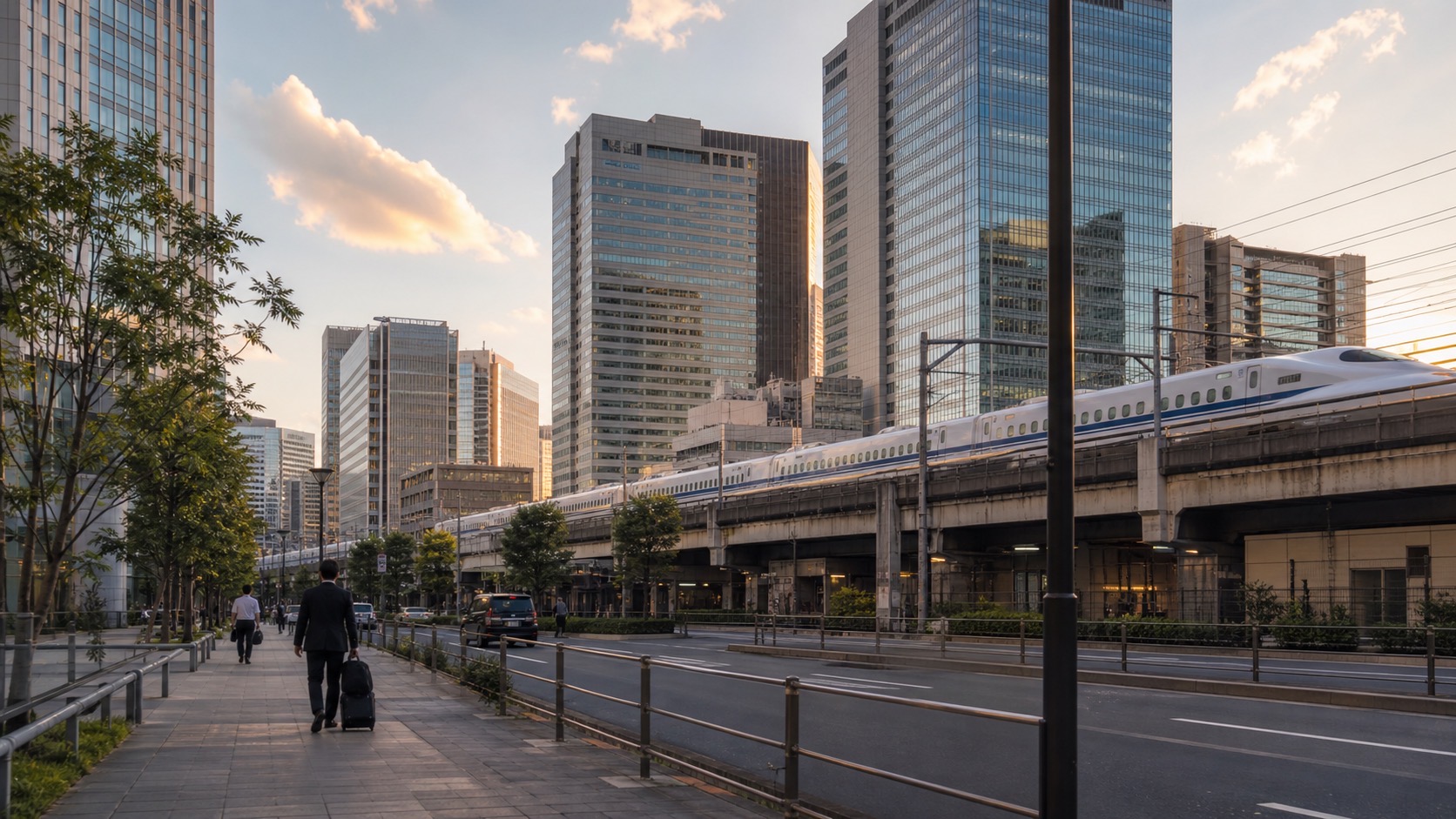
Shinkansen + Haneda direct. The stress-free Tokyo base camp.
Quick links
Overview
The Honest Truth: Shinagawa is most useful as a transport base, with local walks toward Kita-Shinagawa and Tennoz Isle. Choose it for your itinerary and hotel route rather than a dense sightseeing checklist.
Shinagawa combines a Tokaido Shinkansen stop with Keikyu services toward Haneda. Check the chosen terminal, train service, current timetable and fare. Compare the exact hotel room and station approach rather than assuming quiet nights or easy availability.
If you are planning shinkansen trips to Kyoto or Osaka, or using Haneda for early and late flights, Shinagawa eliminates the stress. Allow time for your hotel-to-station walk, ticketing, the correct Shinkansen gate and platform, and boarding before departure; proximity does not guarantee a ten-minute door-to-seat transfer.
Best for: Travelers using the shinkansen to Kyoto and Osaka, early or late Haneda flights, and those who want a large, clean hotel without Shinjuku or Shibuya chaos.
The useful question is not whether Shinagawa has the biggest list of attractions. It is whether the station can remove friction from the rest of your itinerary. A traveler arriving from Haneda can reach a hotel near the station without a long cross-city ride. A traveler leaving for Kyoto can buy a meal, collect luggage, and enter the Tokaido Shinkansen system without first crossing central Tokyo. That advantage is strongest on arrival and departure days, when a missed connection or a long walk has a higher cost than it does on a free afternoon.
Shinagawa also works as a reset point between busier days. You can spend the afternoon in Shibuya, Asakusa, or Ginza and return to a district where the immediate streets are mostly offices, hotels, and transport routes. The trade-off is clear: the neighborhood itself does not provide the same density of temples, shopping streets, or nightlife. Choose Shinagawa when transport reliability and a predictable hotel environment are worth more than stepping into sightseeing the moment you leave reception.
The practical booking test
Before booking, write down three movements: your airport route, your longest day trip, and your latest planned return. If two of the three involve Shinagawa Station, the area is doing useful work for your trip. If none involves the station and your priority is late-night dining or street-level sightseeing, another Tokyo base may save you time and train fares even if its hotel looks less efficient on a map.
Must-see Shinagawa landmarks and attractions
Shinagawa’s core attractions form a compact route. Use this visual shortlist to choose what to see first and where a hotel should sit.
 01
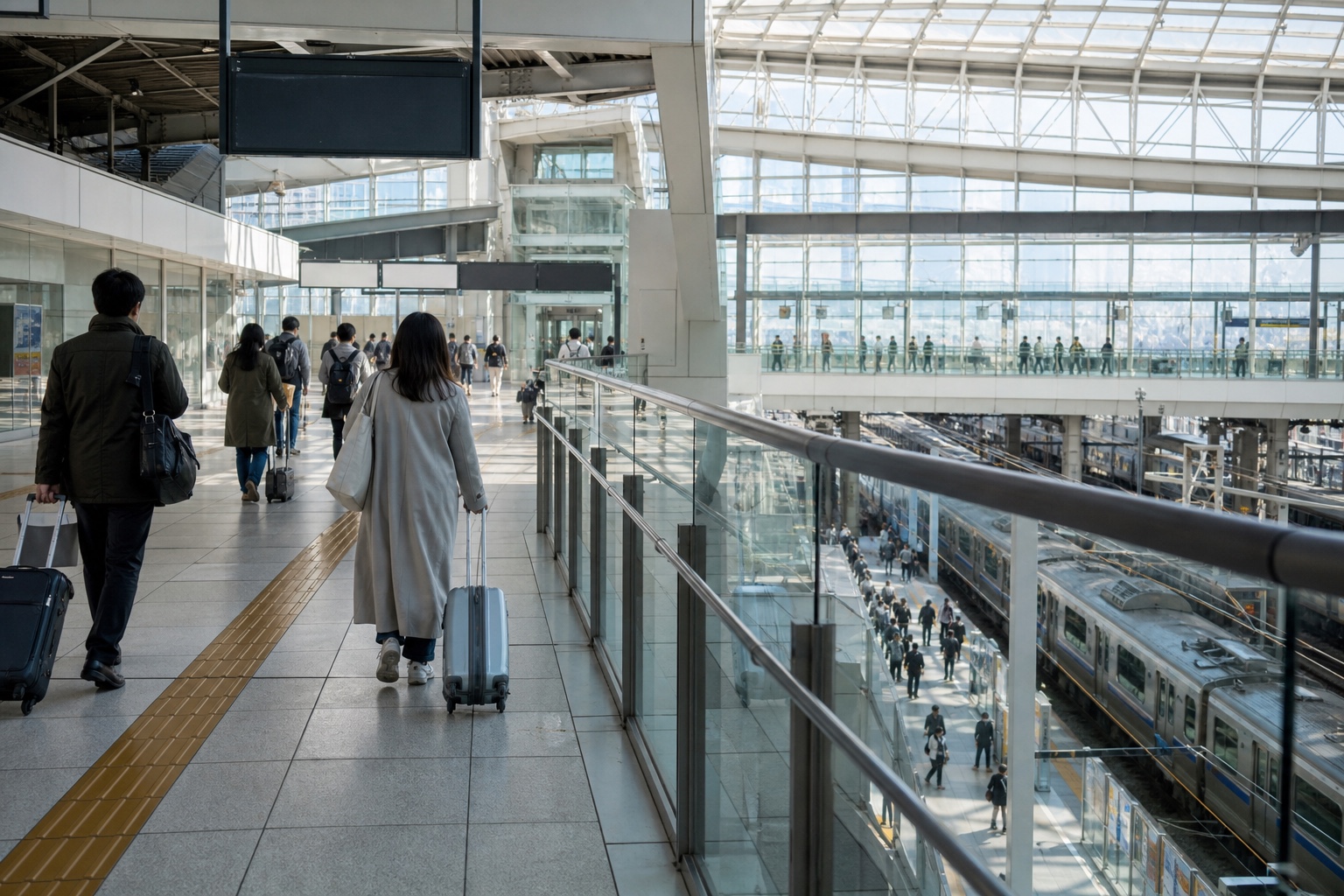
01Shinagawa Station
Transit hubJR, Tokaido Shinkansen, and Keikyu services converge here, making Shinagawa a launch point for Tokyo and longer journeys.
 02
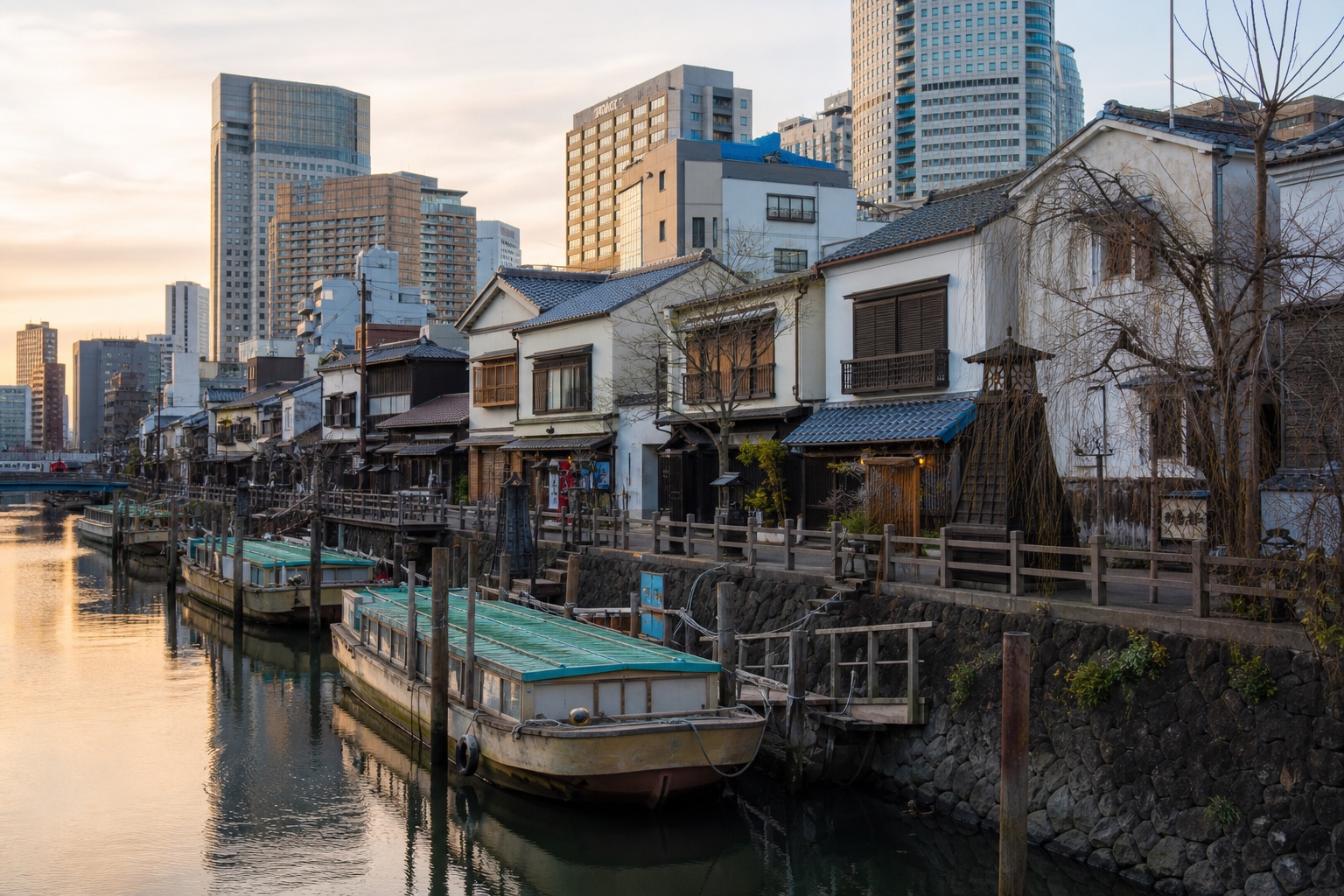
02Kita-Shinagawa and Shinbanba
Old-Tokaido streetsTraditional sweets, small shops, shrines, and older buildings create a local contrast with Shinagawa’s station towers.
 03
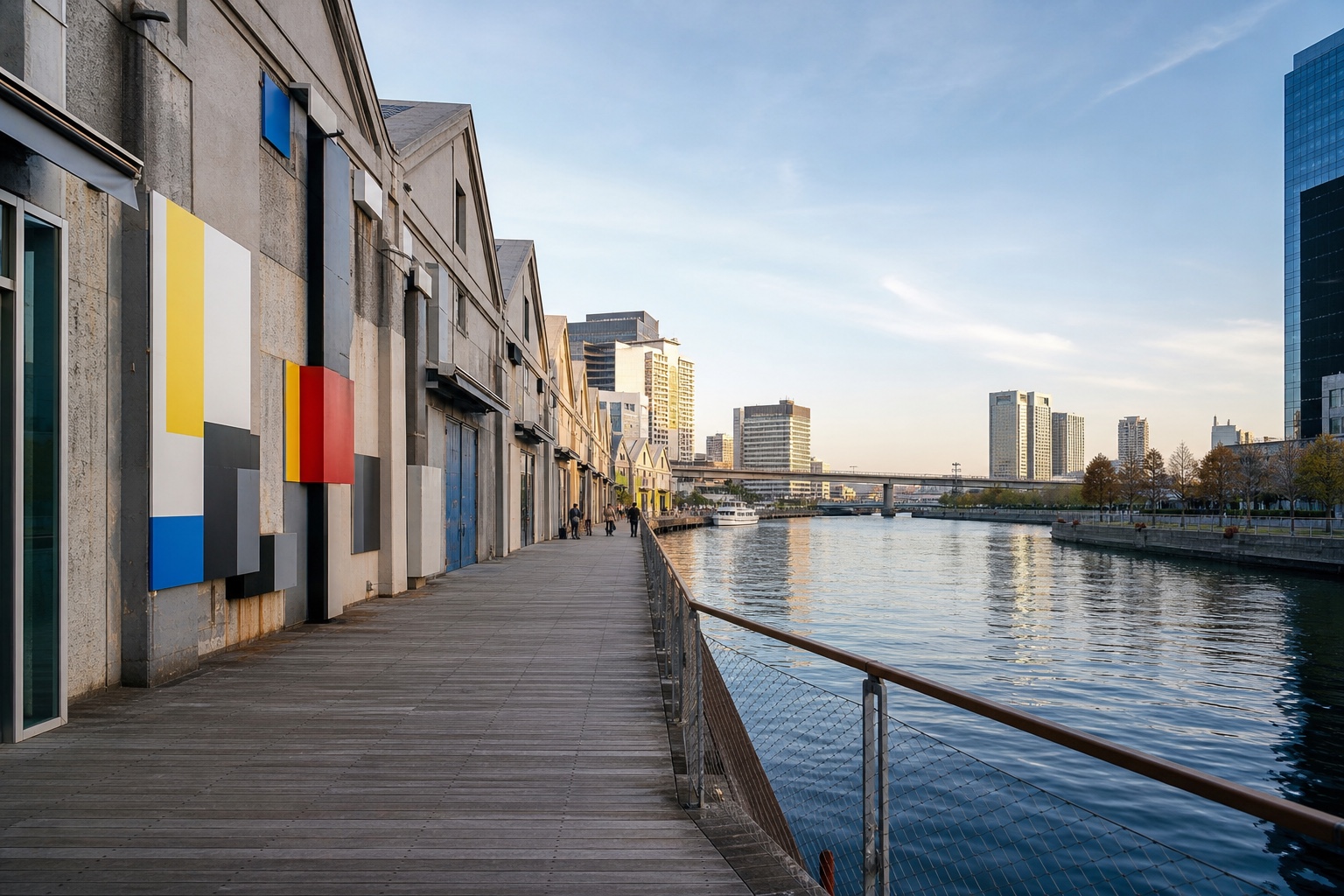
03Tennoz Isle
Canalside galleriesConverted warehouses, canalside cafés, and galleries offer a slower waterside walk away from the station.
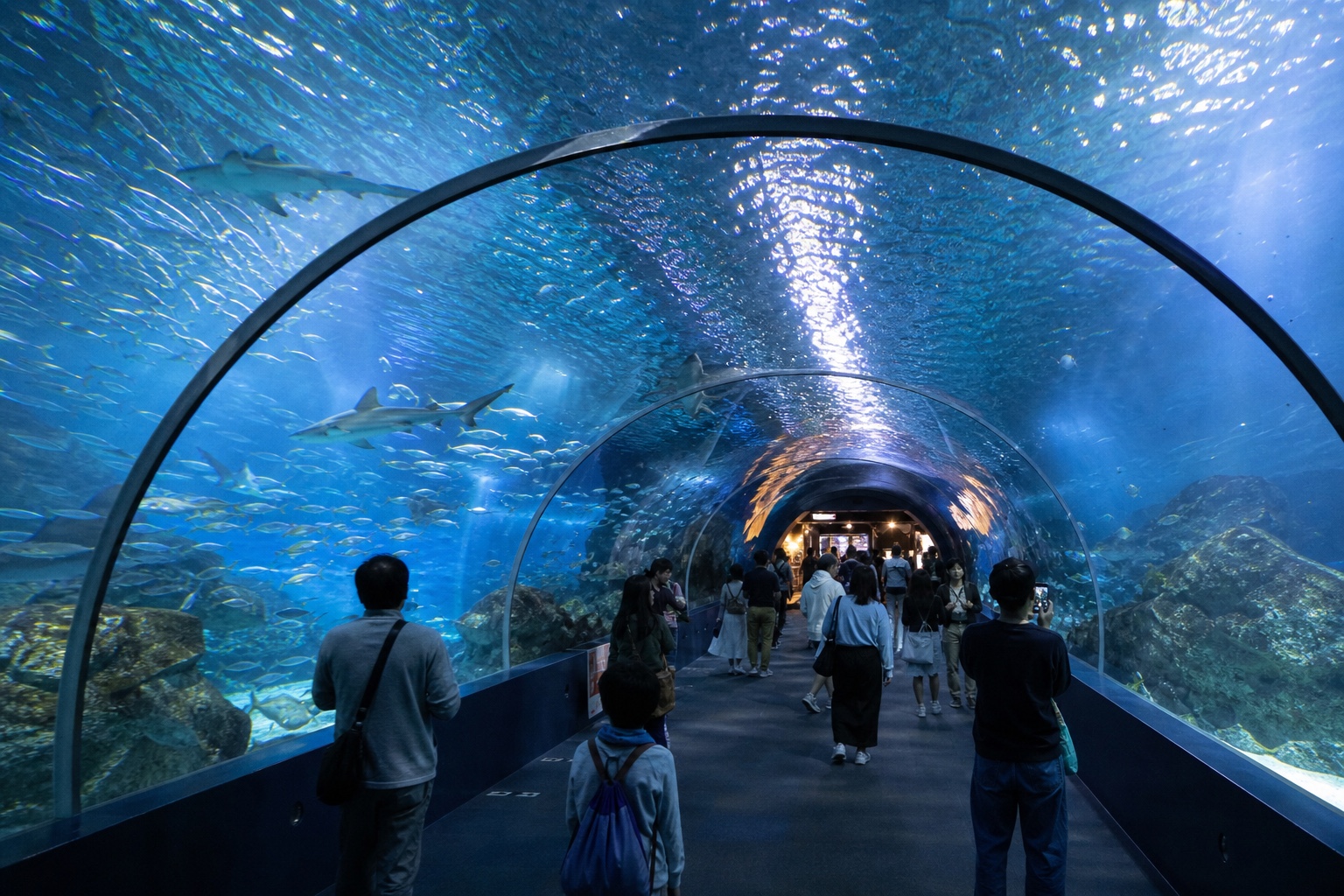 04
04Shinagawa Aquarium area
Family attractionThe aquarium area provides a family-friendly outing for younger children on the wider Shinagawa side.
What Kind of Place is Shinagawa?
Shinagawa is a business and transit hub. There are not many photogenic spots for tourists, but its practical value for travelers is among the best in Tokyo.
Compared to other areas:
The station is the center of the decision. JR East services and the Tokaido Shinkansen bring long-distance and local movement together, while Keikyu connects the area toward Haneda. That concentration makes Shinagawa feel more like a launch platform than a destination. It is especially useful for a split itinerary: several nights in Tokyo followed by Kyoto or Osaka, or a final Tokyo night before an early flight.
Compared with Tokyo Station, Shinagawa can feel less ceremonial and easier to use as a hotel base, but the station is still large and the approach from the wrong exit can be tiring. Compared with Shibuya and Shinjuku, the evening offer is thinner and the streets become quieter sooner. Compared with Ginza, there is less premium shopping within walking distance, but a traveler may spend less for a larger, more transit-oriented hotel. Those are planning differences, not a ranking of neighborhoods.
| Choose Shinagawa when… | Compare another area when… |
|---|---|
| Your route includes Kyoto, Osaka, Nagoya, Haneda, or a business meeting near the station. | Your main plan is late-night bars, small music venues, or shopping streets outside the hotel. |
| You have large luggage, a stroller, or a tight arrival/departure window. | You want a compact sightseeing loop with attractions immediately outside the hotel. |
| You prefer a full-service city hotel and predictable chain facilities. | You want a hostel, guesthouse, or strongly local boutique atmosphere. |
Who is Shinagawa for?
Highly Recommended for
- Shinkansen travelers headed to Kyoto and Osaka.
- Haneda flyers who want no-transfer access.
- Families with luggage who need wide sidewalks and elevators.
- Visitors who want a hotel-focused base and will verify the actual room and evening route.
Not Recommended for
- Travelers who want instant sightseeing after leaving the hotel.
- Nightlife seekers who want clubs and bars until late.
- Ultra-budget backpackers needing many hostel choices.
Good itinerary matches
A three-generation family can use Shinagawa as a low-friction base: luggage stays at the hotel, one group can take the train while another rests, and meals are available in station buildings or hotel restaurants. The area is not automatically easy for every family, though. Station distances, platform changes, and the difference between Takanawa and Konan matter more than a generic claim that the district is family-friendly. Confirm elevators and room occupancy before booking.
Business travelers benefit from the office concentration around the Konan side and from the ability to leave Tokyo without changing hotels. Long-stay visitors can also value the station shopping, convenience stores, and simple rail connections. The cost is that a business district can feel empty on a holiday evening, and some restaurants close earlier than a visitor expects. If atmosphere is part of the trip rather than a background condition, stay closer to the entertainment or old-town district you plan to use most.
Who should think twice
Shinagawa is a weak match for a traveler who wants a dense first-night walk through famous streets, a wide choice of small bars after midnight, or a hotel surrounded by independent shops. You can reach those experiences by train, but every extra trip adds a departure time, a platform decision, and a return journey. That is manageable for an active itinerary; it is not the same as having the experience at your door.
Key Areas
Takanawa Exit (West Side)
Classic hotel district with Shinagawa Prince Hotel and established city hotels. This side is best for JR-focused movement.
Konan Exit (East Side)
Redeveloped office district with glass towers, chain restaurants, convenience stores, and wide sidewalks that are easy with suitcases and strollers.
Kita-Shinagawa and Shinbanba
A short walk from the station brings you to old Tokaido atmosphere with traditional sweets, small shops, and a quieter neighborhood character.
Tennoz Isle
Canal-side warehouses converted to cafes and galleries. Good for a relaxed walk and waterside dining.
Treat the station exits as separate micro-areas when comparing hotels. The Takanawa side faces the established hotel and entertainment cluster, while the Konan side opens toward offices and newer high-rise development. A map pin that appears close to the station can still lead to a different daily route depending on which ticket gate, underground passage, or pedestrian deck you use. Save the hotel’s official access directions before arrival and match them to your train line.
Kita-Shinagawa and Shinbanba are the better choice for a short local walk. The old Tokaido corridor has a different scale from the station towers: small stores, food shops, shrines, and older buildings make the contrast visible. This is not a replacement for Asakusa’s major sights, and many shops keep local hours, but it gives a stay in Shinagawa a neighborhood dimension that the station frontage does not provide.
Tennoz Isle is a separate excursion rather than an attraction directly beside every hotel. The canalside setting works best in daylight or early evening, especially when you want a slower walk after a train-heavy day. Check the return route if you are traveling with young children or carrying shopping; the walk is more enjoyable when you are not treating it as a guaranteed shortcut back to the station.
Day vs. Night
Daytime
- Browse Ecute Shinagawa (inside JR gates) for bento and souvenirs.
- Lunch in Konan office district.
- Walk Tennoz Isle canalside cafes.
- Explore old Tokaido streets in Kita-Shinagawa.
Nighttime
- Casual izakaya around Takanawa side.
- Shinagawa Prince Hotel restaurants for Japanese, Chinese, and buffet options.
- Konan building ground-floor bars and ramen until late evening.
- Hotel bars for a quiet nightcap.
A productive daytime plan is to use Shinagawa for one practical task and one slower walk. Buy a train meal or souvenir inside the station, then leave the immediate platforms for either the old Tokaido side or Tennoz Isle. This keeps the area from becoming only a place to change trains. It also avoids overplanning: Shinagawa’s value is not a long attraction checklist, but the ability to fit food, errands, and a short walk around a larger Tokyo itinerary.
At night, decide whether you want convenience or atmosphere. The station hotels and office buildings make dinner easy, particularly for a solo traveler or a group arriving with luggage. The quieter streets are useful after a demanding day, but they can feel too quiet if you expect a continuous entertainment district. For a late night in Shibuya, Shinjuku, or Roppongi, check the last train or budget for a taxi before ordering a final drink; the district’s calm is part of the trade-off.
Where to Eat and Drink
Shinagawa food scene is convenient and reliable. You get practical options before and after transit, and solo dining is easy.
Popular with International Visitors
- Ecute Shinagawa: inside the JR paid area. To visit without a train-journey ticket, the ordinary Shinagawa station admission ticket is ¥160 for an adult and ¥80 for a child under JR East’s published rule, checked 8 October 2026. Recheck the rule before visiting. Follow the validity printed on the ticket; admission does not authorize a train journey.
- Shinagawa Prince HAPUNA Buffet: around 80 dishes, weekend reservation recommended.
- ALEGRIA Shinagawa: churrasco with table-side carving.
- T.Y. HARBOR (Tennoz): canal terrace, strong dinner location.
- Old Tokaido small shops: quiet local flavor with fewer tourists.
Late-Night Food
- For station takeout, check the chosen Ecute shop’s current hours and last order before a late arrival.
- For a late meal on the Konan side, check a named restaurant’s current closing time and last order.
- One named late-night option is Sukiya Shinagawa Higashi at 2-2-3 Konan: its official branch page, checked 8 October 2026, lists 04:00–03:00 next day, with a daily 03:00–04:00 closure. It is not open 24 hours; recheck the branch notice before relying on it.
- For overnight food, check a named convenience store’s current opening hours and what it stocks before relying on it.
Family-Friendly Dining
- HAPUNA buffet is family-friendly due to variety and spacious seating.
- Ecute takeout for shinkansen meals is practical for children.
- Shinagawa Aquarium area works for younger children.
- Atre Shinagawa keeps movement easy on rainy days.
Shinagawa’s food choice is strongest when the meal has a job. Station takeout solves a Shinkansen departure. A hotel buffet solves a mixed-preference family dinner. Konan’s office-building restaurants solve a quick weekday meal. Tennoz Isle supplies a slower view-based meal when the weather cooperates. This is a useful range, but it is not the same as a destination food neighborhood with dozens of independent restaurants competing for attention.
The official Shinagawa shopping-street guide describes 104 shotengai in the wider Shinagawa area, which explains why a short trip beyond the station can reveal a more local retail pattern. Do not assume every one of those streets is next to Shinagawa Station: the number covers the broader ward, and the old Tokaido area is the relevant nearby direction for a short neighborhood walk. Use the station for reliability and the local streets for texture.
How to plan a meal around transport
For a morning departure, buy the previous evening if your hotel room has a refrigerator or choose a shop with a confirmed opening time. For a family dinner, reserve the restaurant rather than assuming the first available table can seat everyone. For a late arrival, treat convenience stores and chain restaurants as the dependable fallback and regard hotel dining as a bonus: restaurant hours, menus, and last orders change. These simple checks matter more in Shinagawa because many guests are choosing the area for a timed transfer.
Shopping and Cafes
Shinagawa is not a major shopping district, but daily essentials are complete.
- Ecute Shinagawa for bento, sweets, and station shopping.
- Atre Shinagawa for station-connected dining and basic shopping.
- Starbucks and Tully’s in Konan area for work and rest stops.
- Multiple convenience stores and drugstores around both exits.
The station buildings are practical rather than a full-day shopping destination. Ecute Shinagawa is most useful when you are already inside the JR ticketed area; Atre Shinagawa is easier for a meal or coffee without turning a transfer into a separate expedition. If you need medicine, snacks, drinks, or a replacement charger, the station and office-building convenience stores are usually a faster solution than crossing the district looking for a specialist shop.
Cafes around Konan work well for a short work session because the area is built around offices, but that also means seats and opening patterns follow the weekday rhythm. On weekends, some office-building tenants may be closed. Tennoz Isle offers a more scenic alternative, while the old Tokaido side offers smaller local businesses. Check payment methods and opening days when a particular shop is the reason for your walk.
Safety and Hotels
Safety
Plan the actual evening route between your hotel, station and dinner stop. Office/hotel character does not establish safety or quiet on every street.
Hotel Character
Hotels are mostly large international-chain and major Japanese-brand properties.
Pros:
- Room and bathroom quality are stable.
- Breakfast quality is reliable.
- English support is generally strong.
Cons:
- Less local boutique character than old neighborhoods.
- Fewer extremely low-cost options.
The calm atmosphere is useful, but it should not be confused with a guarantee of zero risk. The station is busy, office streets can become quiet, and luggage makes visitors easy to identify. Keep the same precautions you would use elsewhere in Tokyo: check the last train, keep valuables secure, and use a staffed taxi stand or a reputable ride-hailing service when walking feels impractical. The main booking benefit is predictability, not a special exemption from normal travel awareness.
Hotel choice also affects how much of Shinagawa you experience. A large property can reduce decision fatigue because restaurants, breakfast, luggage handling, and reception are in one place. A smaller city hotel may feel easier to understand and less crowded. Neither automatically delivers a local neighborhood stay. If that character matters, plan a walk to Kita-Shinagawa or choose another Tokyo district for at least part of the trip.
Check before paying
- Which station exit and route the hotel recommends for luggage.
- Whether the room type has the beds and occupancy your group needs.
- Breakfast hours if you have a morning Shinkansen or flight.
- Cancellation terms and whether the displayed rate includes the conditions you want.
- Whether late arrival instructions are clear if you land after normal dinner hours.
Best Hotels in Shinagawa
These four hotels are the clearest fits for Shinagawa’s main strengths: Haneda access, Tokaido Shinkansen departures, and calm city-hotel convenience. Compare the trade-offs before checking current availability.
- ★★★★★7.5/10Our pick
Shinagawa Prince Hotel
Large city hotelA large, facility-rich choice for travelers who want restaurants, entertainment, and a simple Takanawa-side base in one property.
Pros:Clear location for day-to-day movement Straightforward walking route with luggage Useful for mixed city and side-trip itineraries
From ¥15,000+/nightTrade-off: Weekend rates rise quickly Popular room categories sell out early Breakfast can feel crowded at peak times
📍 Takanawa Exit 2 min 🗺️ Map🗺️ Map - ★★★★★8.8/10
The Strings by InterContinental
Luxury hotelA high-floor luxury option with premium service and strong access to the Konan side, suited to travelers who value comfort over budget.
Pros:Strong fit when station access matters Manageable route during busy hours Good balance of service and sleep quality
From ¥35,000+/nightTrade-off: Peak-season pricing is volatile Late bookings leave weaker room choices Rush-hour lobby waits are possible
📍 Konan Exit 3 min 🗺️ Map🗺️ Map - ★★★★★8.0/10
Shinagawa Tobu Hotel
City hotelA calmer city-hotel option with relatively spacious rooms, useful for travelers who want the Takanawa side without the scale of a mega-property.
Pros:Simple route for everyday movement Comfortable base for mixed itineraries Less overwhelming than a very large hotel
From ¥12,000+/nightTrade-off: Older feel in some areas Fewer dining choices immediately nearby A little farther from the station
📍 Takanawa Exit ~7 min uphill via Zakuro-zaka 🗺️ Map🗺️ Map - ★★★★★Not rated
Grand Prince Hotel Shin Takanawa
Garden / Large hotelA large Takanawa-side property with 908 balcony-equipped rooms, a roughly 20,000㎡ Japanese garden, multiple restaurants, and club-floor lounge options. A useful alternative when you want greenery and space near Shinagawa.
Pros:Balconies in guest rooms Large Japanese garden Multiple restaurants Club-floor option
Price: Check current ratesTrade-off: The campus is large and the walk from Shinagawa includes an uphill section; compare the exact building and room category
📍 Shinagawa Takanawa Exit 5 min · 🗺️ Map🗺️ Map
How to Choose Between the Four
Start with the first and last train you actually need, then choose the station side. The Takanawa-side properties shorten the walk to the west exit, the Keikyu platforms, and the hotel cluster around Shinagawa Prince. The Konan-side property is a better match when your room, work meeting, or evening plan is on the east side. The two sides are connected, but crossing a large station complex with suitcases is a real part of the journey, not a detail to leave until arrival.
Price is also a use-case decision. Shinagawa Prince Hotel trades boutique character for scale: more facilities, more room types, and a route that is easy to explain to a first-time visitor. The Strings by InterContinental charges more for a quieter, higher-end stay and is a poor fit if the room is used only as a place to sleep between trains. Shinagawa Tobu Hotel sits between those extremes for travelers who prefer a calmer property without the scale of a major complex. Grand Prince Hotel Shin Takanawa adds a garden-campus option on the Takanawa side, with larger public spaces and balcony-equipped rooms.
Rates shown on booking sites change with dates, room type, events, and cancellation conditions. Treat the prices in the cards as starting indications, not a promise. For a family, check the exact bed configuration and child policy before comparing the headline rate; for an early flight, check the route from the room to the platform rather than relying only on the hotel’s name.
Airport Access
| Airport | Route | Time | Cost | Notes |
|---|---|---|---|---|
| Haneda | Keikyu direct, for a suitable service | Check selected service | Adult one-way, as of 8 October 2026: paper ticket ¥330; transport IC ¥327 | Shinagawa ↔ Haneda Airport Terminal 3 or Terminal 1·2. Check Keikyu’s current fare table and timetable before travel. |
| Haneda | Taxi | ~20-30 min | ¥4,000-6,000 | Useful late night |
| Haneda | Limousine bus | ~25-35 min | ¥700 | Useful for Prince Hotel stays |
| Narita | Narita Express direct | ~75 min | ¥3,250 | No need to transfer at Tokyo |
| Narita | Skyliner + JR | ~65 min | ¥2,750 | Cheaper with transfer |
Keikyu serves Shinagawa and Haneda Airport terminals, but the ride depends on the terminal, service and time of day. Check a suitable current departure and fare, then add time for the airport walk, ticketing, platform finding and the walk to your hotel.
For an early departure, the hotel-to-platform walk is the key variable. A one-minute station-side hotel can be more useful than a larger room a few blocks away when you are moving before breakfast. For a late arrival, compare the last practical train with a taxi budget. The taxi option costs more, but it removes a transfer problem when services are infrequent or your luggage is difficult to manage. Recheck live schedules and fares on the day of travel.
Narita is a different proposition. Shinagawa can be a reasonable base for a direct or low-transfer rail plan, but the total journey is much longer than Haneda access and the fare is higher. If most of your trip is built around Narita rather than Haneda, compare Tokyo Station, Ueno, or another rail hub before assuming Shinagawa is the best airport base.
Shinkansen Access
| Line | Station | From Shinagawa | Key Destinations |
|---|---|---|---|
| Tokaido | Shinagawa | Board at this station; allow gate and platform time | Kyoto, Osaka, Nagoya |
| Tohoku / Hokkaido | Tokyo | Check JR service and transfer time | Sendai, Morioka, Shin-Hakodate |
| Hokuriku | Tokyo | Check JR service and transfer time | Kanazawa, Nagano |
| Joetsu | Tokyo | Check JR service and transfer time | Niigata, Echigo-Yuzawa |
Shinagawa’s strongest long-distance advantage is specific: the Tokaido Shinkansen stops here. JR Central’s official Shinagawa station guide identifies the Tokaido Shinkansen and connecting lines. From a hotel near the correct exit, that can turn a departure morning into a short, repeatable sequence: check out, reach the station, find the Shinkansen gate, and board.
Check the seat rules for your service and travel date. Nozomi has unreserved seats outside the operator’s designated all-reserved periods; during those periods, all Nozomi seats require reservations. JR Central says online reservations can be made from outside Japan and that QR tickets can take passengers directly to the gate under the relevant conditions. Peak periods can have different seat rules and crowd levels, so reserve early when your itinerary depends on a particular train. The station is easier when you know the train number, car number, and boarding side before you arrive.
For Tohoku, Hokkaido, Hokuriku, and Joetsu services, use the table as a planning reminder rather than a guarantee of a ten-minute door-to-door transfer. You will be changing at Tokyo Station, and the time depends on the platform, ticket arrangement, luggage, and crowd level. If that transfer is the centerpiece of your trip, staying near Tokyo Station may be worth comparing even when Shinagawa is the calmer hotel base.
Getting Around Tips
- Confirm whether your hotel is on Takanawa or Konan side. JR East’s Shinagawa station map marks the large internal routes, and the correct side matters more than the district name.
- Use Yamanote direction correctly to avoid long loops.
- Walk to Tennoz Isle when weather is good.
- Use Konan taxi stands for quick dispatch.
- Use Suica or Pasmo for seamless transfers.
A low-stress sequence for arrival day
First, identify the hotel exit before leaving the platform. Second, keep the hotel address and official access page available offline. Third, separate the station task from the sightseeing task: collect your luggage or check in first, then decide whether to walk to the old Tokaido area or Tennoz Isle. This sequence prevents a common mistake in large Tokyo hubs—trying to navigate with bags, a new rail card, and a sightseeing plan at the same time.
Use an IC card for ordinary local trips when it is accepted, but keep your Shinkansen reservation and airport plan separate in your notes. A stored-value card does not replace a reserved-seat ticket, and a rail route that looks direct may use a different operator or platform. For groups, choose one meeting point outside the gates and share the hotel exit, since the station’s internal meeting points are easy to confuse when trains arrive at different platforms.
The final rule is to price the cost of convenience honestly. Shinagawa saves time when you are using its station; it may add time when your evening is elsewhere. Count the return train, the walk to the correct exit, and the possibility of a taxi. That calculation gives a better answer than calling the area simply central or convenient.
Frequently Asked Questions
Is Shinagawa a good area to stay in Tokyo?
Yes, if efficient transport matters more than sightseeing outside the hotel. Shinagawa combines direct Tokaido Shinkansen access, a simple Haneda route, and quiet large hotels. It is less suitable if you want a lively tourist district on your doorstep.
How do I get from Shinagawa to Haneda Airport?
For Shinagawa ↔ Haneda Airport Terminal 3 or Terminal 1·2, check the current Keikyu fare and a suitable direct service in the table above. Include station and airport walks. Compare a current taxi quote if trains do not fit your arrival time.
Is Shinagawa safe at night?
Plan the route between the station and your hotel, especially after the last trains. Keep valuables secure and use ordinary city precautions.
Can I take the Shinkansen from Shinagawa Station?
Yes. Shinagawa is a Tokaido Shinkansen stop, with direct trains to Nagoya, Kyoto, and Shin-Osaka. For Tohoku, Hokuriku, and Joetsu services, transfer at Tokyo Station.
What is there to do near Shinagawa Station?
The area is strongest for practical stops: Ecute Shinagawa for bento and souvenirs, Tennoz Isle for canalside cafes and galleries, the old Tokaido streets around Kita-Shinagawa, and Shinagawa Aquarium for a family-friendly outing.
Explore More Tokyo Areas
Compare three different Tokyo bases before choosing the neighborhood that best fits your route and travel style.


Some links below are affiliate links. If you book through them we may earn a small commission at no extra cost to you.