Tokyo practical guide
Tokyo Park Picnics: Check the Space, Food and Equipment Rules
Check your chosen park before packing lunch, alcohol, a tent or cooking equipment. Permission to sit on a lawn does not cover every picnic setup.
Before packing for a Tokyo park picnic, check three things separately: where you may sit, what you may bring, and what you may set up. A lawn on a map does not establish permission for a tent, a barbecue or an unattended sheet to reserve space.
This guide is a way to check your chosen park, rather than a list of places where every picnic arrangement is allowed. Look at the official park page and current notices before buying supplies, especially for blossom-viewing events or a visit with bulky equipment.
Start with the exact park and the exact area
For a hotel base near your chosen outing, compare our Shinjuku hotel guide and Ueno hotel guide. Check the route to the exact park entrance before leaving.
Find the park operator’s visitor rules and any notices for your date. A garden, an open park and an event site can have different conditions. Even inside one park, a designated children’s area or barbecue facility may operate differently from the lawn beside it.
Check whether the space you want is open, whether eating there is allowed, and when you must leave. Keep paths, entrances and facilities clear. Do not treat another group’s setup as evidence that the same equipment or activity is permitted.
Yoyogi Park’s Jinnan 1-chome district has a separate operator. Check its own rules and notices for the area you intend to use: Jinnan 1-chome district guide
A picnic blanket is not permission to reserve a lawn
Before spreading a large sheet, check the operator’s rules on occupying space and leaving belongings. Plan a setup for the people actually present, and arrange a meeting point without assuming you can hold a large empty area for later arrivals.
The Shinjuku Gyoen rules ask visitors not to occupy the same bench or lawn area for a long time. Yoyogi Park’s prohibited-activities sheet, linked from its official park page, prohibits leaving belongings in the park. These are different formulations; neither provides a universal number of minutes for reserving a picnic spot.
If a seasonal notice adds restrictions, follow that notice for your visit. An old blossom-season photograph is not a booking system or a guarantee that a particular patch of grass will be available.
Yoyogi Park’s service-center notice prohibits reserving spaces with ropes, pegs or signs and says unattended sheets may be removed. It also prohibits tables, chairs, fire and tents outside blossom season. See the 2026 visitor notice
Check food, alcohol and cooking separately
Bringing ready-to-eat food and cooking it on site are different plans. Shinjuku Gyoen prohibits alcoholic beverages and flame-producing equipment, including portable stoves. In the areas covered by Yoyogi Park’s service-center rules, fire use is prohibited, including cooking and barbecues. Do not interpret an outdoor eating area as permission to light a stove.
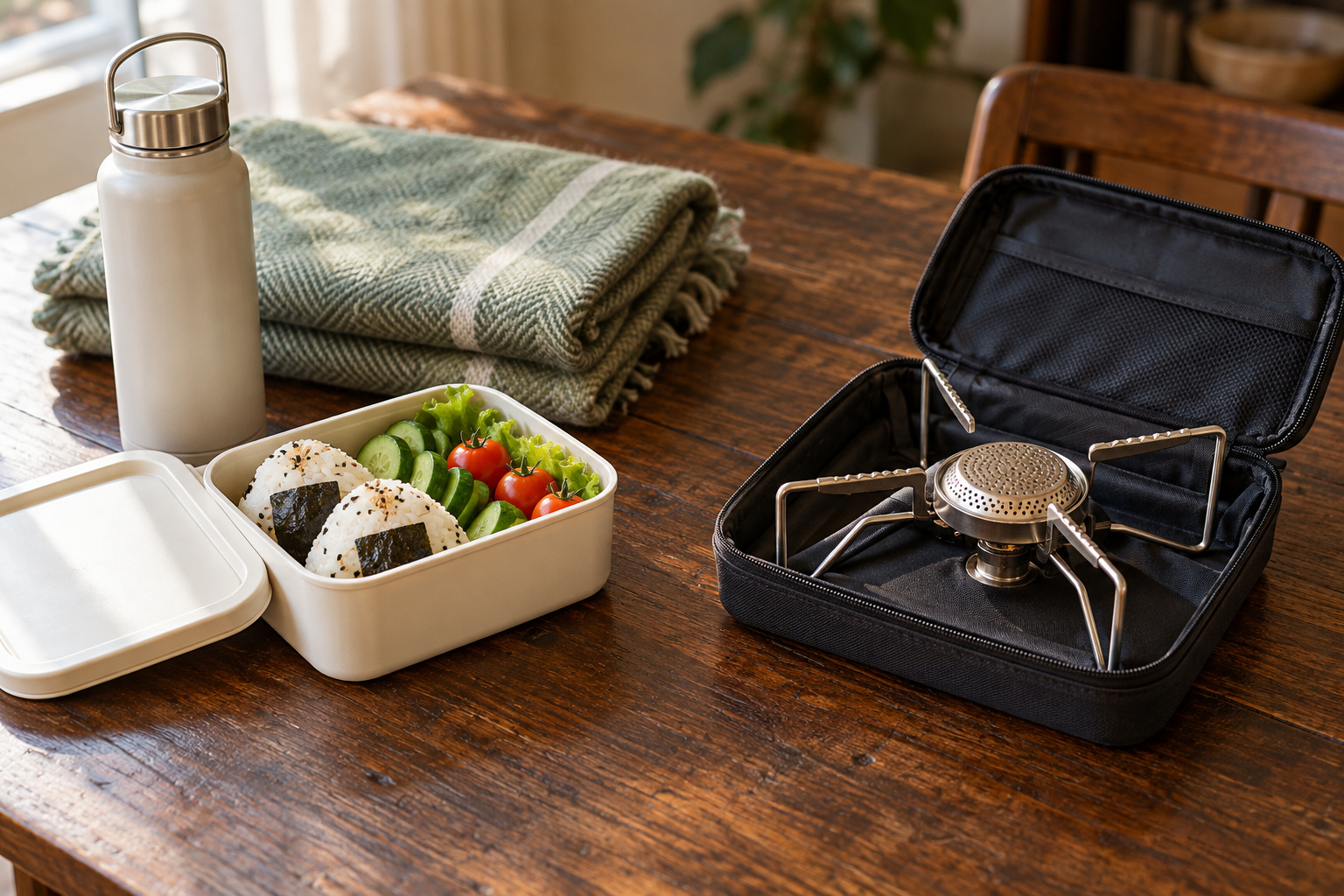
These are rules for the named places, not a statement that all Tokyo parks have identical restrictions. If you want a barbecue, check a specifically designated facility’s booking and equipment conditions. For an ordinary picnic, choose supplies only after confirming what your chosen location allows.
The Yoyogi park-wide rules reviewed here do not state a blanket food or alcohol allowance. Facility rules can be stricter: the artificial-turf sports area restricts food and drink to water or tea and bans alcohol. Check the specific facility rules
A small pop-up tent still needs a rule check
The Tokyo Metropolitan Park Association FAQ says some parks may allow peg-free pop-up tents for shade in specified places and times, and asks visitors to check with the relevant service center in advance. “Pop-up” and “no pegs” are therefore not blanket permission.
Yoyogi Park’s service-center prohibition sheet includes tents, tarps and sunshades. Shinjuku Gyoen generally prohibits tents and parasols, with a narrow exception: children’s tents measuring no more than 150 cm on each side may be set up in the Kids Area for heat protection for infants and young children from May 7 through October 31. Check the current wording before relying on that exception; it does not authorize a tent elsewhere in the garden.
If your trip depends on shade equipment, settle the permission question before carrying it across the city. A lighter setup or a different permitted location may be more practical than arriving with equipment you cannot use.
Before leaving your accommodation
- Save the official rules and check current notices for the park and date.
- Confirm the permitted eating area and any closing or collection time.
- Check alcohol, cooking equipment, tents and furniture individually.
- Bring a bag for your waste and follow the park’s disposal instructions.
- Have another plan if the intended area is closed or too busy.
A successful picnic does not require a large setup. Match what you bring to the permission actually given, avoid occupying space you do not need, and follow instructions from park staff on the day.
Frequently asked questions
Can I use a peg-free pop-up tent in any Tokyo park?
No. The park association describes permission at some parks for particular places and times, with advance confirmation. Check your destination’s own rule.
Can I bring alcohol to a Shinjuku Gyoen picnic?
Shinjuku Gyoen’s published rules prohibit bringing alcohol into the garden. Do not extend a different park’s policy to this venue.
Does the Shinjuku Gyoen children’s-tent exception apply everywhere?
No. The stated exception is for infants and young children in the Kids Area for heat protection, May 7 through October 31, with each side no more than 150 cm. It does not authorize tents elsewhere in the garden.
Sources and freshness
The linked official park rules and notices were checked on October 10, 2026. This is a rules-based planning guide, not a park visit or a live check of lawn access. Check current notices for your exact area and date.