Where to Stay in Tokyo: Best Areas for First-Time Visitors
Tokyo is not one simple neighborhood. It is a huge city of different bases, each with its own rhythm, prices, trains, food, and nightlife. Start here if you are not sure whether Ginza, Shinjuku, Shibuya, Ueno, Asakusa, Ikebukuro, Odaiba, or Shinagawa fits your trip.

Quick links
Quick Answer: Which Tokyo Area Should You Stay In?
If this is your first Tokyo trip, do not start by asking which hotel is best. Start by choosing the area. A hotel in the wrong area can make every day feel harder, even if the room itself is good. A small room in the right area often works better than a large room in a place that does not match your trip.
First time, low stress
Choose Ginza for calm streets and central access, or Shinjuku if you want maximum train convenience and late-night options.
Compare Ginza hotelsValue and airport access
Choose Ueno or Asakusa if you want lower hotel prices, older Tokyo atmosphere, and easier Narita-side access.
Compare Ueno hotelsNightlife and youth culture
Choose Shinjuku for bars, trains, and all-night energy; choose Shibuya for youth culture, shopping, and a trendier feel.
Compare Shinjuku hotelsFamilies and open space
Choose Ikebukuro for Sunshine City and anime shopping, or Odaiba for bay views, malls, and family-friendly space.
Compare Ikebukuro hotelsTokyo Is Too Big to Treat as One Area
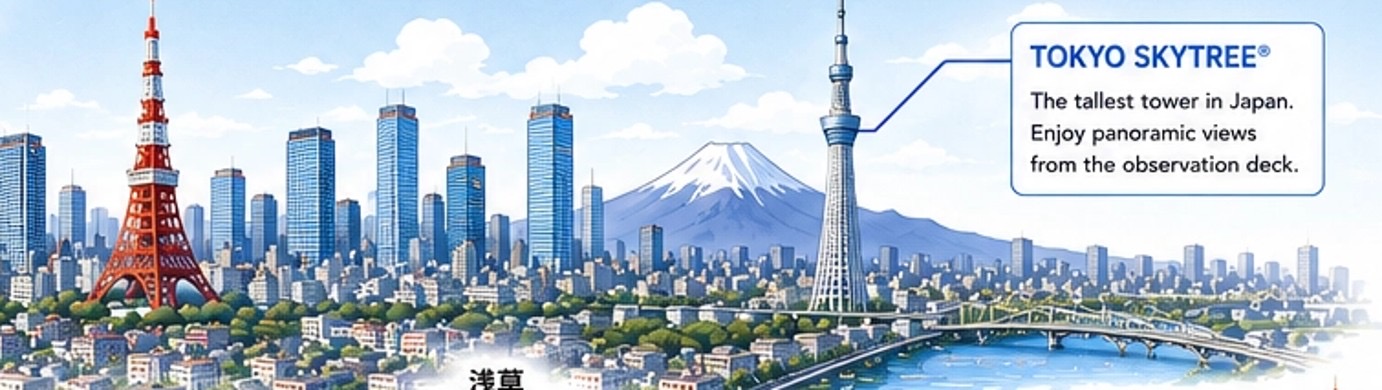
Tokyo is Japan’s largest city, and it can feel more like a collection of cities than one destination. For scale, the metropolis has around 14 million residents, Tokyo Skytree rises 634 meters, and the food scene runs from quick ramen counters to Michelin-starred dining. That is why advice like “stay in Tokyo” is not very useful. Staying near Senso-ji in Asakusa, a luxury street in Ginza, the neon side of Shinjuku, or the bayfront in Odaiba creates a completely different trip.
The practical rule: do not try to see all of Tokyo from one mental map. Pick a base that fits your travel style, then use trains to visit the rest.
This is the layer above the individual area guides. Once you understand the role of each district, the hotel choice becomes much easier.
Use the Yamanote Line as Your Mental Map
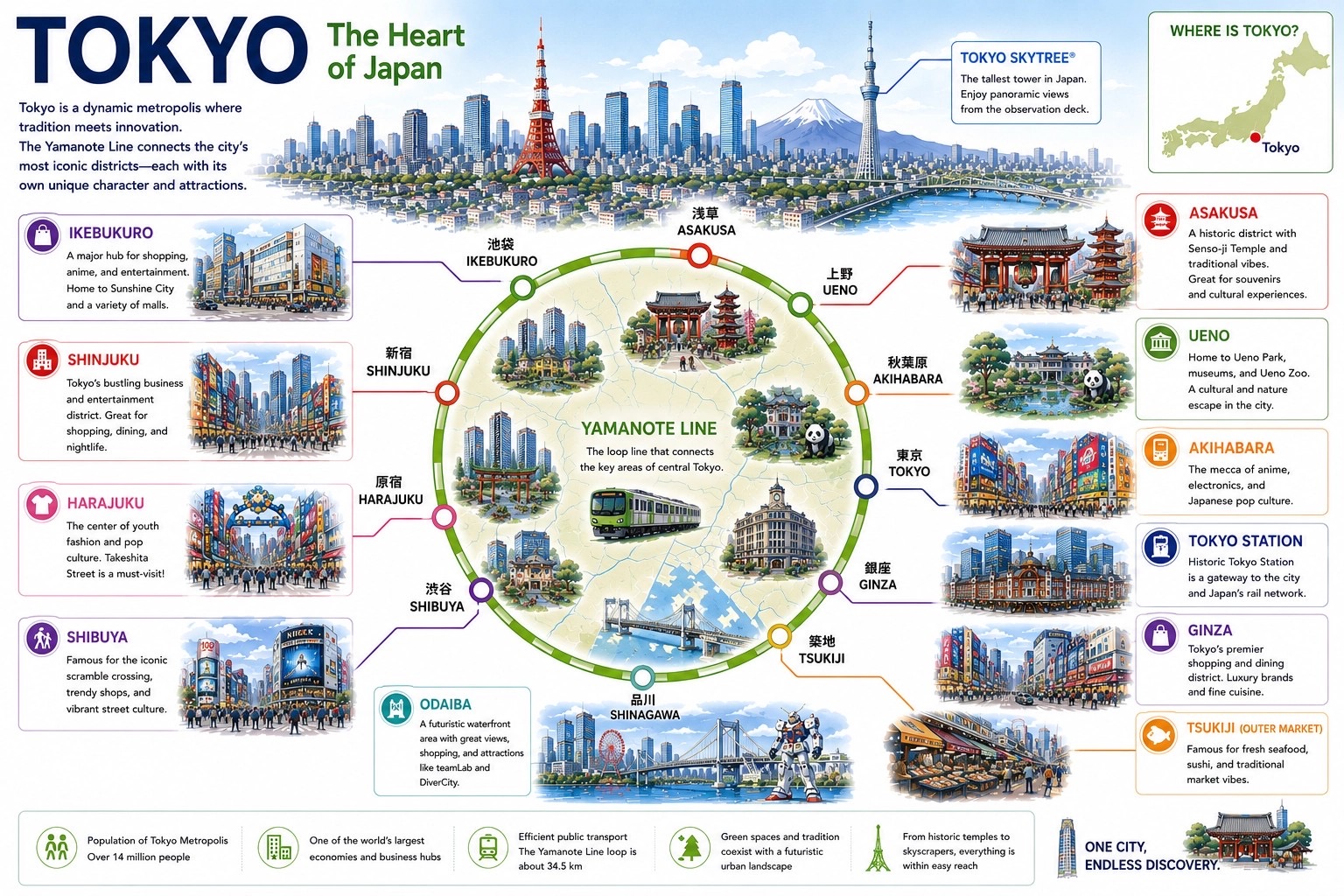
The easiest way to understand central Tokyo is the JR Yamanote Line, a loop line that connects many of the city’s major districts. You do not need to memorize every station. Just picture different neighborhoods sitting around a loop, with a few important areas just outside it.
North: Ikebukuro and Ueno. Northeast, just outside the loop: Asakusa. East: Akihabara, Tokyo Station, and Ginza. South: Shinagawa and the bayfront. West: Shibuya, Harajuku, and Shinjuku.
The loop makes Tokyo easier to read, but it should not trap your planning. Asakusa, Odaiba, Tsukiji, and other areas sit outside the loop and can still be excellent choices depending on your trip.
Tokyo Area Guide: What Each District Feels Like
Use this table as the first filter. It is not about naming the “best” area in Tokyo. It is about matching your base to the kind of trip you actually want.
Scroll horizontally on mobile for the full table.
| Area | Best for | Trade-off |
|---|---|---|
| Ginza | Polished first-time stays, shopping, food halls, calm nights, Tokyo Station access. | More expensive and less rowdy than Shinjuku or Shibuya. |
| Shinjuku | Nightlife, rail access, department stores, first-timers who want maximum energy. | Crowded and confusing; hotel location within Shinjuku matters a lot. |
| Shibuya | Youth culture, shopping, music, restaurants, Scramble Crossing, west-side sightseeing. | Busy and not always relaxing; prices are often high. |
| Ueno | Museums, Ameyoko, value hotels, Narita Skyliner access, old Tokyo food streets. | Less polished than Ginza; nightlife is casual rather than stylish. |
| Asakusa | Senso-ji, traditional streets, Skytree views, river walks, budget-friendly stays. | Not on the Yamanote Line; west-side trips take longer. |
| Akihabara | Anime, games, electronics, easy access to Ueno and Tokyo Station. | Themed and commercial; not the most atmospheric at night. |
| Ikebukuro | Families, Sunshine City, anime shopping, Harry Potter Studio Tour access, better value. | Less iconic for sightseeing; station exits can feel busy. |
| Odaiba | Bay views, malls, teamLab-style digital art, family time, open space. | Farther from classic central Tokyo; transport choices are narrower. |
| Shinagawa | Haneda access, Shinkansen, business hotels, arrival and departure nights. | Convenient more than charming; not a classic sightseeing neighborhood. |
Choose Your Tokyo by Trip Style
Tokyo does not force one correct answer. The best base depends on whether you want a quiet hotel, late-night food, fast trains, luxury shopping, museums, anime stores, or family-friendly space. Use these clusters to narrow the choice.
Luxury, food, and calm nights
Start with Ginza. Compare Shimbashi-Shiodome if you want easier izakaya nights nearby.
Nightlife and big-city energy
Start with Shinjuku. Compare Shibuya if shopping, youth culture, and restaurants matter more than all-night bar streets.
Traditional Tokyo and better value
Start with Asakusa or Ueno. Add Akihabara if anime, games, and electronics are part of your trip.
Quiet local stays
Compare Hamacho-Ningyocho, Suidobashi-Korakuen, and Kanda-Jimbocho if you want a calmer base with good transport.
Why Tokyo Works So Well for First-Time Visitors
Tokyo is huge, but it is also unusually easy to move through. Trains run frequently, IC cards make local transport simple, stations are full of food and shopping, and many neighborhoods remain walkable late into the evening. That combination is why area choice matters so much: you can stay in one district, then reach completely different versions of Tokyo by train.
- Food: from department-store food halls and ramen shops to sushi counters and casual chains.
- Shopping: luxury streets in Ginza, youth fashion in Shibuya and Harajuku, electronics and anime in Akihabara, and practical chain stores around major stations.
- Culture: temples in Asakusa, museums in Ueno, pop culture in Ikebukuro and Akihabara, and city views from towers and bayfront decks.
- Nature: parks and gardens sit inside the city, while day trips can take you to mountains, onsen areas, or the coast.
The mistake is trying to make one district do everything. The smarter approach is to choose the base that handles your daily rhythm, then visit the other districts as day or evening trips.
How to Use This Site
Start with this page to understand the districts, then open the area guide that fits your travel style. Each area guide goes deeper into hotel location, access, food, shopping, and the trade-offs of staying there.
FAQ: Choosing Where to Stay in Tokyo
What is the best area to stay in Tokyo for a first visit?
For most first-time visitors, Ginza, Shinjuku, Ueno, and Shibuya are the safest starting points. Ginza is calm and polished, Shinjuku is the strongest transport and nightlife base, Ueno offers value and Narita access, and Shibuya works well for shopping and youth culture.
Is it better to stay near the Yamanote Line?
Often yes, but not always. The Yamanote Line is a useful mental map, but areas just outside it, like Asakusa and Odaiba, can be excellent if their atmosphere fits your trip. Do not reject a good area just because it is outside the loop.
Where should families stay in Tokyo?
Ikebukuro, Ueno, Odaiba, and Ginza are strong family candidates for different reasons. Ikebukuro has Sunshine City and anime shopping, Ueno has museums and parks, Odaiba has open bayfront space, and Ginza has calmer streets and department-store facilities.
Where should budget travelers stay in Tokyo?
Start with Ueno, Asakusa, Ikebukuro, Kinshicho-Kameido, and some quieter east-side neighborhoods. They usually offer better value than Ginza, Shibuya, or the most convenient parts of Shinjuku.
Explore More Tokyo Area Guides
- Ginza Hotel Base Guide – best for polished shopping, food, and calm central stays.
- Shinjuku Hotel Base Guide – best for nightlife, rail access, and big-city Tokyo energy.
- Ueno Hotel Base Guide – best for value, museums, Ameyoko, and Narita access.
- Asakusa Hotel Base Guide – best for temples, old-town streets, Skytree views, and budget-friendly stays.