Conveyor Belt Sushi in Tokyo
conveyor belt sushi chains in Tokyo — Sushiro, Kura Sushi, Hama Sushi, Uobei. How to order, when to go, and which to pick.
For many first-time visitors, chain kaiten-zushi was one of the best meals of their trip — and it cost less than a convenience store bento. That’s the magic of Japan’s conveyor belt sushi chains. You sit down, tap a touchscreen, and plates of surprisingly good sushi show up within minutes. No Japanese needed, no reservations at most locations, and you’ll walk out having spent ¥1,000–2,000 per person.
These aren’t Michelin-starred omakase counters. They’re fast, loud, family-friendly restaurants where a plate of salmon nigiri costs ¥120–180. But the quality gap between chain kaiten-zushi and what passes for “sushi” in most countries is enormous. First-timers are routinely shocked.
Best for: Budget sushi that’s actually good, solo travelers, families with kids, and anyone who wants to eat sushi without the stress of a formal sushi bar.
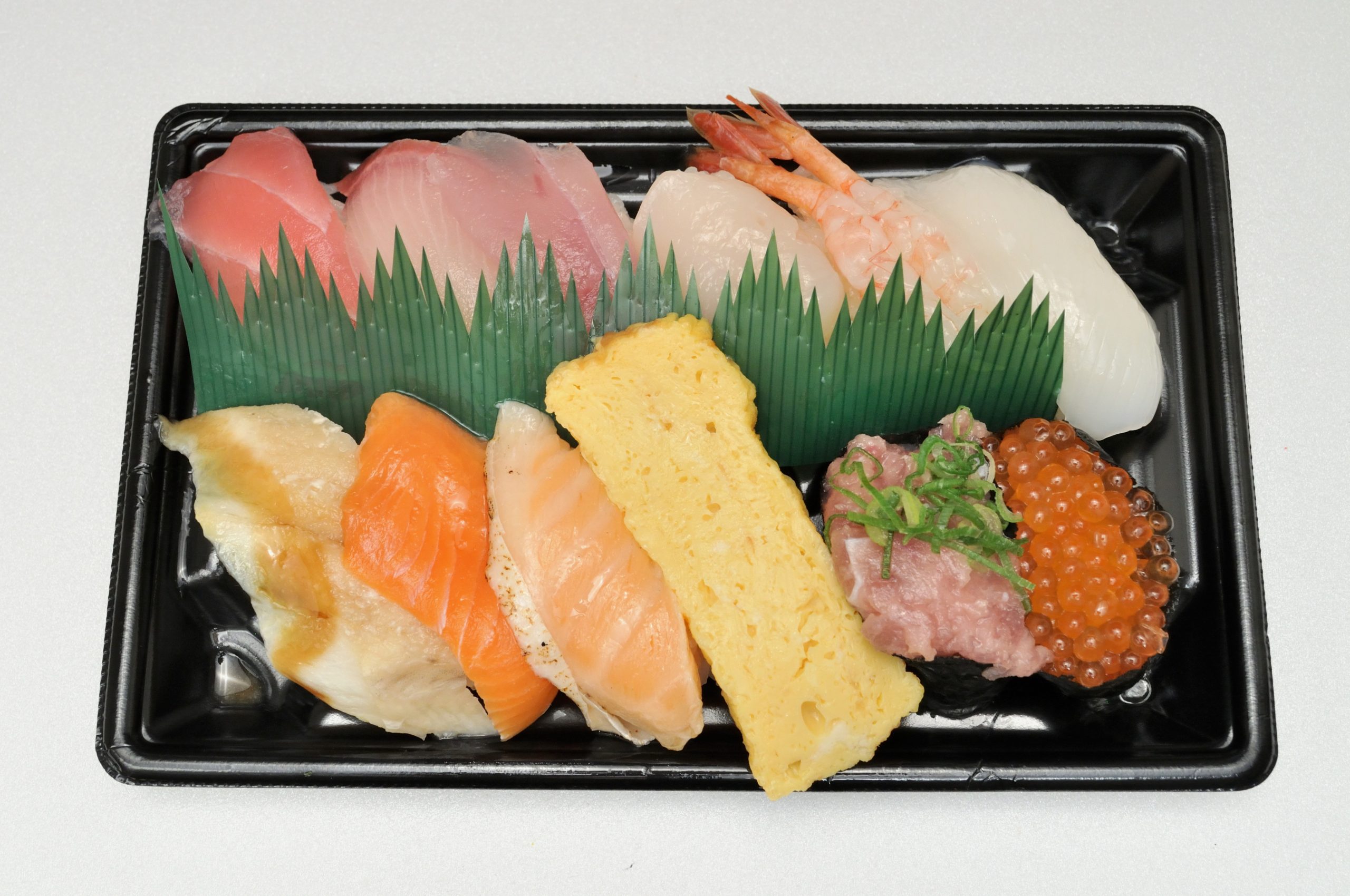
A Sushiro product display; menus and prices vary by branch and season.
The Big Four Chains (and How They’re Different)
Sushiro(スシロー)
The most popular chain in Japan by sales volume — and a strong first choice for its balance of price, menu range, and accessibility. The consensus online is simple: Sushiro has the best overall balance of quality and price. The fish tastes fresher than you’d expect at this price point, the rice is well-seasoned, and the limited-time seasonal items are worth seeking out.
- Price: Most plates ¥120–180 (tax included since 2024 price revision)
- Ordering: Touchscreen tablet, some locations have English UI
- App reservation: Yes — the Sushiro app lets you join the queue remotely. This is basically mandatory at popular locations on weekends. Without it, you’re looking at 30–60 minute waits
- Best items: Tuna, salmon, shrimp tempura roll, and whatever the current seasonal special is
A practical queue-saving move is to “Reserve on the app 30–45 minutes before you want to eat. Walk around the neighborhood, and by the time you get there, you’re next in line.” This can reduce entrance waiting, although app and reservation rules vary by branch.
Kura Sushi(くら寿司)
Kura’s gimmick is the bikkura pon game — every five plates you eat, the collection slot triggers a capsule-toy gacha machine built into the table. Kids go absolutely wild for it. Adults pretend they don’t care, then get weirdly competitive.
The sushi itself is solid, though taste varies by branch and seasonal menu. Where Kura wins is the entertainment factor and the non-sushi menu — they serve ramen, tempura, udon, and even parfaits, making it the easiest chain for groups where someone doesn’t eat raw fish.
- Price: ¥115–180 per plate
- Ordering: Touchscreen, English available at tourist-area stores
- App reservation: Yes — similar system to Sushiro
- Best items: The seasonal collaborations (they do themed plates with anime characters), shrimp tempura, and the chocolate cake dessert plate
- The gacha: Capsules contain small toys, stickers, or keychains. Not valuable, but fun
SNS note: The Kura Sushi in Asakusa is massive and gets mixed reviews from travelers — “edible but not great” is a common take. The smaller neighborhood locations tend to score better on quality.
Hama Sushi(はま寿司)
The value pick. Hama Sushi runs a flat-rate deal at many locations (¥100+tax per plate on weekdays), making it the cheapest of the big four. Quality is a step below Sushiro, but you’re paying less, and the side menu — particularly the ramen and fried chicken — is surprisingly decent.
- Price: ¥100–150 per plate (weekday discount at select stores)
- Ordering: Touchscreen, English menus available at many stores
- Website: Has a full English version, which is unusual for kaiten chains
- Best for: Travelers on a tight budget, suburban/rural locations where other chains don’t reach
Uobei(魚べい)
No conveyor belt at all — Uobei uses a high-speed lane delivery system where your order zips down a track to your seat. It’s fast, efficient, and feels vaguely futuristic. The stores are mostly compact and located near major train stations in Tokyo, making them good for a quick solo lunch.
- Price: ¥120–180 per plate
- Ordering: Touchscreen
- Best for: Speed. If you want sushi in 15 minutes and need to catch a train, Uobei is the move
- Shibuya location: There’s one near Shibuya Station near the station — easy to find, quick in-and-out
How to Order (You’ll Figure It Out in 2 Minutes)
Every chain uses touchscreen tablets. The flow is the same everywhere:
- Walk in → check in at the reception kiosk (or show your app reservation QR code)
- Get seated → the tablet is on your table
- Browse categories: Recommended / Popular / Salmon / Tuna / Shrimp etc.
- Tap to order → plates arrive in 1–3 minutes via lane or belt
- Stack empty plates at the designated slot when done
- Press the “check” button → pay at the register or self-checkout machine
First-timer picks if you are overwhelmed by the menu:
- Salmon (サーモン): Reliable and mild.
- Maguro / tuna (まぐろ): The classic starting point.
- Ebi / shrimp (えび): Sweet and familiar.
- Tamago / egg (たまご): Mild and useful as a palate cleanser.
- Chawanmushi (茶碗蒸し): A savory steamed-egg side dish.
Wasabi Warning
Most chains serve wasabi-free sushi by default. This surprises travelers who expect it. If you want wasabi:
- Select “wasabi あり” on the touchscreen when ordering each item
- Or use the wasabi packets / tube on the table and add it yourself
When to Go (and When to Avoid)
| Time | Crowd level | Notes |
|---|---|---|
| 11:00–11:30 AM | Low | Right at opening. Best experience, freshest first batches |
| 12:00–13:30 | High | Lunch rush. 20–40 min wait without app reservation |
| 15:00–17:00 | Low | Sweet spot. No wait, staff aren’t rushed |
| 18:00–20:00 | Very High | Dinner peak, especially weekends. Use the app |
| 20:30+ | Medium | Crowds thin out. Good option if you ate a late lunch |
Which Chain Should You Pick?
| Priority | Go to | Why |
|---|---|---|
| Best overall quality | Sushiro | Consistently rated #1 by travelers and locals |
| Traveling with kids | Kura Sushi | Gacha game keeps them entertained |
| Cheapest possible | Hama Sushi | ¥100/plate weekday deal |
| Fast solo meal | Uobei | High-speed delivery, small stores near stations |
| Someone in your group doesn’t eat sushi | Kura Sushi | Biggest non-sushi menu (ramen, tempura, desserts) |
Real Talk: Chain vs. “Real” Sushi
This is a common first-time visitor question. The honest answer:
Chain kaiten-zushi is not a replacement for a proper sushi restaurant. The rice, the fish selection, the technique — a skilled itamae at a counter-service sushi bar is a different experience entirely. If budget allows, do both.
But chain sushi fills a role that nothing else does: a reliable, stress-free, ¥1,500 meal that’s available everywhere, doesn’t require reservations or Japanese ability, and is enjoyable. Many long-term residents eat at Sushiro regularly and don’t consider it a compromise.
The SNS consensus: “Go to a chain for your casual Tuesday dinner. Save the omakase budget for one special meal.”
If sushi is only one stop in your food plan, compare our ramen chain guide and family restaurant guide.
FAQ
How much will I spend per person?
Most people eat 8–15 plates. At ¥120–180 per plate, expect ¥1,000–2,500 per person including a drink and miso soup. It’s hard to spend more than ¥3,000 unless you’re really going for it.
Can I use credit cards?
Yes, all four chains accept major credit cards (Visa, Mastercard, etc.) and IC cards (Suica, Pasmo). Some self-checkout machines are card-only.
Is it safe for people with allergies?
Allergen information is available on the touchscreen menu at all chains. However, cross-contamination risk is real in a high-volume kitchen. If you have severe allergies, communicate clearly — or consider a restaurant where the chef can accommodate you directly.
Do conveyor belts still exist?
Mostly no. After a series of hygiene incidents in 2023 (people tampering with shared plates on the belt), most chains switched to direct-to-table delivery only. You still order from a screen and plates still arrive quickly — they just come via a lane or are brought by staff, not sitting exposed on a belt. The experience is essentially the same, just more hygienic.
Explore More Tokyo Guides
These stores are found across Tokyo. For neighborhood-specific tips on where to stay and what else to explore nearby:


