Japan · Multi-night hotel stays
Hotel Stayover Cleaning in Japan: Towels, Room Entry and Eco Plans
For a hotel stay of two nights or more, skipping a full clean does not necessarily prevent staff from entering for routine service. A limited service can still include towel replacement or rubbish collection. A separate no-entry choice may have its own sign, deadline and towel-delivery arrangement.
Read an “eco cleaning” or “ECO Stay” offer as a list of services, rather than a promise of daily cleaning or no routine staff entry. Before booking, confirm what happens at the specific property, under your chosen rate, for your stay dates. The examples below show how to read those conditions; they do not establish a rule for every hotel in Japan.
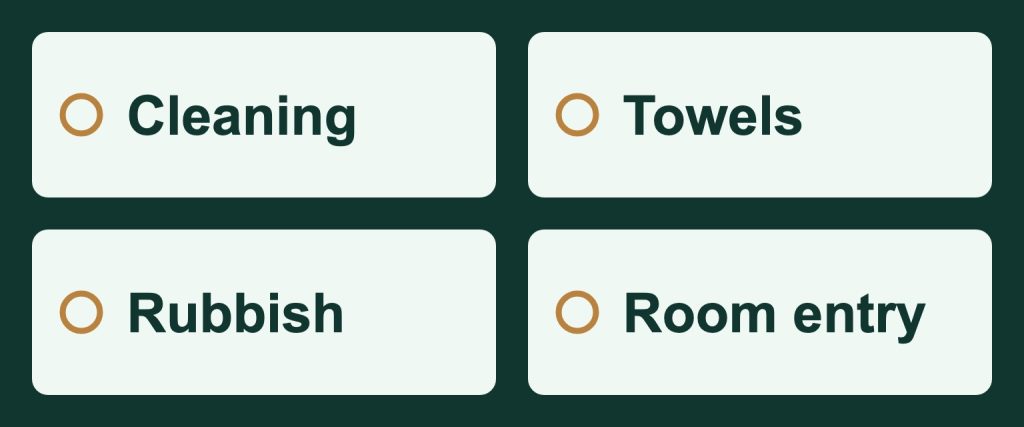
Four services
Separate four services before choosing a plan
Room cleaning, towels, rubbish and permission to enter are related, but one answer does not settle all four. For example, a towel delivery outside the door does not tell you whether staff will clean the bathroom or collect used towels.
| Service | What to ask | What the label alone does not confirm |
|---|---|---|
| Cleaning | Which days include bathroom cleaning, floor cleaning, bed-making and linen changes? | That all of those tasks happen daily, or together. |
| Towels | How often are fresh towels supplied, where are they delivered and where do used towels go? | Door delivery, extra towels or used-towel collection. |
| Rubbish | Is it collected from the room, or must you follow another procedure? | That putting a bag outside the door is allowed. |
| Room entry | Will staff enter for limited service, and how do you request no entry? | That declining a full clean prevents every service visit. |
If a plan says only “eco cleaning available,” these details remain unresolved. Ask the property to describe the actual arrangement before selecting that rate. Full-cleaning frequency and the work included in each visit are two different conditions.
Official examples
Two official examples, with different scopes
Toyoko Inn: scheduled cleaning and an ECO Stay visit
Toyoko Inn’s official ECO Stay notice applies to its hotels in Japan and describes the policy introduced for stays beginning June 3, 2025. Regular cleaning is once every three days; pet-friendly rooms have a daily-cleaning exception.
Between those regular cleans, the stated ECO Stay service involves staff entering to replace towels, remove rubbish and make the bed. Scheduled full cleaning also includes bed-linen replacement and unit-bath cleaning. Bed-making during limited service is not the same as changing the linen.
During the ECO Stay period, the notice offers a separate no-entry choice: display its “Do not disturb” sign outside the door by 10 a.m., and staff leave fresh towels on the door knob without entering. To request cleaning during that period, contact the front desk by the previous day.
This is a named operator example. Confirm the applicable dates, room and request process for your booking; do not transfer its three-day interval or 10 a.m. deadline to another hotel.
Hotel GrandBach Kyoto Select: a clearly defined limited service
The operator’s published eco-cleaning notice for Hotel GrandBach Kyoto Select describes staff entering for towel exchange, rubbish collection and bottled-water replenishment. It separates that service from room and bathroom cleaning, bed-making and linen changes.
The notice also shows separate “Make up the room” and “Do not disturb” magnets. It is useful as an example of service scope and door-sign choices, not confirmation of the arrangements for a future reservation. Ask the booked property for its current notice, applicable schedule and instructions. This Kyoto document does not establish the policy at GrandBach Tokyo Ginza or other branches.
The practical difference between the examples is the work described during limited service. Read that list carefully; the word “eco” does not tell you whether the bed is made, the bathroom is cleaned or anybody enters.
Room entry
A no-entry sign is a separate choice
Before using a door hanger or magnet, check its exact meaning. “No cleaning,” “Do not disturb” and “Make up the room” should not be treated as interchangeable instructions. Use the hotel’s own sign and ask when it must be displayed.
If you want no routine service visit, also ask how fresh towels and rubbish are handled that day. A no-entry request does not, by itself, tell you that items will be left outside or collected later. Do not leave used towels or rubbish in the corridor unless the hotel instructs you to do so.
For a longer stay, ask whether scheduled cleaning still requires access and how to arrange a suitable time. Do not assume that a sign lets you decline every visit for the entire reservation. The two examples here do not establish a universal rule for extended no-entry requests.
If staff entry is important to your decision, get a clear answer for the rate you intend to book. A general label on a booking platform is not enough to resolve that requirement.
Dates and rate
Match the policy to your dates and rate
Write down your check-in and check-out dates and the number of nights. Ask the hotel to identify the actual stayover days on which it plans full or limited service. Avoid guessing the first cleaning date from a phrase such as “every three days”; confirm how the hotel counts your stay.
A two-night stay has one day between arrival and departure. A longer stay gives you more service days to clarify. If you extend your booking, ask whether the cleaning schedule or request deadline changes with the new dates.
Read the rate description as well as the property policy. If an eco or no-cleaning plan has its own conditions, confirm whether it changes the normal schedule, permits a requested full clean or adds a charge. This guide does not promise that an extra clean is free, available on demand or available under every rate.
For your needs, specify the task rather than asking only for “cleaning.” If bathroom cleaning matters, ask about that. If you only need fresh towels, ask for the towel procedure. These requests can produce different answers and should be resolved before you rely on either service.
For a longer Tokyo stay, compare the room facilities in our apartment hotels with kitchens and in-room washer-dryers guide. If you are choosing a neighborhood, the Ueno hotel-base guide compares accommodation around that base.
Ask the hotel
Four questions to ask the hotel
Send these questions with the property name, room category, rate-plan name and stay dates. You can use a translation tool, then save the reply with your reservation.
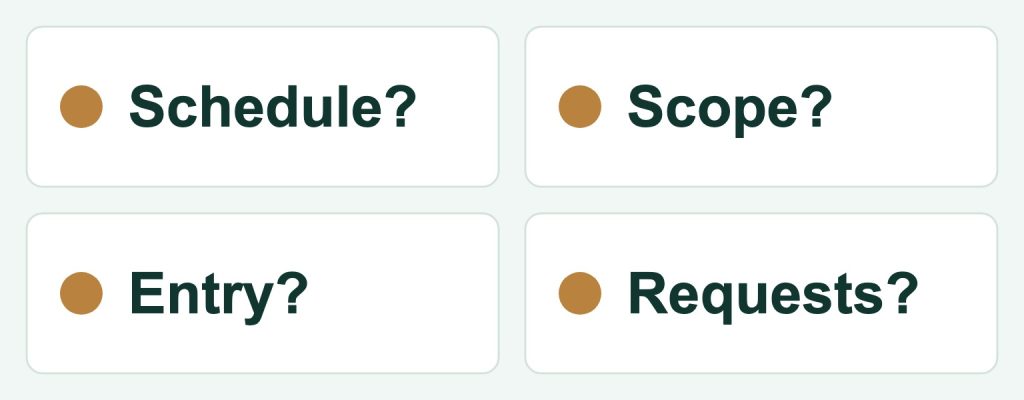
- Schedule: “On which dates will my room receive full cleaning or limited service?”
- Scope: “What happens to the bathroom, bed linen, towels and rubbish on each type of service day?”
- Entry: “Will staff enter on a limited-service day? What is the procedure if I do not want routine service entry?”
- Requests: “When must I request a full clean or towels, and are there any restrictions or extra charges under my rate?”
For a no-entry day, add one practical follow-up: “How do I receive fresh towels and dispose of used towels and rubbish without staff entering?” If the answer remains unclear, ask reception to explain the current procedure before you choose a sign or leave items outside.
During your stay
Check the arrangement during your stay
On arrival, compare the current room notice with your rate terms and any hotel reply. If the wording differs, ask the front desk which arrangement applies to your booking. Confirm the scheduled cleaning dates, the daily service window and the deadline for a request or sign.
Before going out, display the appropriate sign according to those instructions. If you plan to remain in the room during the service window, discuss timing with reception rather than assuming staff will return at any hour you choose.
If towels or an agreed service have not arrived, contact the front desk with the specific task and date. Reconfirm the arrangement if you change rooms, extend your stay or change your plan. Reviews can help you identify questions, but another guest’s experience at a different date or branch is not your booking’s service confirmation.
FAQ
FAQ
Does eco cleaning mean nobody enters my room?
Not necessarily. Limited service can involve entry for tasks such as towels or rubbish. Confirm the separate no-entry procedure and how it interacts with scheduled cleaning at your property.
Can I receive fresh towels without a full room clean?
Ask the property. Towel replacement and full cleaning are separate services, but the delivery method, used-towel procedure, timing and availability of extra towels depend on the applicable arrangement.
Will the bathroom be cleaned and bed linen changed during a longer stay?
Confirm the actual dates and tasks. Bed-making does not necessarily include a linen change, and a limited visit does not necessarily include bathroom cleaning.
Can I request a full clean on an eco plan?
Check your rate terms and the hotel’s request process. Do not assume that an additional clean is included, free or possible on the same day.
Should I leave used towels and rubbish outside my door?
Only if the hotel’s instructions tell you to. Ask where each item should go and how collection works on a no-entry day.
Sources
Official sources and review date
Sources checked October 5, 2026 (Japan time). The Toyoko Inn page is an operator policy example; the GrandBach PDF is a published Kyoto Select notice used to explain service scope. Neither confirms another property’s rate conditions or a future booking.
Explore more
Related Tokyo guides
Image note: Original Coverstories editorial illustrations and diagrams. They are explanatory visuals, not photographs of hotels, real ticket screens or proof of current availability.