Where to Stay in Ryogoku: Sumo, Museums and Affordable Hotels
Ryogoku is Tokyo’s most distinctive culture-first hotel base: sumo, major museums, the Sumida River, and quieter nights, balanced against one important compromise—most west-side trips require time on a local train.
Quick links
Is Ryogoku a good place to stay?
Ryogoku is a very good Tokyo base for the right traveler, but it is not a universal answer. Stay here when museums, traditional culture, the Sumida River, and a calmer evening rhythm matter more than department stores or nightlife. The neighborhood has enough hotels and restaurants to be practical, yet its identity remains unusually clear: this is the home of Ryogoku Kokugikan, the Sumo Museum, and the newly reopened Edo-Tokyo Museum. Few other Tokyo districts put several major cultural sights within such an easy morning walk.
The trade-off is transport geography. JR Ryogoku sits on the Chuo-Sobu Local Line, so Akihabara is direct and Shinjuku is reachable without changing trains. Tokyo Station, Ginza, Shibuya, and Asakusa are not all one-seat rides. The separate Toei Oedo Line station adds useful connections, but it is a deep subway station and it is not inside the JR building. A map may make the two station symbols look almost interchangeable; with luggage, they feel like distinct starting points.
Ryogoku therefore works best for visitors who plan days rather than chase every attraction spontaneously. A museum morning, an Asakusa or Skytree afternoon, and a quiet riverside evening form a coherent day. A traveler who wants to shop in Shibuya until the last train and return to a dense late-night food district will find the location less forgiving.
The neighborhood is also a sensible value comparison. Hotel rates change sharply with tournaments, weekends, and large events at the Kokugikan, but outside those peaks Ryogoku can offer more choice than the most famous west-Tokyo hubs. “Affordable” does not mean that every date is cheap. It means the area gives travelers credible alternatives—from a simple business hotel to a full-service riverside property—without paying solely for a Shinjuku or Shibuya address.
Ryogoku is strongest for:
- First-time visitors who want Tokyo history to be part of the stay, not a separate day trip.
- Sumo fans attending a tournament or visiting the Sumo Museum.
- Museum-focused couples and families who prefer quiet nights.
- Travelers using Akihabara, Asakusabashi, Kinshicho, or eastern Tokyo frequently.
- Repeat visitors who have already stayed on the Yamanote Line.
Choose another base if:
- Most evenings will end in Shibuya, Roppongi, or Shinjuku nightlife.
- Direct airport rail is the single most important requirement.
- Department-store shopping and broad late-night dining must be outside the hotel.
- Every member of the group dislikes local trains, station changes, or ten-minute walks.
Ryogoku at a glance
Ryogoku occupies the east side of the Sumida River in Sumida City, although the historical name also reaches across the river. For hotel planning, the useful center is the compact zone around JR Ryogoku Station, Ryogoku Kokugikan, the Edo-Tokyo Museum, and the Toei Oedo Line station. Most hotels in this guide are within a short walk of one or both stations.
The JR station has east and west exits. The west side is the arena-and-river side: use it for Ryogoku Kokugikan, the Sumo Museum, the riverfront, and hotels such as THE GATE HOTEL or APA Hotel & Resort. The east side opens toward the restaurant streets and the denser blocks south of the tracks. Ryogoku View Hotel is especially convenient here. The Toei Oedo Line station lies northeast of the JR platforms near the Edo-Tokyo Museum and Dai-ichi Hotel Ryogoku.
That geography creates three different stay styles.
West of JR: arena and river
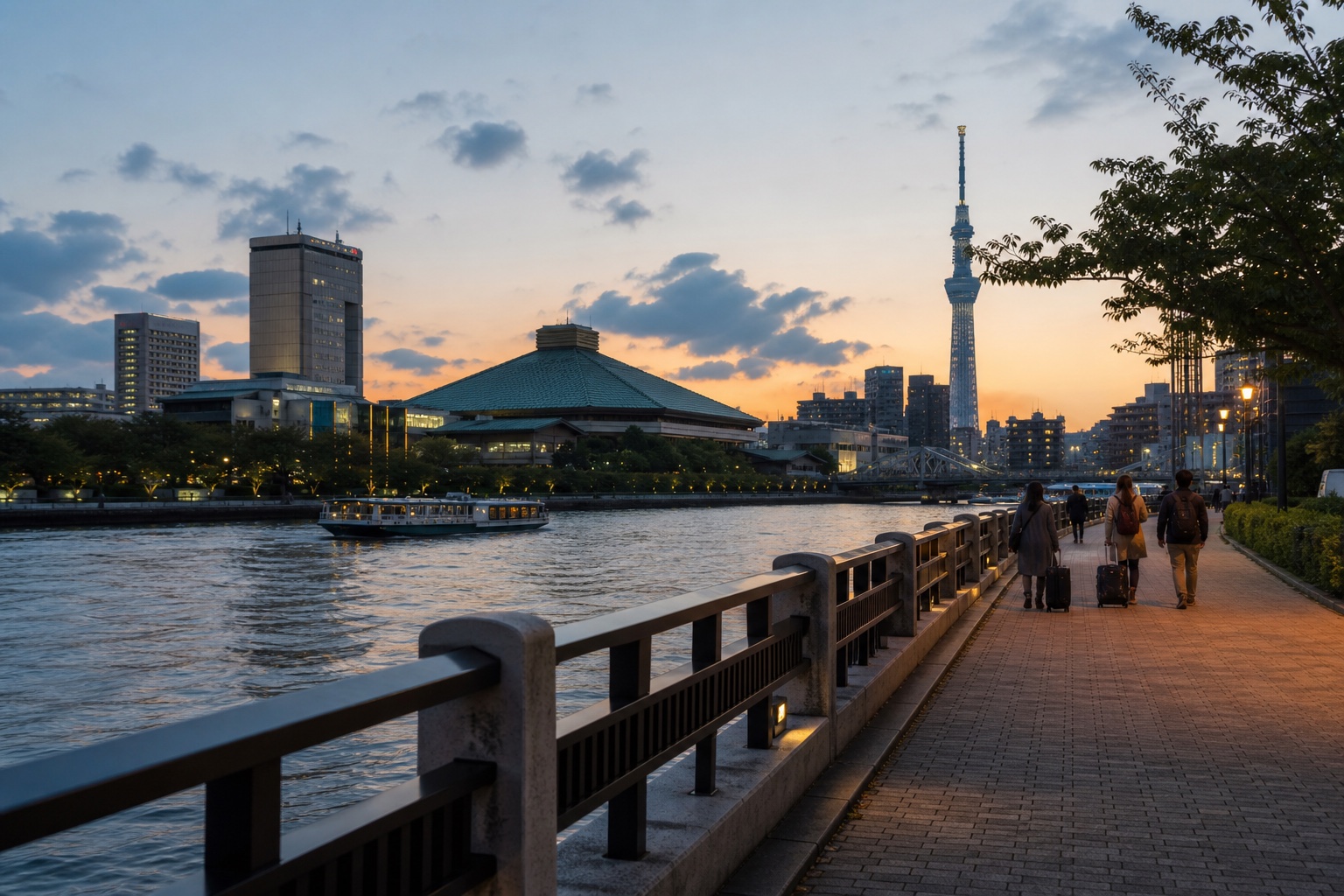
This is the most atmospheric choice. Tournament banners, the Kokugikan roofline, the former Yasuda garden area, and the Sumida River make the neighborhood feel specific from the moment you leave the station. It is excellent for an early riverside walk and easy arena access. On event days, however, the same streets become crowded before and after performances.
East and south of JR: food and everyday convenience
The east-exit blocks are better for small restaurants, convenience stores, and the everyday rhythm of the neighborhood. The atmosphere is less monumental but more practical after dinner. Noise is still modest by central-Tokyo standards, although rooms facing the tracks or busy roads should not be assumed silent.
Around the Oedo Line: museums and subway access
The blocks around Toei Ryogoku suit travelers who will use the Oedo Line repeatedly or who want the Edo-Tokyo and Hokusai museums close. This side feels more administrative and residential at night. It is quieter, but the JR platform is a longer walk, so choose it intentionally rather than assuming both rail lines share a concourse.
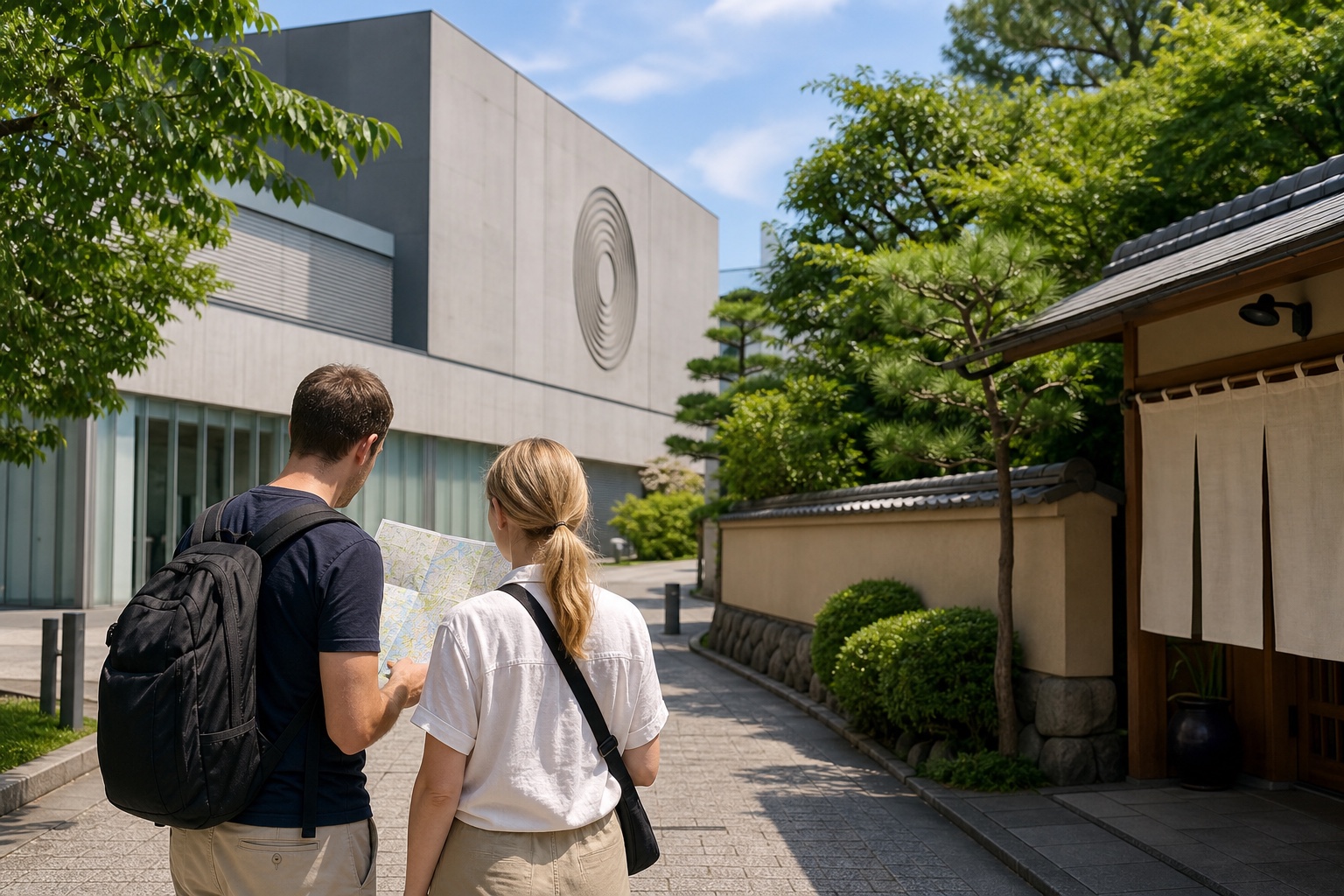
Ryogoku is generally walkable and flat. The main challenge is not steep terrain but summer heat, rain, and the distance between station exits. A hotel advertised as “near Ryogoku Station” may be near the subway rather than JR. Check the exact exit in the official access instructions before paying.
Must-see Ryogoku landmarks and attractions
Ryogoku’s core attractions form a compact route. Use this visual shortlist to choose what to see first and where a hotel should sit.
 01
01Ryogoku Kokugikan & Sumo Museum
Sumo heritageThe arena and museum form the area’s core sumo destination and cultural landmark.
 02
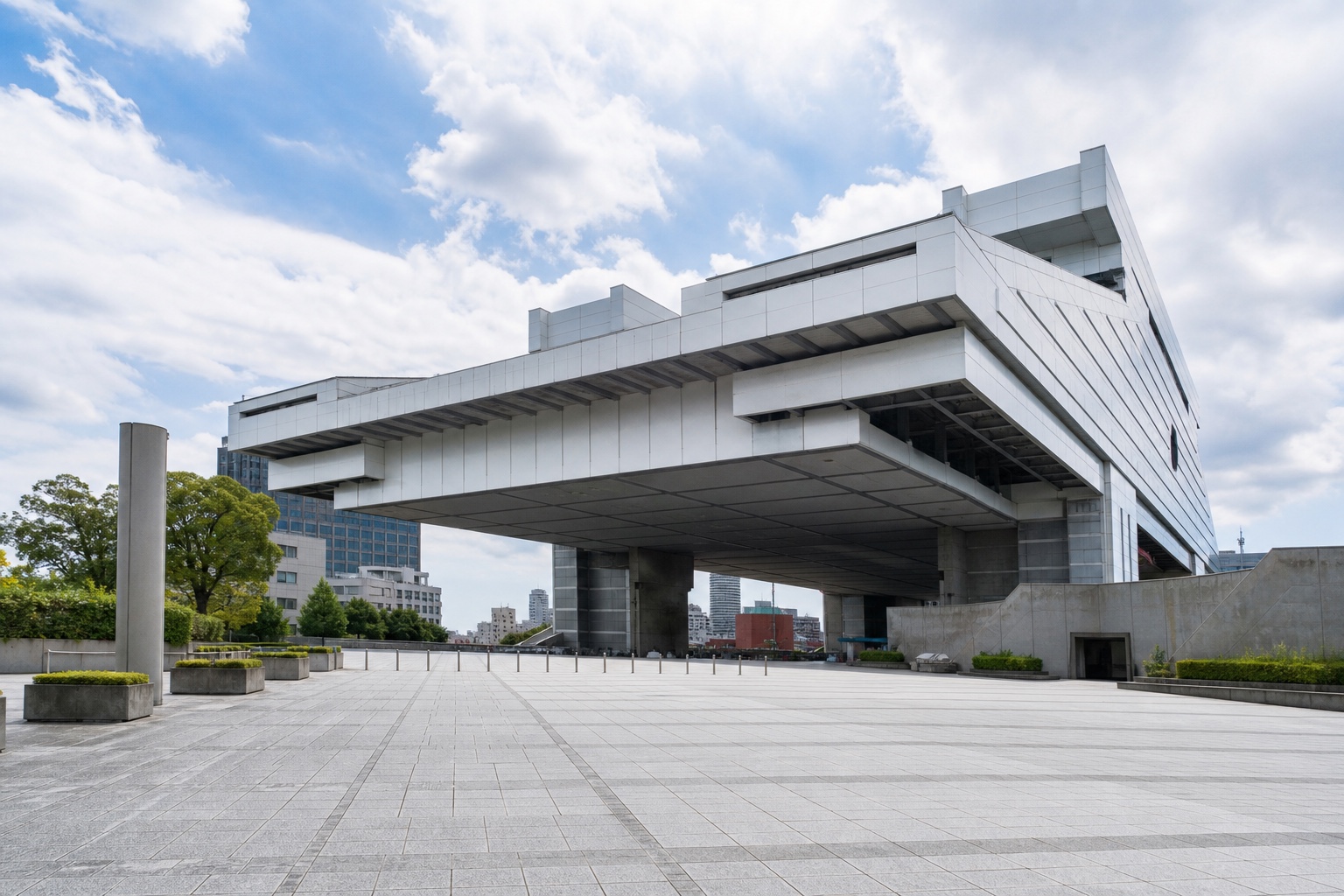
02Edo-Tokyo Museum
Edo historyLarge galleries use original objects, scale models, and reconstructions to explain Tokyo’s development from Edo to modern times.
 03
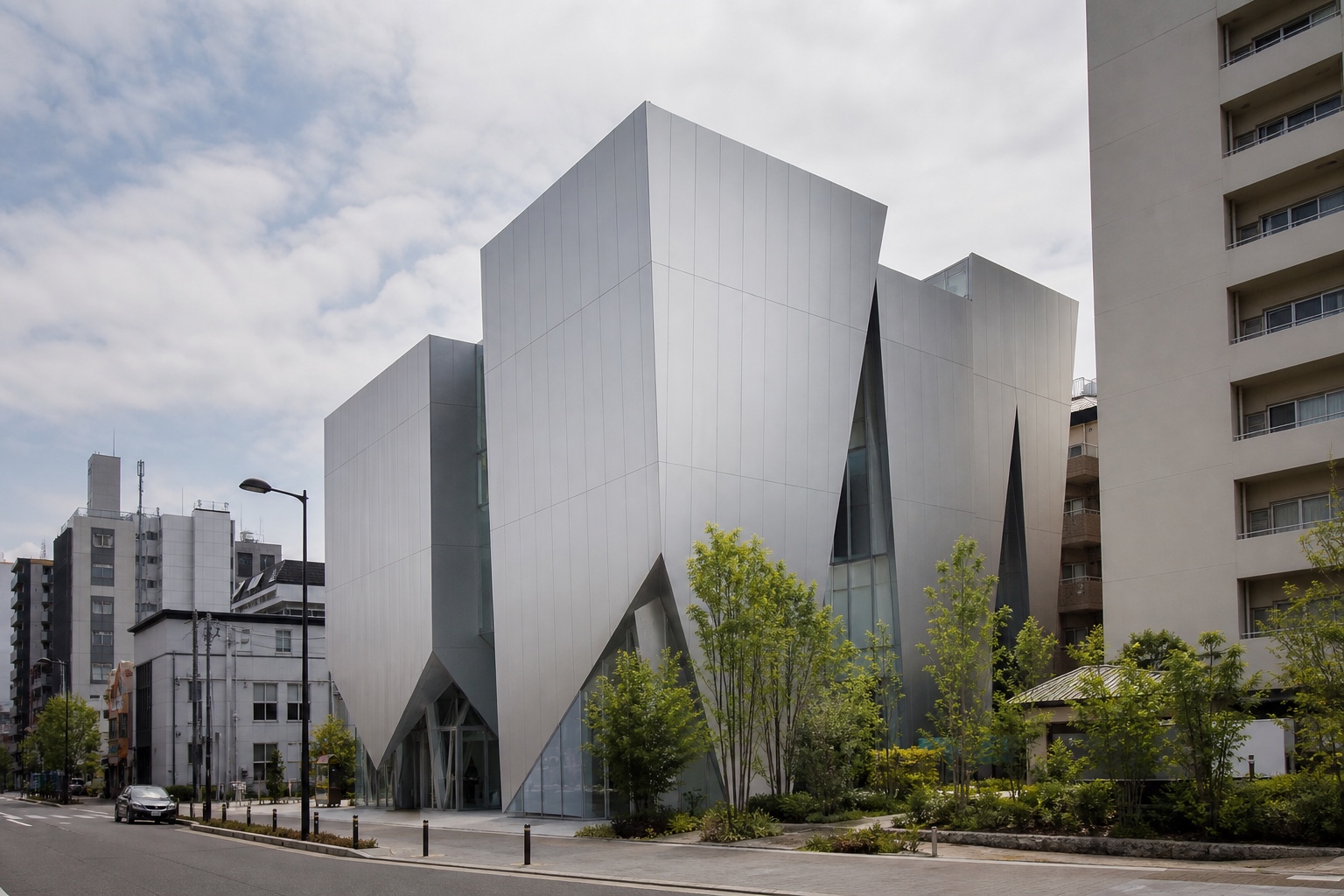
03Sumida Hokusai Museum
Ukiyo-e museumA smaller museum connecting Katsushika Hokusai’s work with local Sumida context.
 04
04Sumida River Promenade
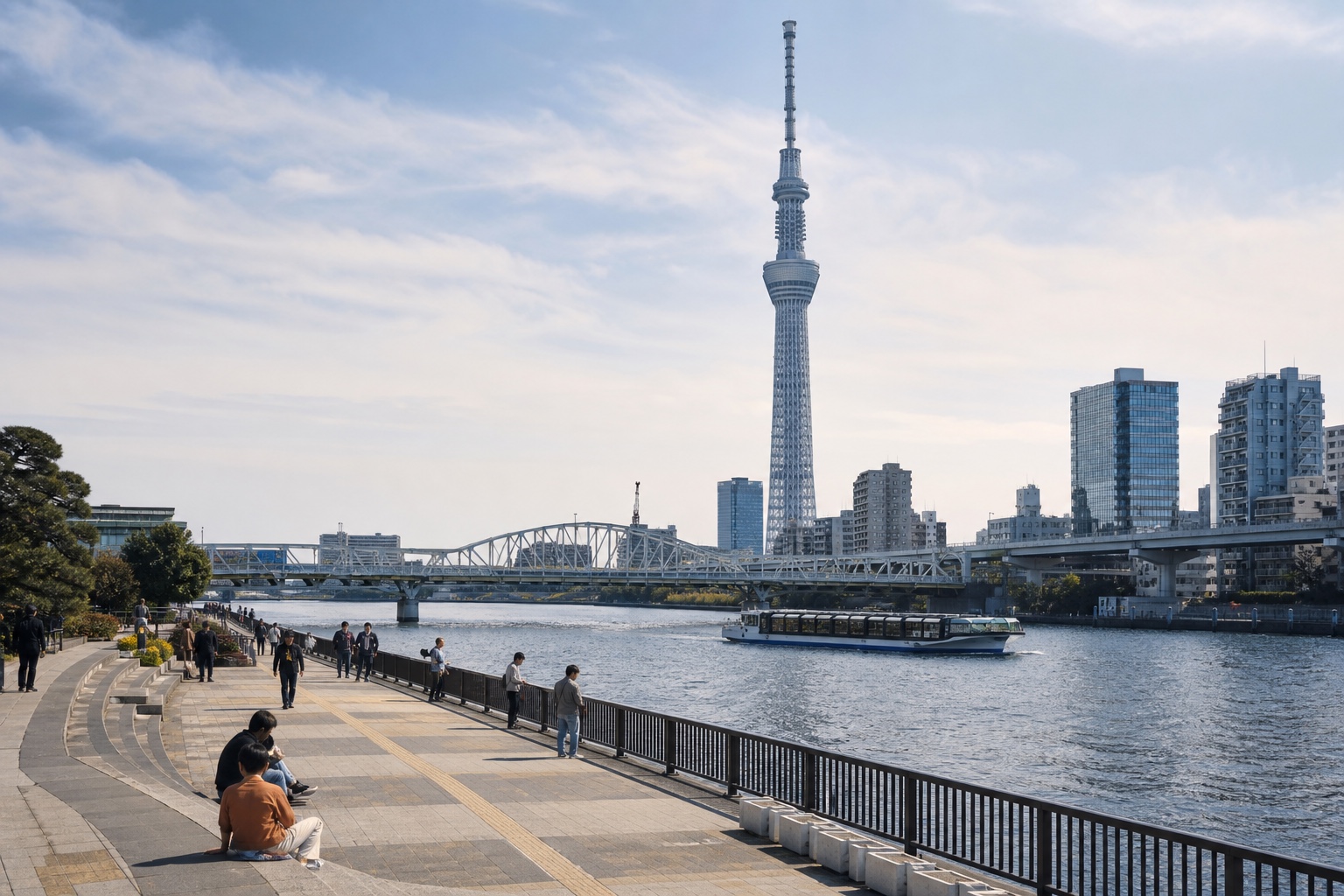
Riverside walkA free riverside walk with views toward Tokyo Skytree and a route toward Asakusabashi.
Getting around Ryogoku
The JR Chuo-Sobu Local Line is Ryogoku’s simplest rail asset. It runs directly to Akihabara, Ochanomizu, Yoyogi, and Shinjuku in the westbound direction, and to Kinshicho and farther east in the opposite direction. For Tokyo Station, change at Akihabara to the Yamanote or Keihin-Tohoku Line. This is an ordinary connection, but it matters for luggage: Tokyo Station is not directly served from Ryogoku.
The Toei Oedo Line adds Ueno-Okachimachi, Iidabashi, Shinjuku-nishiguchi, Roppongi, and Daimon to the practical network. It can be extremely useful when an itinerary follows the Oedo Line. The cost is vertical movement. Like many Oedo Line stations, Ryogoku is deep, so platform-to-street time can be longer than the rail map suggests.
JR or Toei? JR Ryogoku and Toei Ryogoku are separate station experiences. JR East station information and the Toei Ryogoku guide should be checked against the hotel side. For heavy luggage, the extra outdoor walk and the deep Oedo platforms are meaningful trade-offs.
| Destination | Practical route | What to expect |
|---|---|---|
| Akihabara | JR Chuo-Sobu Local | Direct and usually the easiest central connection |
| Tokyo Station | JR to Akihabara, then Yamanote or Keihin-Tohoku | One change; allow time for the large Tokyo Station complex |
| Shinjuku | JR Chuo-Sobu Local | Direct local service; convenient but not an express ride |
| Ueno | Oedo Line to Ueno-Okachimachi or JR with a change | Choose by the exact destination within Ueno |
| Asakusa | JR to Asakusabashi and Toei Asakusa Line, or a surface route | Geographically close, but not a one-seat JR trip |
| Ginza | JR and subway combination | Straightforward, but another area is better for daily Ginza shopping |
| Roppongi | Toei Oedo Line | Direct, with a long underground journey |
| Kinshicho | JR Chuo-Sobu Local | One stop and useful for larger shopping facilities |
JR and Toei are separate stations
This is the detail most likely to cause an avoidable arrival mistake. There is no internal paid-area passage connecting JR Ryogoku with Toei Ryogoku. The walk is manageable, yet it is an outdoor transfer. A family with suitcases, a traveler in heavy rain, or anyone with limited mobility should book near the line they expect to use most.
Airport access
Ryogoku does not have a single branded airport express. From Haneda, one practical pattern uses the Keikyu/Toei Asakusa network and a change around Asakusabashi, while another uses the Oedo Line via Daimon. From Narita, live route planners may suggest JR services, Keisei connections, or combinations through Nippori, Ueno, or Asakusabashi. The best answer changes with the terminal, departure time, and luggage.
Do not choose a route solely from an old blog’s minute count. Check the airport operator and live journey planner for the travel date, then identify lifts before leaving the airport. A taxi for the final short segment can be sensible when four people share the fare or when museum-side accommodation is awkward from JR.
Step-free planning
The area is mostly flat, but station infrastructure still matters. Confirm the lift-equipped exit on the current JR or Toei map, especially when staying on the opposite side of the tracks. The Sumida Hokusai Museum notes that Toei Exit A3 is lift-only, which can be useful for visitors heading in that direction. Event crowds may slow the paths around the west exit even when the route is technically step-free.
Sumo, museums and things to do
Ryogoku’s advantage is depth, not a checklist of unrelated attractions. Sumo, Edo history, ukiyo-e, swords, gardens, and the river all tell parts of the same eastern-Tokyo story. A two-night stay can support a full cultural itinerary without long morning travel.
Ryogoku Kokugikan and the Sumo Museum
Ryogoku Kokugikan stages three of the six annual Grand Sumo tournaments. Tournament dates, ticket release rules, and entry conditions belong to the Japan Sumo Association; never rely on a reseller’s description alone. Even outside tournament periods, the arena shapes the neighborhood and hosts other events.
The Sumo Museum is on the first floor of the Kokugikan. Its compact exhibition rotates items such as woodblock prints, rankings, and ceremonial aprons. According to the association, regular admission is free, but a tournament ticket is required on tournament days. It commonly closes on weekends, national holidays, and during display changes. That makes it a poor attraction to “fit in whenever.” Check the official calendar first, then build the day around the confirmed opening.
Morning-practice visits require even more care. A sumo stable is a working and residential environment, not an open museum. Some experiences are arranged under strict conditions, while many stables do not accept casual visitors. Do not arrive unannounced, photograph through windows, block an entrance, or treat wrestlers encountered in the street as performers.
Edo-Tokyo Museum: reopened in 2026
The Edo-Tokyo Museum reopened on March 31, 2026 after a four-year renovation. This changes Ryogoku’s value substantially. Its large permanent galleries use original objects, scale models, and full-size reconstructions to explain the city’s development from Edo to modern Tokyo. For a first Tokyo trip, it provides context that makes later visits to Nihonbashi, Asakusa, Ginza, and the bay area easier to understand.
The official site currently lists standard opening from 09:30 to 17:30 and later Saturday hours, with last admission 30 minutes before closing. Mondays and year-end periods are normally closed, with holiday adjustments. Special exhibitions have separate schedules and fees. Treat those details as current planning information, not a permanent promise.
Sumida Hokusai Museum
Katsushika Hokusai was born in the Sumida area, and the museum gives his work a local context rather than presenting only the famous wave image. The angular contemporary building is about five minutes from Toei Ryogoku A3 or nine minutes from the JR east exit according to the museum. Regular hours are Tuesday through Sunday, 09:30 to 17:30, with the last entry at 17:00, subject to closures and exhibition changes.
The museum is smaller than the Edo-Tokyo Museum. That is an advantage when attention or time is limited: allow around one to two hours rather than assuming it consumes a whole day. Temporary exhibitions can justify a longer visit.
Gardens, swords and the river
Kyu-Yasuda Garden gives the arena side a quiet green pause. The Japanese Sword Museum nearby will interest visitors who want craftsmanship and material history rather than theatrical “samurai experiences.” Both are easy to pair with the Kokugikan area, but opening hours and garden access can change around maintenance or events.
The Sumida River promenade is free, open-ended, and often the best evening activity. Walk north for views toward Tokyo Skytree or cross toward Asakusabashi for craft streets. The river can be exposed in summer, so sunrise or blue hour is more comfortable than midday.
Eating in Ryogoku
Chanko-nabe is the headline dish: a substantial hot pot associated with sumo training. There is no single authentic recipe. Restaurants use chicken, fish, pork, vegetables, tofu, and different broths, and some are connected to former wrestlers. The useful question is not “which one is the original?” but whether the menu, portion, reservation policy, and seating work for the group.
Popular chanko restaurants can fill before tournaments and weekend events. A pot is also less appealing in peak summer heat, although air-conditioned restaurants still serve it. Solo travelers should check whether a one-person portion is available; some menus are designed for two or more.
Ryogoku offers more than hot pot. The east-exit streets have izakaya, soba, sushi, curry, yakiniku, cafes, and familiar chains. The selection is sufficient for a short stay but smaller than Asakusa, Ueno, or Kinshicho. Several independent restaurants close one day a week or finish earlier than travelers expect. Save the exact address and last-order time rather than assuming the area around a major station serves late.
A practical food strategy
Use one evening for a reserved chanko meal, then leave the other flexible. Museum days can end early, making a 17:30 or 18:00 dinner easy. On tournament days, either book well ahead or eat away from the arena flow—toward the east exit, Asakusabashi, or one stop away in Kinshicho.
Breakfast depends on the hotel. Large properties may have extensive buffets, but the cost and queues can be disproportionate for travelers who only want coffee and toast. Convenience stores and station cafes solve that problem. Conversely, a full hotel breakfast can be valuable when museum opening time is fixed and the group does not want to search for food first.
Ryogoku is not a serious late-night food base. Convenience stores and some chains remain available, but the neighborhood quiets earlier than Shinjuku or Shibuya. If a 23:30 dinner is normal for the trip, choose a hotel near JR and verify a specific late option before returning.
Best hotels in Ryogoku
The five hotels below are verified against their official sites. No fixed guest score or “from” price is shown because both become stale quickly. Compare the same refundable conditions, taxes, breakfast, child policy, and room occupancy on the same dates.
The shortlist is deliberately varied. THE GATE HOTEL is the most design-led riverside stay. APA Hotel & Resort provides the broadest facilities but can feel like a very large machine. Dai-ichi Hotel is strongest for the Oedo Line. Ryogoku View minimizes the JR walk. Pearl Hotel is the simple value-oriented choice.
Before booking, decide which station matters. A three-minute walk from JR and a direct connection to Toei A1 solve different problems. Also check room area, not only the bed label. A double room designed for one business traveler can be uncomfortable for two people with two large suitcases.
- ★★★★★Not ratedOur pick
THE GATE HOTEL RYOGOKU by HULIC
Couples, design-minded stays, and river eveningsThe neighborhood’s most polished riverside option has 126 rooms, a restaurant and bar, and a guest-only upper-floor terrace and lounge. It works when the hotel should feel part of the trip rather than only a place to sleep.
Pros:Strong Sumida River setting, close to the Kokugikan, and an easy JR walk.
Price: 🏷️ Riverside design hotelTrade-off: It is a premium Ryogoku choice, and a river or landmark view is not guaranteed unless the booked room category says so.
📍 3 minutes from JR Ryogoku west exit; 7 minutes from Toei Oedo A3🗺️ Map - ★★★★★Not rated
APA Hotel & Resort Ryogoku Eki Tower
Public-bath users and travelers who want facilities on siteThis very large property adds a public bath, restaurants, fitness facilities, a convenience shop, and a seasonal paid rooftop pool. It is the most self-contained option in the shortlist.
Pros:Broad facilities, excellent access to both stations, and room categories from single to triple.
Price: 🏷️ Large full-facility hotelTrade-off: Basic singles are only 11 square meters, central air-conditioning has limitations, and elevator or breakfast queues can occur at busy times.
📍 3 minutes from JR Ryogoku west exit; 4 minutes from Toei Oedo A3🗺️ Map - ★★★★★Not rated
Dai-ichi Hotel Ryogoku
Oedo Line users, families, and selected Disney itinerariesDirect subway access removes a weather and luggage problem, while upper rooms can face Tokyo Skytree or the river depending on category. The hotel is also an official Tokyo Disney Resort Good Neighbor Hotel.
Pros:The easiest Toei Oedo arrival, broad room choice, and useful family-oriented services.
Price: 🏷️ Full-service city hotelTrade-off: JR passengers have a longer walk, and Disney shuttle eligibility and reservations must be confirmed for the exact plan.
📍 Direct from Toei Oedo Ryogoku A1; about 8 minutes from JR🗺️ Map - ★★★★★Not rated
Ryogoku View Hotel
JR arrivals, luggage-heavy trips, and modern Japanese roomsThe one-minute JR walk is the decisive advantage. Its room list includes modern Japanese categories that give families or culture-focused visitors an alternative to a standard compact business-hotel room.
Pros:Minimal JR transfer friction and a useful range from singles to Japanese-Western styles.
Price: 🏷️ Station-front mid-range hotelTrade-off: The station-front setting is practical rather than scenic, and the property has no hotel parking.
📍 1 minute from JR Ryogoku; about 7 minutes from Toei Oedo🗺️ Map - ★★★★★Not rated
Pearl Hotel Ryogoku
Short stays and travelers prioritizing a straightforward ratePearl Hotel is the no-frills counterpoint to the larger resort-style choices. It keeps the arena and JR station close and can make sense when location matters more than a fashionable room or extensive shared facilities.
Pros:Practical station position and a simple business-hotel format.
Price: 🏷️ Simple business hotelTrade-off: Some room categories are compact and the overall product is older and more functional than the newest Ryogoku hotels.
📍 Station-front location by JR Ryogoku and the Kokugikan side🗺️ Map
How to choose the right hotel
Best for couples
THE GATE HOTEL RYOGOKU is the clear first comparison when the hotel atmosphere matters. The river, restaurant, and guest terrace create somewhere worth returning to before the end of the night. The trade-off is price and view certainty: book a category whose official description explicitly matches the desired outlook.
Best for families
Dai-ichi Hotel Ryogoku and Ryogoku View Hotel deserve the first room search. Dai-ichi has a broader city-hotel format and direct Oedo access; Ryogoku View has modern Japanese room types and the shortest JR walk. APA also lists triple rooms, but families should inspect the exact floor area and bed arrangement rather than trusting the word “triple.”
For a Disney day, Dai-ichi’s Good Neighbor Hotel status may be useful, but a logo does not automatically give every guest a shuttle seat. Confirm whether the selected stay plan qualifies, how reservations work, and whether the schedule fits park opening.
Best for public-bath facilities
APA Hotel & Resort is the obvious option. Its large public bath is a meaningful advantage after walking all day. Travelers with tattoos, children, mobility requirements, or strong preferences about bathing hours should read the current facility rules before booking. The rooftop pool is seasonal and paid; it should never be described as a free year-round hotel amenity.
Best for JR convenience
Ryogoku View Hotel wins on pure walking distance. Pearl Hotel is another station-oriented comparison. This matters more than it sounds when Tokyo Station requires a change at Akihabara: saving several blocks at the start and end of each day reduces friction.
Best for a quiet stay
No city hotel can promise silence. Request a room away from tracks, lifts, vending areas, and event-facing streets, then treat the request as a preference rather than a guarantee. Museum-side rooms may avoid some JR noise, while riverside hotels can receive event and promenade activity.
When to stay and when to avoid
Tournament periods transform Ryogoku. The atmosphere is at its best: flags line the streets, restaurants fill with fans, and the arena gives the whole district a sense of occasion. Prices and availability can also tighten sharply. If sumo is the reason for the trip, secure official tickets and a refundable hotel early. Do not pay a non-refundable event premium before understanding the ticket position.
Outside tournaments, Ryogoku is calmer and museums become the main draw. This is the better version for travelers who dislike crowds or want to compare hotel rates. Large concerts, sporting events, and conferences at the Kokugikan or nearby venues can still create sudden peaks.
Summer brings river humidity and exposed walks. Schedule museums around midday, carry water, and use the promenade early or after sunset. The seasonal rooftop pool at APA may be attractive, but capacity, charges, and operating dates must be checked. Autumn and spring make the area easiest to explore on foot. Winter suits chanko dinners especially well, though garden hours become shorter.
Monday needs deliberate planning because several museums commonly close then or shift the closure after a public holiday. A Monday arrival can still work: settle in, walk the river, visit Asakusabashi, or use the day for Akihabara. Then place the major museums on Tuesday or later.
A two-day Ryogoku plan
Day one: sumo and the river
Start at the Kokugikan side of JR Ryogoku. If the Sumo Museum calendar confirms it is open, visit early; its small scale makes it a good introduction rather than an all-day commitment. Continue through the arena district and Kyu-Yasuda Garden, then visit the Japanese Sword Museum if its current exhibition matches your interests.
Lunch can be chanko, but reserve on event days. In the afternoon, walk the river or cross toward Asakusabashi. Return before sunset for blue-hour views. A riverside hotel makes this day especially easy because there is no long commute after dinner.
Day two: Edo and Hokusai
Give the Edo-Tokyo Museum the larger block. Arrive near opening if a special exhibition is popular. Afterward, walk toward the Sumida Hokusai Museum, stopping for coffee between the two rather than trying to consume both without a break. The museums complement each other: one explains the city at scale, while the other narrows the lens to an artist and his local world.
Finish in Kinshicho for larger shops and dinner, or ride to Akihabara for an evening contrast. Both are easy from JR Ryogoku. Travelers who want Asakusa can go there instead, but the rail route requires a change or a surface connection.
This itinerary is deliberately unhurried. Ryogoku rewards context. Racing through four museums, an arena, a garden, and a hot-pot dinner turns a coherent neighborhood into another checklist.
Safety and practical details
Ryogoku is generally calm, but no Tokyo district is risk-free. Use normal urban precautions: keep valuables controlled in event crowds, avoid leaving a phone or bag unattended in restaurants, and confirm the last train. The west-exit area can become congested after major events, while riverside paths are quieter late at night.
The neighborhood is flat and relatively manageable for wheelchairs or strollers. Individual museum routes, hotel bathrooms, and station lifts still need confirmation. “Accessible room” inventory is limited and often cannot be inferred from a general room page; contact the hotel before booking when a feature is essential.
Convenience stores cover basic food, cash machines, and travel supplies. Pharmacies and supermarkets exist, but Ryogoku is not a broad retail hub. For clothing, electronics, or a large supermarket run, use Kinshicho, Akihabara, or Ueno. This is a cultural base with everyday services, not a shopping district with museums attached.
English support is strongest at hotels and major museums. Small restaurants may use Japanese-only menus, although translation tools help. Dietary restrictions require specific questions about stock, sauces, and shared cooking—not only a translated dish name. Chanko broth may contain fish, chicken, pork, or other ingredients even when the visible vegetables seem suitable.
Cashless payment is common but not universal. Carry some yen for smaller shops, museum lockers, or unexpected machine requirements. Large suitcases should stay at the hotel after checkout when possible; dragging them into compact museums or event crowds creates unnecessary difficulty.
FAQ
Is Ryogoku central enough for a first Tokyo trip?
Yes, if eastern Tokyo and cultural attractions are priorities. Akihabara is direct, Shinjuku is on the same local line, and the Oedo Line expands coverage. It is less convenient when most plans are in Shibuya, Harajuku, or southern Tokyo.
Can I walk from Ryogoku to Asakusa?
It is possible for travelers who enjoy a longer urban walk, but it is not a quick station-to-station stroll. Weather and the exact hotel matter. A train connection, bus, or taxi may be more sensible with children, luggage, or summer heat.
Is the Edo-Tokyo Museum open?
Yes. It reopened on March 31, 2026 after major renovation. Check the official calendar for the travel date because Monday closures, holiday adjustments, and exhibition schedules still apply.
Can I see sumo practice without a tour?
Do not assume so. Stables are workplaces and homes with strict etiquette. Use an authorized, current arrangement and follow every instruction. The Sumo Museum and an official tournament are more predictable ways to engage with the sport.
Which Ryogoku station should my hotel be near?
Choose JR for Akihabara, Shinjuku, and the simplest station experience. Choose Toei Oedo for Iidabashi, Roppongi, Daimon, or direct subway-side hotel access. The stations are separate, so optimize for the line used most.
Are Ryogoku hotels cheap during tournaments?
Often not. Demand around major sumo dates and arena events can raise rates and reduce availability. Compare refundable rooms early and recheck later rather than assuming the neighborhood will remain a bargain.
Is Ryogoku good with children?
It can be excellent for children who enjoy hands-on history, models, art, trains, or sumo. Quiet evenings and flat streets help. The drawback is limited late-night family dining and compact entry-level hotel rooms.
Final verdict
Ryogoku is one of Tokyo’s best culture-first hotel bases. The reopened Edo-Tokyo Museum restores a major reason to stay, while the Kokugikan, Sumo Museum, Hokusai Museum, river, and gardens create an itinerary that begins outside the hotel door.
Book here for identity, calm, and eastern-Tokyo access. Do not book here merely because one night appears cheaper than Shinjuku. The transport pattern and evening atmosphere should suit the whole trip. When they do, Ryogoku feels less like a compromise and more like a neighborhood the visitor intentionally chose.
Explore more Tokyo areas
Ryogoku is not the only good eastern-Tokyo base. Compare it with Asakusa for temple streets and a broader visitor scene, Kinshicho and Kameido for larger shops and more everyday commercial energy, and Akihabara for electronics, anime, and more central transfers.
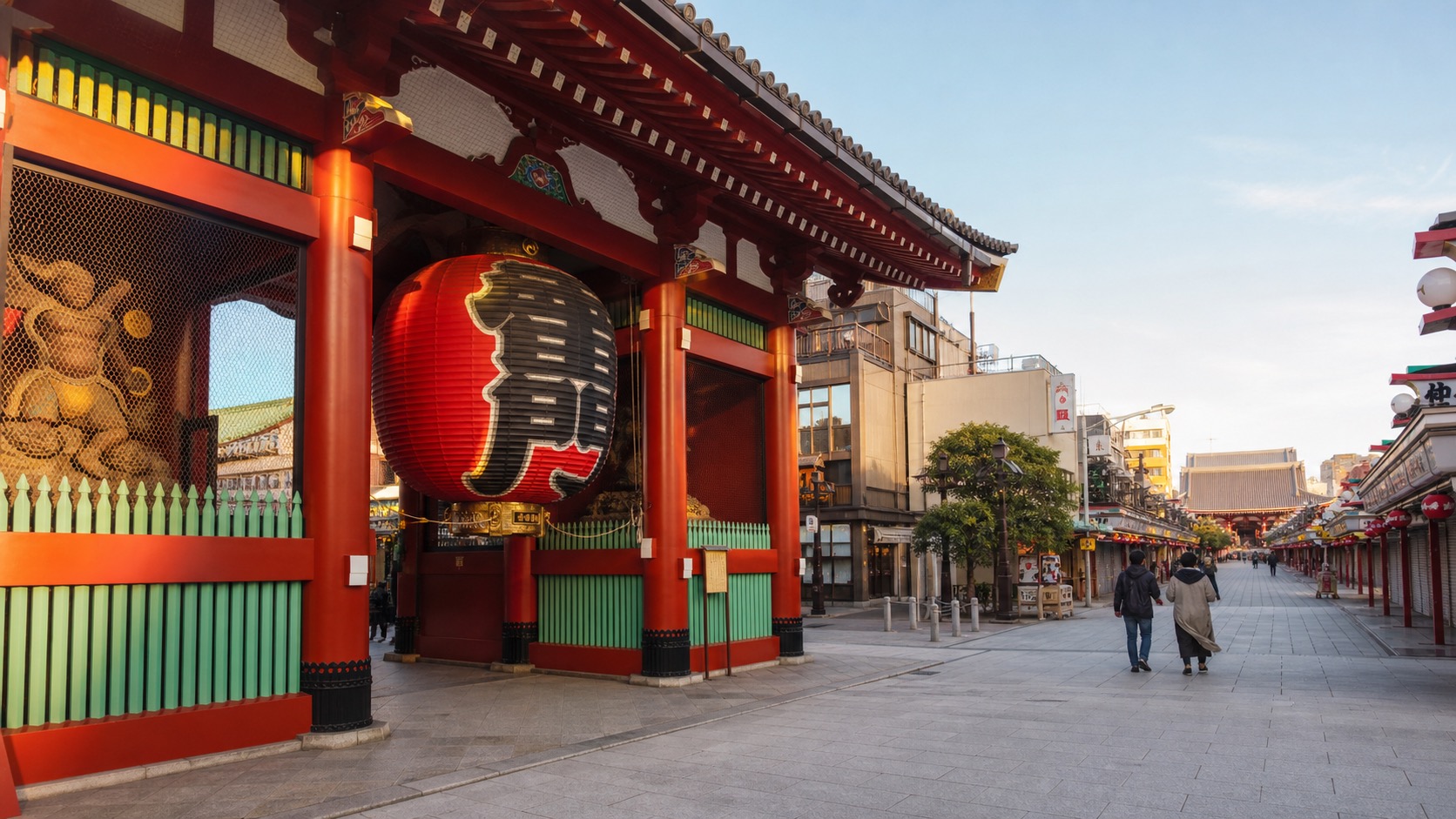
Asakusa
Choose it for temple streets, a broader visitor restaurant scene, and stronger evening sightseeing.
Open guide
Kinshicho & Kameido
Choose it for more shopping, direct rapid-train options, and a busier everyday commercial center.
Open guide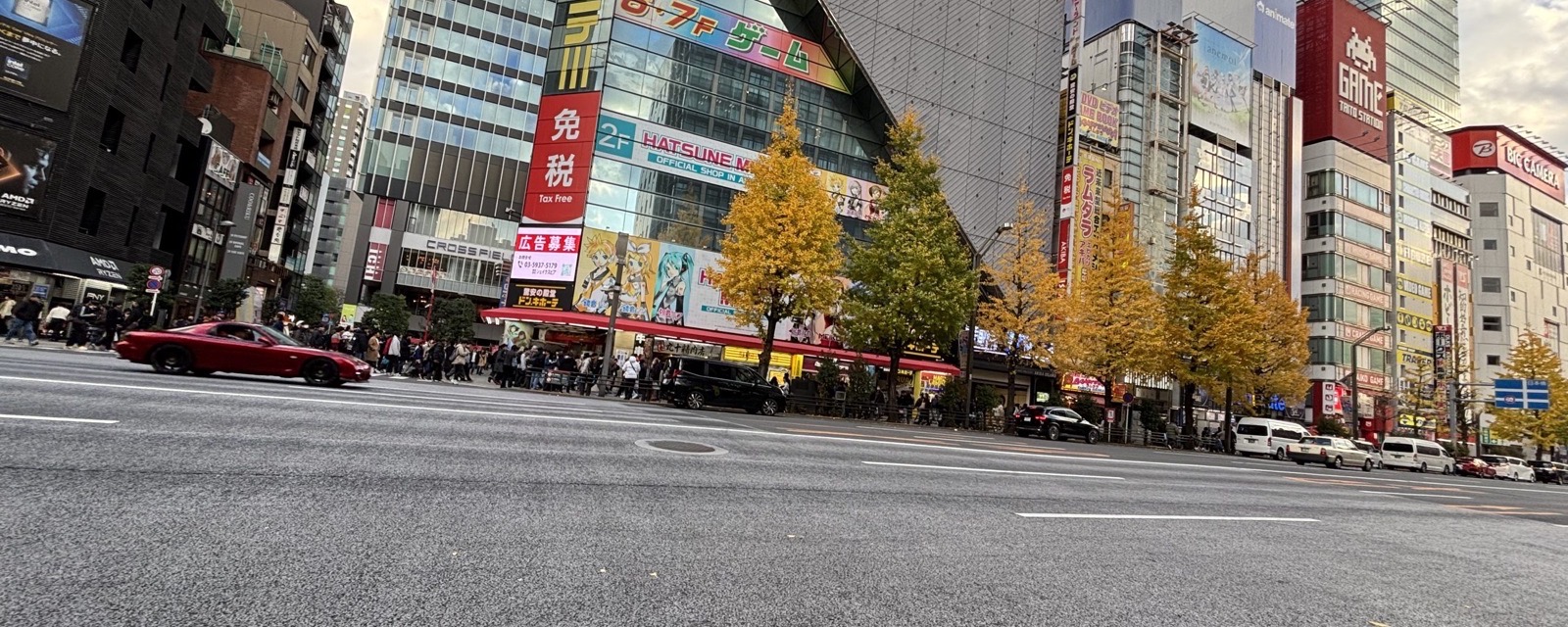
Akihabara
Choose it for electronics, anime shopping, and simpler transfers across central Tokyo.
Open guideSome links below are affiliate links. If you book through them we may earn a small commission at no extra cost to you.