Where to Stay in Tsukiji or Toyosu: Markets, Sushi and Tokyo Bay Access
Tsukiji is the central, walk-to-Ginza choice; Toyosu is the spacious bay-and-wholesale-market choice. Both reward early risers, but they solve very different Tokyo itineraries.
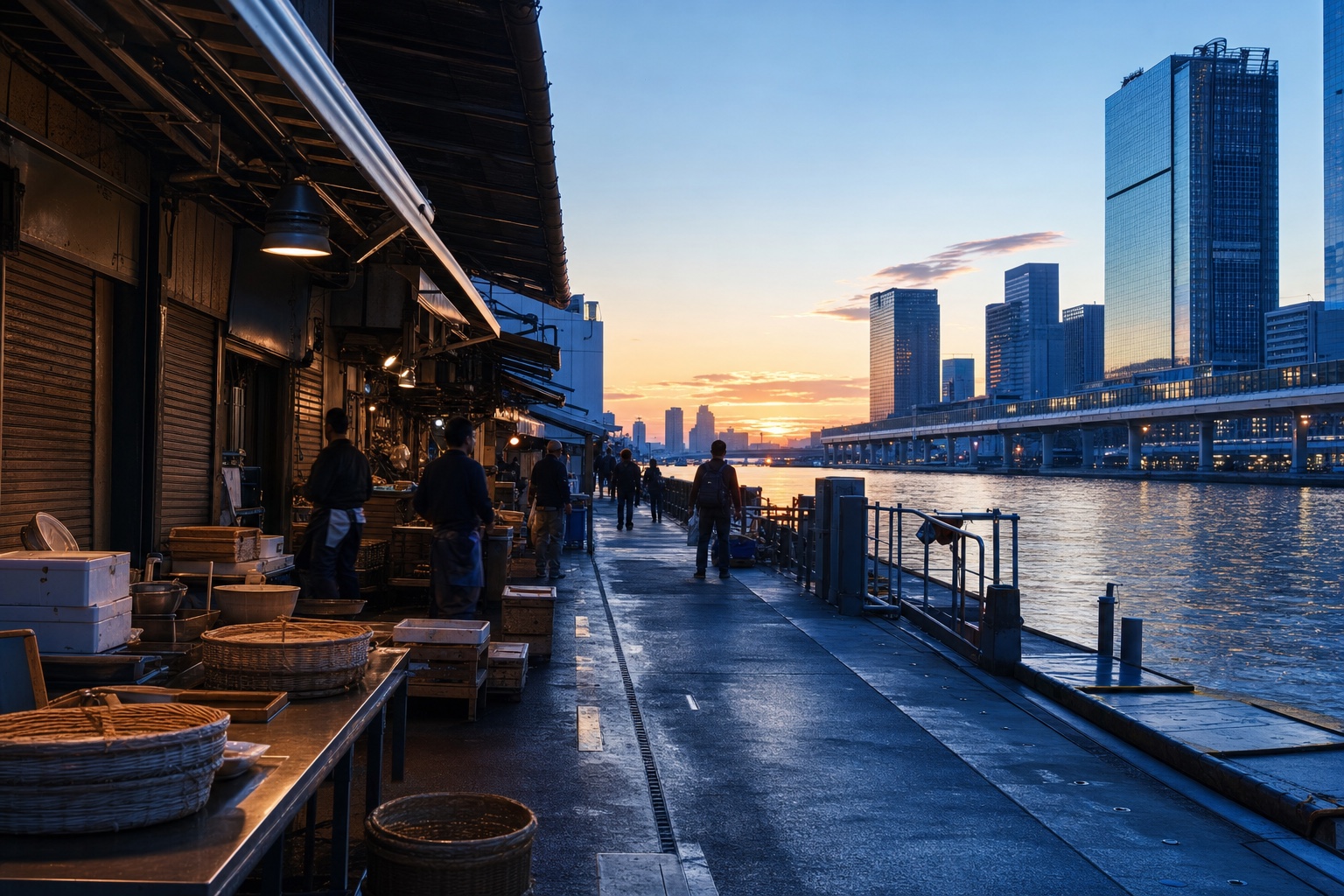
Quick links
Tsukiji or Toyosu: the short answer
Choose Tsukiji for central Tokyo. Choose Toyosu for the wholesale market, open waterfront, and newer bay hotels. The two districts share a seafood story, but they are not interchangeable hotel bases.
Tsukiji sits beside Ginza and has several useful subway stations within the wider neighborhood: Tsukiji on the Hibiya Line, Shintomicho on the Yurakucho Line, Higashi-ginza on the Hibiya and Asakusa lines, and Tsukijishijo on the Oedo Line. A traveler can eat breakfast in the Outer Market, walk to Ginza, and reach Ueno, Roppongi, or Haneda with manageable connections. Even when seafood is not the main interest, Tsukiji works as a compact central base.
Toyosu is a modern bay district. Toyosu Station combines the Yurakucho Line with Yurikamome, while Shin-toyosu and Shijo-mae sit closer to the wholesale market. Hotels here offer high floors, larger baths, bay views, and more space around the building. The compromise is repetition: many central-Tokyo days start with Yurikamome or the Yurakucho Line, followed by another transfer.
The market distinction matters. The wholesale operation moved from Tsukiji to Toyosu in October 2018. Tsukiji Outer Market did not disappear; its specialist shops, restaurants, kitchenware stores, and Tsukiji Uogashi facility remain active. Toyosu is where the large-scale wholesale work and tuna-auction viewing take place. Any guide that calls both places simply “the fish market” creates the wrong expectations.
Stay in Tsukiji when:
- Ginza, Tokyo Station, central museums, and city dining matter more than bay views.
- The group wants an early food-market morning without making markets the whole trip.
- Direct access to the Hibiya or Asakusa Line will be useful.
- Small streets, independent shops, and a walkable urban atmosphere are appealing.
Stay in Toyosu when:
- A very early Toyosu Market visit is a major trip goal.
- Odaiba, Ariake, Tokyo Big Sight, or other bay destinations appear repeatedly.
- A public bath, skyline view, newer room, or waterfront promenade matters.
- Children will use LaLaport, KidZania, parks, or more open pedestrian space.
Neither choice is ideal for a nightlife-first trip centered on Shibuya or Shinjuku. Tsukiji is less inconvenient for those districts, but travelers returning after midnight will still find the immediate streets quiet.
Must-see Tsukiji & Toyosu landmarks and attractions
Tsukiji & Toyosu’s core attractions form a compact route. Use this visual shortlist to choose what to see first and where a hotel should sit.
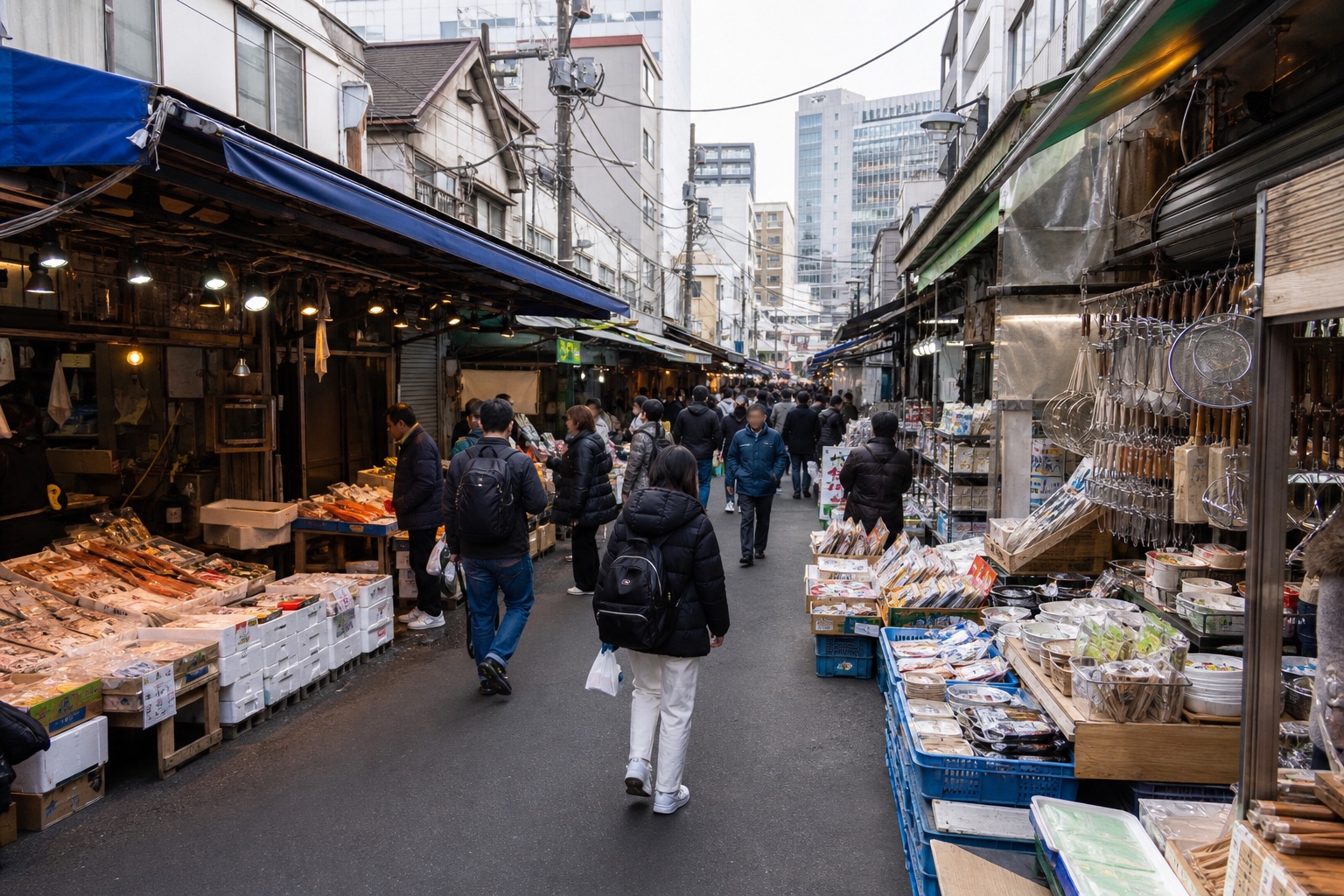 01
01Tsukiji Outer Market
Market lanesA dense market of seafood, dried goods, tea, knives, ceramics, prepared food, and small restaurants.
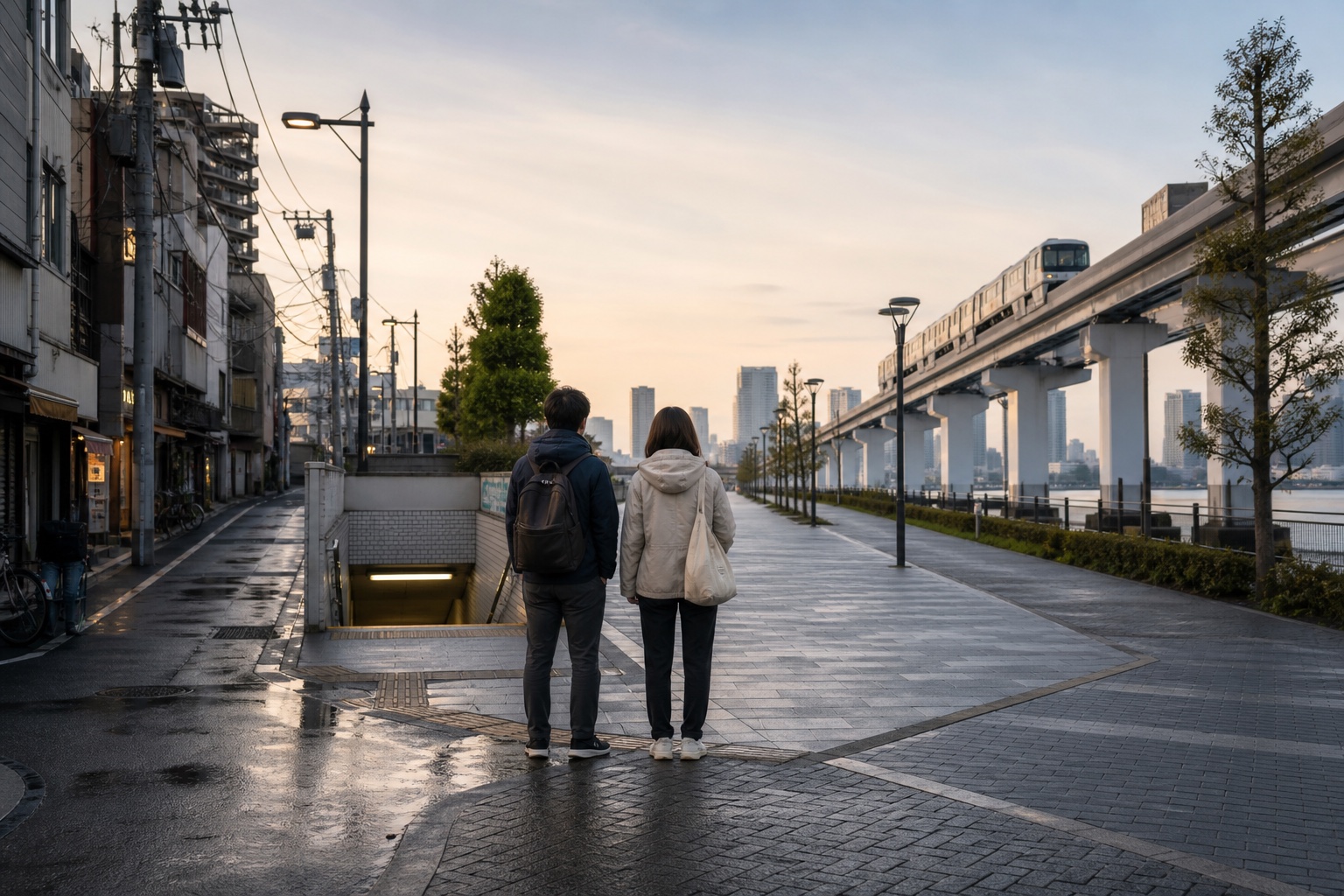 02
02Toyosu Market
Wholesale complexA controlled wholesale complex with observation corridors, market restaurants, public viewing spaces, and a rooftop garden.
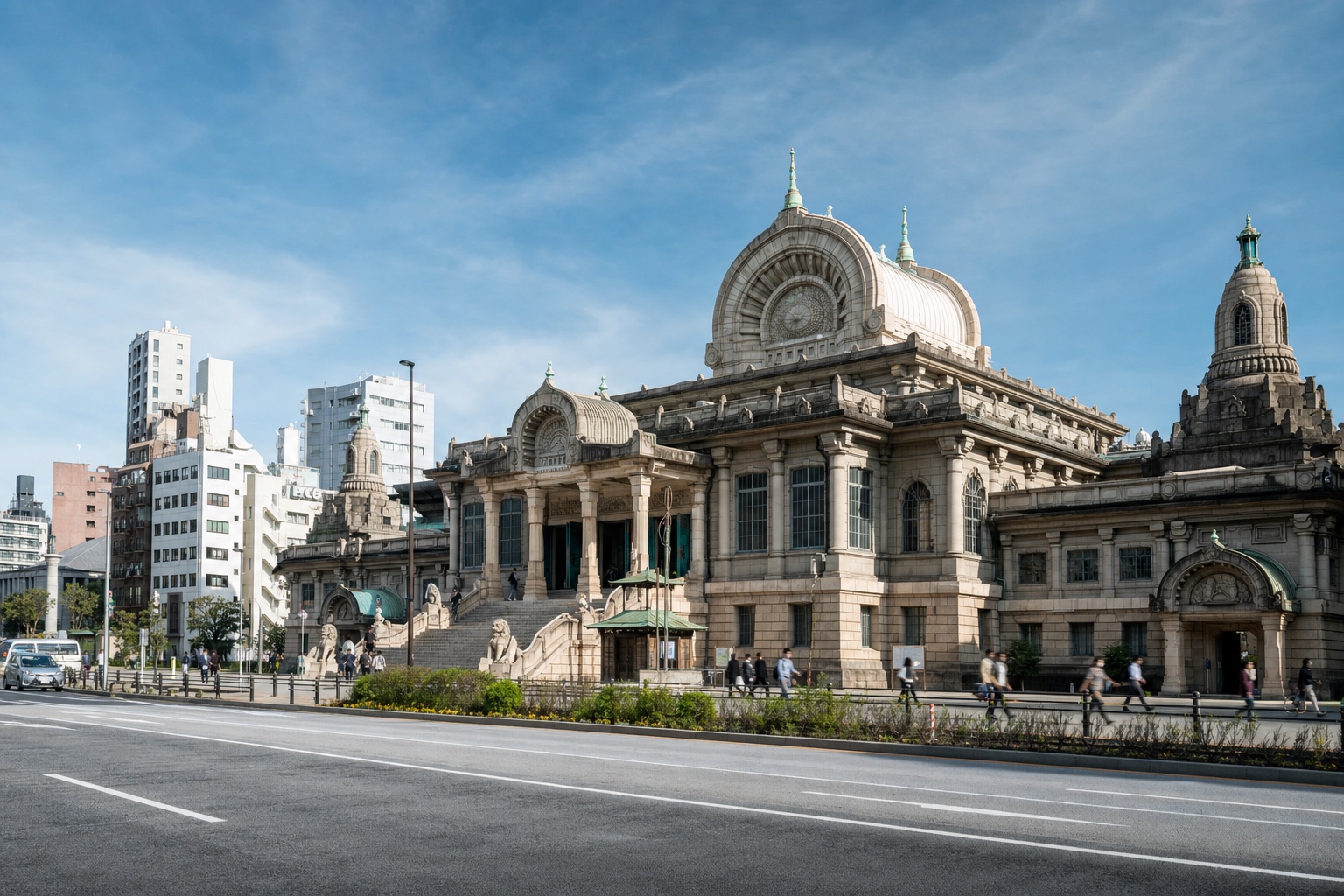 03
03Tsukiji Hongwanji Temple
Temple stopA named temple placed between the Outer Market and a walk toward Ginza.
 04
04Toyosu Waterfront
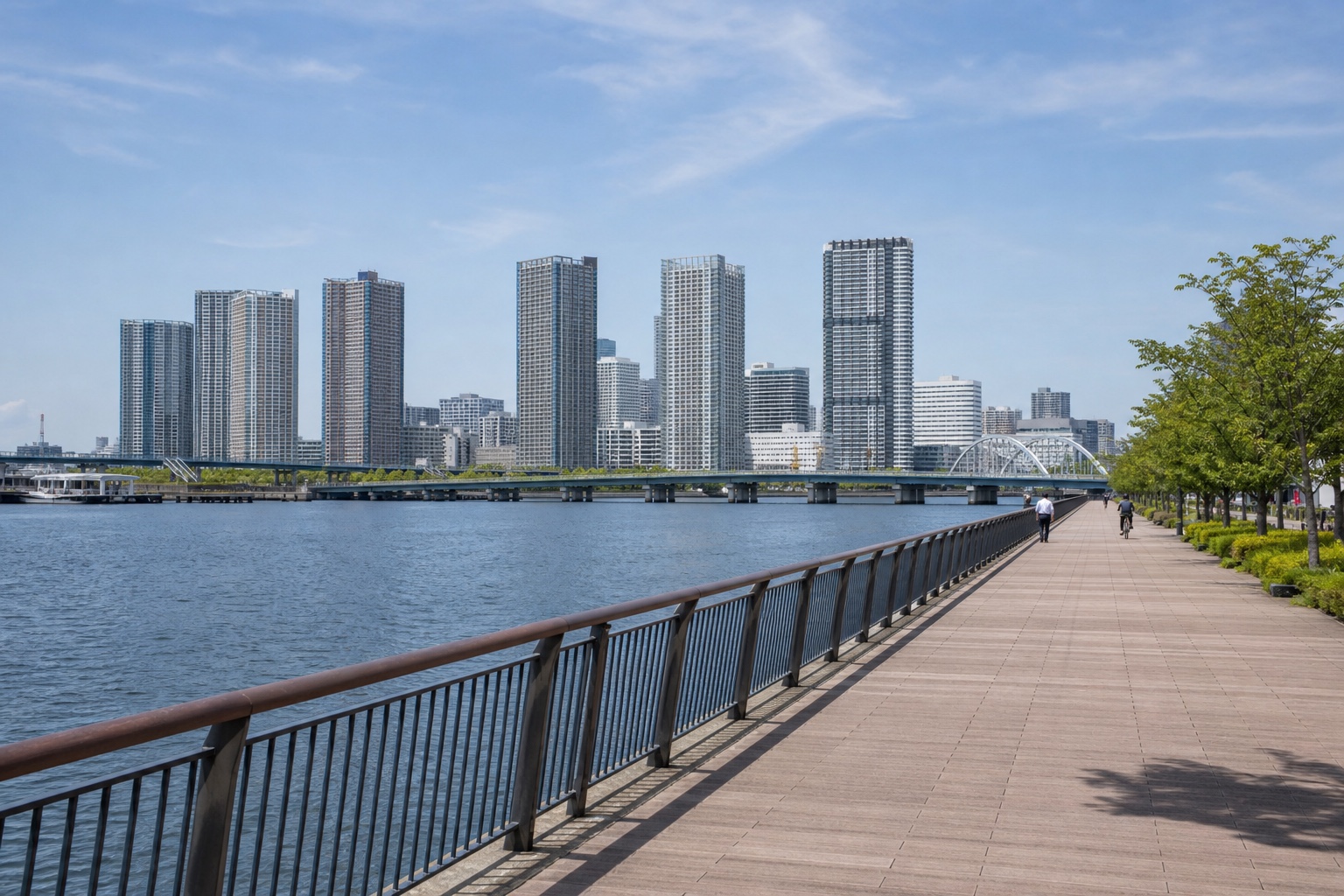
Bay waterfrontOpen waterfront and newer bay settings add space around Toyosu’s market, hotels, parks, and promenades.
How the two markets actually work
Understanding the markets is more useful than collecting restaurant names. Both are working food districts whose hours, holidays, and visitor rules reflect professional trade rather than tourist convenience.
Tsukiji Outer Market
The Outer Market is a dense network of narrow lanes. Shops sell seafood, dried goods, seaweed, tea, knives, ceramics, fruit, omelets, prepared food, and restaurant supplies. Many restaurants are small, and queues can block the flow of workers if visitors are careless.
The market’s official guidance recommends roughly 09:00 to 14:00 as the general shopping window. Many businesses close on Sundays and some Wednesdays, while each shop sets its own schedule. Earlier is not automatically better. Professionals receive priority in the morning, and access to the wholesale section of Tsukiji Uogashi is restricted before 09:00 unless permission has been granted.
Leave large suitcases at the hotel. The official market guidance specifically warns that bulky luggage and strollers obstruct narrow streets. Plat Tsukiji has lockers and visitor support, but capacity is limited and should not be the core luggage plan. Wear closed-toe shoes with grip because floors can be wet and carts or bicycles still move through the area.
Eating manners are practical rather than ceremonial. Eat inside the shop or in its designated space instead of walking through the lanes with food. Ask before photographing staff or merchandise. Avoid splitting one dish between several people when a tiny restaurant has a queue. These choices make the visit easier for everyone.
Toyosu Market
Toyosu is a large controlled wholesale complex divided among several buildings. Visitors use elevated corridors, restaurants, market-related shops, and public viewing spaces rather than walking through the trading floor. The scale is impressive, but it can feel more like navigating an airport or convention center than wandering an old market lane.
The public observation corridor and the closer tuna-auction observation deck have different conditions. The closer deck requires advance arrangements when offered; it should never be promised as a walk-in experience. Auction activity depends on the market calendar and business conditions. Check the Tokyo Metropolitan Government’s official market page for the exact date.
Restaurants inside the market operate on market rhythms. Some open very early and finish before an ordinary dinner service would begin. A famous counter may develop a long queue, while another good restaurant has space. Arriving with one “must eat here” demand can waste the morning. Keep two or three options across the relevant building and check whether the market is open at all.
The rooftop garden and waterfront surroundings make Toyosu more than an auction stop. On a clear day, the elevated space explains why travelers choose to stay here: large sky, bay infrastructure, and a very different Tokyo scale from Tsukiji’s alleys.
Getting around Tsukiji and Toyosu
Tsukiji has no JR station, but the subway network compensates. Hotel Keihan and TSUKI Tokyo are convenient for Tsukiji and Shintomicho. VIA INN adds Higashi-ginza, useful for the Asakusa Line and airport-related journeys. Hotels nearer the former wholesale site may favor Tsukijishijo on the Oedo Line.
Toyosu Station is the district’s strongest general transport point. The Yurakucho Line runs toward Ginza-itchome, Yurakucho, Iidabashi, and Ikebukuro. Yurikamome serves Shin-toyosu, Shijo-mae, Ariake, Odaiba, and Shimbashi, but it is slower than its simple route map may suggest. Market-front hotels sacrifice some central convenience for a shorter dawn journey.
| Destination | From Tsukiji | From Toyosu | Better base |
|---|---|---|---|
| Ginza | Walk or one Hibiya Line stop | Yurakucho Line to Ginza-itchome | Tsukiji |
| Tokyo Station | Subway, bus, taxi, or walk from Ginza side | Yurakucho Line to Yurakucho, then walk or JR | Tsukiji by a small margin |
| Toyosu Market | Bus, taxi, or indirect rail | Yurikamome to Shijo-mae | Toyosu |
| Odaiba | Oedo/Yurikamome connection | Yurikamome through the bay | Toyosu |
| Tokyo Big Sight | Subway and Yurikamome/Rinkai transfer | Yurikamome | Toyosu |
| Ueno | Hibiya Line direct | Yurakucho Line plus transfer | Tsukiji |
| Shibuya | Hibiya Line plus transfer | Yurakucho Line plus transfer | Tsukiji |
| Haneda Airport | Higashi-ginza Asakusa Line options | Bus where operating or rail transfers | Depends on hotel and time |
Station access matters more than the district label: For Tsukiji, Tokyo Metro’s official guide lists elevator routes at Exit 1 and Exit 2; Shintomicho Exit 1 is another option but has operating-hour limits. For Toyosu, the guide lists elevator routes around exits including 1c, 3, and 7. Compare the Tsukiji guide, Shintomicho guide, and Toyosu guide before booking a market-side hotel.
Traveling between Tsukiji and Toyosu
The districts look close across the reclaimed bay edge, yet rail travel is indirect. There is no short metro hop called “Tsukiji to Toyosu Market.” A surface bus or taxi can be more intuitive, especially for two or more travelers. Rail commonly means combining the Oedo Line and Yurikamome or using other transfers.
Do not plan to visit both markets before breakfast merely because they share a theme. Each rewards a separate morning. If only one morning is available, choose based on the experience: compact shopping and street food at Tsukiji, or wholesale scale and observation corridors at Toyosu.
Airport planning
Higashi-ginza gives some Tsukiji hotels useful Asakusa Line access toward Haneda. Exact train patterns vary, so confirm whether the service is through-running and which airport terminal it reaches. Toyosu has airport-bus services on some routes and schedules, but an old timetable is not evidence that a bus operates on the travel date.
For either district, compare the current airport operator, a live rail planner, and taxi cost. A family of four at 05:00 may reasonably choose a taxi even when a cheaper multi-transfer route exists.
Neighborhood atmosphere
Tsukiji begins early. Delivery activity, shutters, wet pavement, and breakfast queues create energy before ordinary shopping districts wake. By late afternoon the market lanes are much quieter. The surrounding residential and office blocks remain active, but the headline attraction has finished its day.
This rhythm can be a gift. Visitors can eat early, rest at the hotel, and walk to Ginza after the worst fatigue passes. It can also disappoint someone who expects a night market. Tsukiji is not an evening street-food district.
Toyosu has two atmospheres. Around Toyosu Station and LaLaport, it is a family-oriented residential and shopping district with supermarkets, restaurants, a cinema, waterfront parks, and wide pavements. Around Shijo-mae, the wholesale market and large hotels dominate. That side can feel remarkably empty after market and event hours.
The space is useful for strollers, running, and bay walks. It is less useful for spontaneous bar-hopping. Guests at a market-front hotel should identify dinner options before 20:00 instead of assuming the market restaurants will reopen at night.
Which feels more “Tokyo”?
Both do, but they show different eras. Tsukiji expresses the layered, compact commercial city where specialists work from small premises beside temples and residences. Toyosu expresses contemporary metropolitan planning: artificial islands, controlled logistics, elevated transit, family towers, and public waterfront.
Travelers seeking old-Tokyo texture often prefer Tsukiji. Travelers who value views, larger public space, and modern facilities often prefer Toyosu. Neither preference is more authentic.
Food strategy without the hype
Sushi near a market is not automatically cheap, and a queue is not proof of value. Ingredient quality, preparation, counter format, and location all influence price. Review sites can amplify a few stalls until visitors spend an hour waiting for a meal that is only marginally different from an available alternative.
At Tsukiji, browse once before buying. Compare posted prices, portion size, and eating space. The market sells cooked omelets, grilled seafood, rice bowls, noodles, sweets, tea, fruit, and kitchen goods in addition to raw fish. Visitors with allergies or dietary restrictions should ask about broth, soy sauce, shared grills, and garnishes rather than relying on appearance.
At Toyosu, learn which building contains the chosen restaurants. “At Toyosu Market” is not a precise direction. A wrong building can add a long indoor walk. Keep the official visitor map offline because mobile reception and concentration both feel weaker at dawn.
Breakfast and hotel choice
A hotel breakfast can compete with a market breakfast. Paying for both makes little sense unless the hotel meal is deliberately scheduled for another day. Room-only rates preserve flexibility, while breakfast-inclusive plans help on market holidays or departure mornings.
TSUKI Tokyo and VIA INN make a spontaneous Outer Market visit easy. Hotel JAL City and La Vista minimize the approach to Toyosu Market. Mitsui Garden at Toyosu Station is a compromise: better for the rest of Tokyo, but not as close to the wholesale buildings.
Evening food
Tsukiji guests can walk toward Ginza, Higashi-ginza, Shintomicho, or Shiodome for dinner. That expanded radius is one of the strongest reasons to stay there. Toyosu Station has LaLaport and neighborhood restaurants, but Shijo-mae hotel guests may need Yurikamome, a bus, or a taxi for wider choice.
Best hotels in Tsukiji and Toyosu
These six hotels were checked against their official websites. Fixed prices and guest scores are omitted because they change by date, occupancy, and room plan. Compare identical conditions: room area, bed count, breakfast, taxes, cancellation, child policy, and access to the line actually used.
The list contains three central Tsukiji choices and three Toyosu choices. Do not rank them as if location were a minor detail. A compact Tsukiji room can outperform a large bay room when the itinerary is central; a market-front Toyosu hotel can save a painful dawn journey when the auction is the trip’s centerpiece.
- ★★★★★Not ratedOur pick
TSUKI Tokyo
Couples, design, and market morningsA small contemporary hotel that uses wood, restrained color, and Japanese bathing ideas to create a more personal stay than a standard business hotel. Five room types are offered, with wooden baths in selected categories.
Pros:Strong Tsukiji identity, short market walk, and easy access to both Hibiya and Yurakucho lines.
Price: 🏷️ Japanese-design boutique hotelTrade-off: The wooden bath is not in every room, and boutique inventory can be limited or expensive on popular dates.
📍 3 minutes from Tsukiji Exit 4; 4 minutes from Shintomicho Exit 1🗺️ Map - ★★★★★Not rated
Hotel Keihan Tsukiji Ginza Grande
Families of three or four and longer central staysThe room list is the reason to book: genuine twin/triple categories and a 42-square-meter Deluxe Fourth give groups better options than many central Tokyo hotels. The hotel has 296 rooms, a gym, restaurant, and laundry.
Pros:Multiple room layouts, separate-bathroom categories, and good central rail coverage.
Price: 🏷️ Large family-friendly city hotelTrade-off: It sits on the quieter north side of Tsukiji rather than in the Outer Market lanes or directly beside Ginza.
📍 About 2 minutes from Tsukiji; about 3 minutes from Shintomicho🗺️ Map - ★★★★★Not rated
VIA INN Higashi-Ginza
Solo travelers and equipped long-stay roomsA useful no-drama base with Hibiya and Asakusa Line access. Selected deluxe single rooms include a washer/dryer, while kitchenette, sofa, or massage-chair details vary and must be requested.
Pros:Excellent station choice, 24-hour convenience store in the building, and some unusually equipped solo rooms.
Price: 🏷️ Practical compact hotelTrade-off: Base rooms start around 13 square meters; the official FAQ states there are no three-person rooms or extra beds.
📍 2 minutes from Tsukiji; 4 minutes from Higashi-ginza🗺️ Map - ★★★★★Not rated
Mitsui Garden Hotel Toyosu PREMIER
Yurakucho Line convenience, views, and a public bathThis is the easiest all-round Toyosu hotel for city exploration. The high-rise lobby, rooms, and public bath provide broad bay and skyline views, while direct station access reduces bad-weather friction.
Pros:Direct Toyosu Station access, LaLaport proximity, public bath, and a better central-Tokyo rail position than market-front hotels.
Price: 🏷️ High-rise hotel with public bathTrade-off: It is not beside the wholesale market; an early auction visit still needs Yurikamome, bus, taxi, or a longer walk.
📍 Direct hotel entrance from Toyosu Station and Toyosu Bayside Cross🗺️ Map - ★★★★★Not rated
Hotel JAL City Tokyo Toyosu
Early market visits and guests wanting 20-square-meter-plus roomsAll rooms are at least 20 square meters and use separate bath and toilet layouts, with capacity up to three people. The location makes the public market route much easier than a central-Tokyo start.
Pros:Strong room fundamentals, close market access, and a practical midpoint between Shijo-mae and Shin-toyosu.
Price: 🏷️ Modern market-side city hotelTrade-off: Most central trips begin with Yurikamome or a bus, and the immediate streets become quiet outside market and event hours.
📍 2 minutes from Shijo-mae; 3 minutes from Shin-toyosu🗺️ Map - ★★★★★Not rated
La Vista Tokyo Bay
Bay views, large baths, families, and resort facilitiesA 570-room bay hotel with large bathing facilities, pool, gym, sky bar, and room categories extending to four-person accommodation. It turns a market visit into a waterfront resort stay.
Pros:The easiest Shijo-mae access, broad facilities, views, and useful multi-person room inventory.
Price: 🏷️ Large waterfront resort hotelTrade-off: It is a large operation, some facilities have charges or access rules, and repeated travel to west Tokyo becomes tiring.
📍 Direct connection to Shijo-mae Station, about 1 minute🗺️ Map
How to choose the right hotel
Best central all-rounder
Hotel Keihan Tsukiji Ginza Grande has the broadest room inventory in the Tsukiji group. Couples can choose a standard double or twin, groups of three have specified triple layouts, and a four-person category exists. Tsukiji and Shintomicho stations create useful route choices.
VIA INN is a better fit for a solo traveler who values a lower-friction base over spacious shared areas. Its selected deluxe single rooms can add washer/dryer facilities, but the official room description makes clear that kitchenette and furniture variations are not guaranteed merely by booking any room.
Best boutique choice
TSUKI Tokyo gives the strongest small-hotel identity. The wood finishes and selected wooden-bath rooms suit a couple who wants the accommodation to reinforce the food-and-craft theme. Confirm the exact bath shown in the booked category. A generic “room at TSUKI” reservation does not guarantee it.
Best Toyosu transport compromise
Mitsui Garden Hotel Toyosu PREMIER is directly connected to Toyosu Station and therefore the most sensible bay choice for guests who still plan substantial central-Tokyo sightseeing. Its public bath and high-rise views add destination value. The wholesale market is not outside the door, however; the last segment still matters before sunrise.
Best early-market convenience
Hotel JAL City Tokyo Toyosu and La Vista Tokyo Bay are both close to Shijo-mae. JAL City emphasizes modern rooms of at least 20 square meters and separate bath/toilet layouts. La Vista emphasizes resort facilities, a large bath, and bay views. Choose the room and shared facilities, not a tiny difference in advertised walking minutes.
Best for families
Hotel Keihan is the strongest central choice because its official inventory includes three- and four-person layouts. La Vista is the bay alternative with four-person categories and more on-site recreation. Hotel JAL City can suit three people, while VIA INN explicitly states that it does not offer three-person rooms or extra beds.
A two-day food-and-bay plan
Day one: Tsukiji and Ginza
Arrive at the Outer Market after the professional priority period begins to ease, unless a specific restaurant has confirmed an earlier plan. Leave luggage at the hotel, wear appropriate shoes, and browse before choosing breakfast. Visit Tsukiji Hongwanji Temple or Hamarikyu Gardens afterward, checking current opening details.
Walk toward Ginza in the afternoon. The short distance is the point of a Tsukiji base: department stores, galleries, stationery, cafes, and evening restaurants are available without another complex commute. Return through Higashi-ginza after dinner.
Day two: Toyosu Market and waterfront
Check the official market calendar first. If the market is open, arrive for the public observation period appropriate to the day; use the closer auction deck only with the required advance arrangement. Eat in the relevant building, then visit the shops or roof garden.
Continue toward Toyosu Station for LaLaport and the waterfront, or take Yurikamome toward Odaiba. Families can substitute KidZania or a park. End at a bay hotel or return to Tsukiji by a route chosen live, not by assuming a direct market-to-market train.
Trying to complete Tsukiji, Toyosu Market, Odaiba, teamLab, Ginza, and a long sushi dinner in one day defeats the reason to stay nearby. Two focused mornings produce a better experience.
Safety, accessibility and practical details
Both districts are generally orderly, but working-market hazards are real. Wet floors, moving carts, narrow lanes, distracted crowds, and early-morning fatigue create more risk than conventional street crime. Keep children close, wear stable shoes, and do not step backward into traffic for a photograph.
Tsukiji’s compact lanes can be difficult with wheelchairs or strollers at busy times. Plat Tsukiji lists an accessible toilet and provides information, but that does not make every small restaurant accessible. Contact a specific venue when step-free entry or seating is essential.
Toyosu’s visitor corridors and newer hotels are generally broader, yet distances can be long. A route that is technically step-free may still involve hundreds of meters between lifts and buildings. Use the official visitor map and confirm accessible hotel rooms directly.
Large luggage belongs at the hotel. Toyosu Market is not a convenient transfer stop between airports and accommodation, and Tsukiji explicitly discourages bulky bags. Hotel storage policies vary before check-in and after checkout, so confirm them before building the day.
Market restaurants and hotels handle allergies differently. Explain the ingredient and the severity. Seafood broth, bonito stock, soy, wheat, shellfish, shared fryers, and cross-contact can appear in dishes whose English name sounds safe. A translation card helps, but it does not replace a clear conversation.
FAQ
Did Tsukiji Market close?
The inner wholesale market moved to Toyosu in October 2018. Tsukiji Outer Market remains active with shops, restaurants, kitchenware, and Tsukiji Uogashi. Toyosu is now the main wholesale market.
Which area is better for first-time visitors?
Tsukiji is the safer all-round choice because Ginza is walkable and several subway lines are nearby. Toyosu is better when the wholesale market, Odaiba, bay views, or newer hotel facilities are central priorities.
Can I watch the tuna auction without a reservation?
Public viewing conditions and the closer observation deck are different. The closer deck requires advance arrangements when offered. Check the Tokyo Metropolitan Government market site and calendar for the exact date.
What time should I visit Tsukiji?
The Outer Market’s official guidance identifies roughly 09:00 to 14:00 as a useful general shopping period, with professional buyers taking priority before 09:00. Individual shops set their own hours and closures.
Is Toyosu good for Tokyo Disneyland?
It can be workable through bay transport and transfers, but it is not a Disney Resort hotel zone. Compare the live route, first-train timing, and a Maihama-area stay before choosing Toyosu solely for Disney.
Can I walk from Tsukiji to Toyosu?
The districts are separated by waterways, large roads, and reclaimed-land infrastructure. A long walk is possible for an experienced urban walker, but it is not the practical market transfer for most visitors. Bus or taxi is often clearer.
Which area has better nightlife?
Tsukiji wins because Ginza, Higashi-ginza, and Shimbashi expand the evening radius. Toyosu offers restaurants and waterfront evenings, but market-front blocks become quiet.
Final verdict
Tsukiji is the better Tokyo base; Toyosu is the better market-and-bay base. That simple distinction prevents most booking mistakes.
Choose Tsukiji when the market is one part of a central itinerary. Choose Toyosu when early wholesale-market access, public baths, larger modern rooms, and waterfront space deserve a daily transport compromise. In either district, check the official market calendar before paying a non-refundable hotel rate.
Explore more Tokyo areas
Compare Ginza for luxury shopping and central dining, Odaiba for family bay attractions and larger resort hotels, and Shimbashi and Shiodome for stronger JR connections between central Tokyo and the waterfront.

Ginza
Choose it for luxury shopping, broad dining, and a more polished central-city evening.
Open guide
Odaiba
Choose it for bay attractions, larger hotels, and family entertainment rather than market access.
Open guide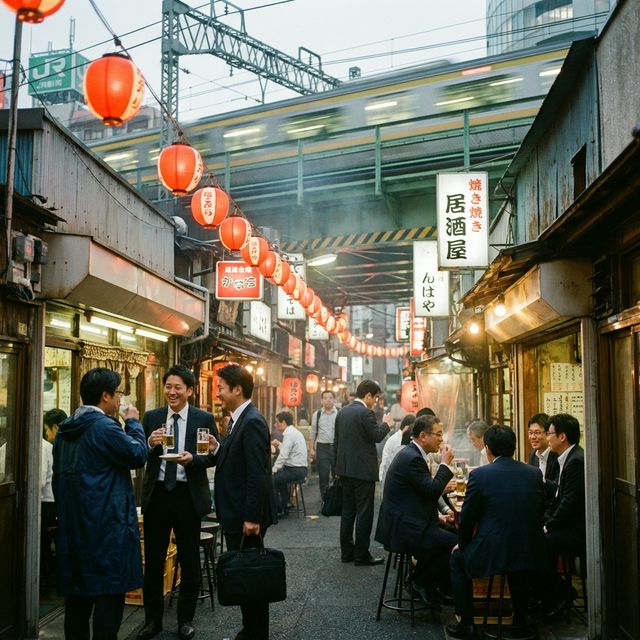
Shimbashi & Shiodome
Choose it for stronger JR connections, office-district dining, and easy access between central Tokyo and the bay.
Open guideSome links below are affiliate links. If you book through them we may earn a small commission at no extra cost to you.